Introduction
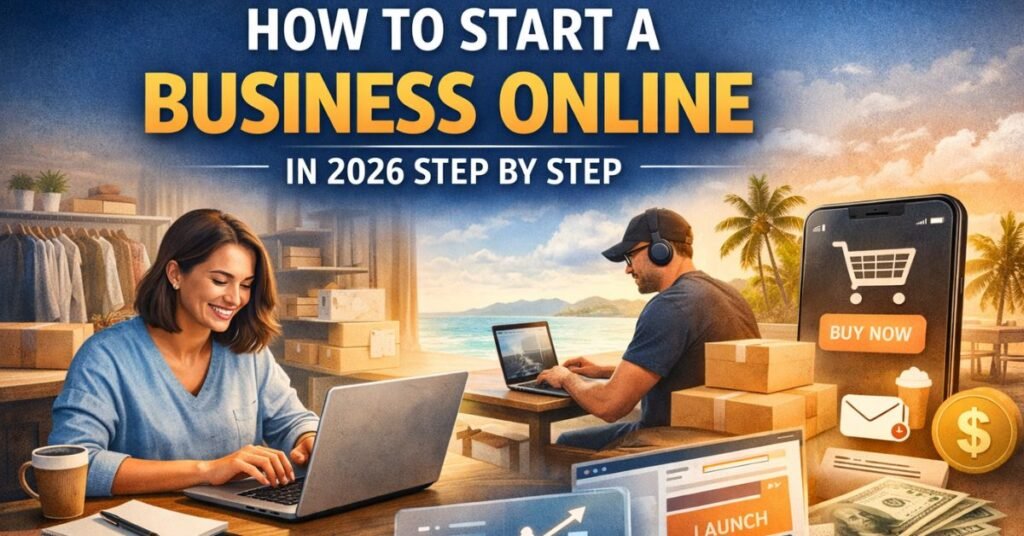
If you have ever caught yourself thinking, “I should really start something of my own online,” you are not alone. The idea of building an online business in 2026 feels more realistic, accessible, and urgent than ever before. Traditional jobs feel less secure, AI is reshaping entire industries, and the internet has matured into a global marketplace where a single person can reach millions without renting an office or hiring a large team.
Learning how to start a business online in 2026 step by step is no longer just a “nice-to-have” skill. For many people, it is becoming a core life skill. Whether you want a full-time income, a side hustle that gives you breathing room, or a long-term asset you can grow and eventually sell, an online business can deliver all three if you approach it the right way.
In this guide, I will walk you through the entire process, exactly as I would explain it to a close friend who is serious about doing this properly. We will cover how online businesses really work in 2026, what types of models actually make sense today, the tools you should (and should not) use, and how to avoid the mistakes that quietly kill most beginner projects. By the end, you will have a clear, practical roadmap you can follow step by step, not just inspiration.
Topic Explanation: What Starting an Online Business in 2026 Really Means
When people hear “online business,” they often imagine overnight success, passive income screenshots, or influencers selling courses from a beach. The reality in 2026 is more grounded, and honestly, more encouraging. Starting an online business today is less about hacks and more about building something useful in a smart, focused way.
At its core, an online business is simply a system that delivers value digitally and gets paid for it. That value might be a product, a service, information, or access to a community. The internet is just the delivery mechanism. Think of it like opening a shop on a busy global street where billions of people already walk past every day. Your job is to offer something that solves a real problem and make it easy to find, trust, and buy.
What makes 2026 different from earlier years is the combination of mature platforms, AI-assisted tools, and lower technical barriers. You no longer need to code, design, or market like a professional to get started. At the same time, competition is higher, which means clarity and execution matter more than raw effort.
A helpful analogy is this: starting an online business in 2026 is like building a modern food truck instead of a five-star restaurant. You can start small, test fast, adapt quickly, and scale only when you know people actually want what you are selling. That mindset will save you time, money, and frustration as you move forward.
Benefits and Use Cases: Who Online Business Is Best For in 2026
One of the biggest advantages of learning how to start a business online in 2026 step by step is flexibility. Online businesses are no longer limited to tech-savvy founders or digital marketers. They are being built by teachers, designers, accountants, parents, students, and retirees alike.
For someone with limited capital, an online business removes many traditional barriers. You do not need inventory, a storefront, or a large team to begin. Many successful online businesses start with little more than a laptop, an internet connection, and a clear idea. This makes it ideal for beginners who want to learn by doing rather than investing heavily upfront.
Online businesses are also incredibly adaptable. A freelance service can turn into an agency. A blog can evolve into a media brand. A simple digital product can grow into a full ecosystem of tools and memberships. In 2026, this adaptability is crucial because markets change quickly. Businesses that can pivot without rebuilding everything from scratch tend to survive and thrive.
Common real-world use cases include:
- Professionals monetizing their expertise through consulting or digital products
- Creators building niche audiences and earning through ads, affiliates, or memberships
- Small sellers launching eCommerce brands without physical stores
- Service providers offering global services instead of local-only work
The unifying factor is leverage. An online business allows your effort to scale beyond your hours. That leverage is what turns skills and ideas into long-term income streams.
Step-by-Step Guide: How to Start a Business Online in 2026
Step 1: Choose a Problem Worth Solving
Every successful online business starts with a problem, not a product. This is where many beginners go wrong. They start by asking, “What should I sell?” instead of “What do people actually need help with?”
In 2026, the best problems share three qualities. First, they are painful enough that people are already searching for solutions. Second, they affect a specific group of people you can clearly describe. Third, they are problems you understand or can learn quickly.
Spend time in online communities, forums, social platforms, and comment sections. Look for repeated questions, frustrations, and complaints. Pay attention to the language people use. That language will later become your marketing copy. Choosing the right problem at this stage makes everything else easier, from content creation to sales.
Step 2: Validate Your Idea Before You Build Anything
Validation is the difference between a hobby and a business. Before you invest weeks or months building a website or product, you want evidence that people are willing to pay for a solution.
In 2026, validation can be simple. You can create a basic landing page, post valuable content on social media, or offer a small paid beta to early users. The goal is not perfection. The goal is feedback and signals of demand.
Ask potential customers direct questions. Offer pre-orders. Run small test campaigns. If people engage, ask follow-up questions, or even pay a small amount, you are on the right track. If not, adjust your idea early while the cost of change is low.
Step 3: Pick the Right Online Business Model
There is no single “best” online business model in 2026, but there is a best model for your situation. Your skills, time availability, and income goals should guide this decision.
Popular and proven models include:
- Service-based businesses like freelancing, consulting, or coaching
- Content-driven businesses such as blogs, newsletters, and YouTube channels
- Digital products including courses, templates, and tools
- eCommerce and dropshipping with a niche focus
- Subscription and membership-based communities
Each model has trade-offs. Services generate cash faster but are less scalable. Products take longer to build but can scale better. Content businesses grow slowly but create strong long-term leverage. Choose one primary model to start, not all of them at once.
Step 4: Build Your Online Presence the Smart Way
Your online presence is your storefront, your salesperson, and your credibility all in one. In 2026, this does not mean building a complex website with dozens of pages. It means creating a clear, trustworthy hub that explains who you help, how you help them, and what to do next.
A simple website with a homepage, about page, and offer page is often enough. Pair this with one main traffic channel, such as search, email, or a social platform where your audience already spends time. Focus on clarity over cleverness. People should understand your value within seconds.
Consistency matters more than design perfection. A clean, fast, easy-to-navigate site will outperform a flashy one that confuses visitors. Your goal is to reduce friction at every step.
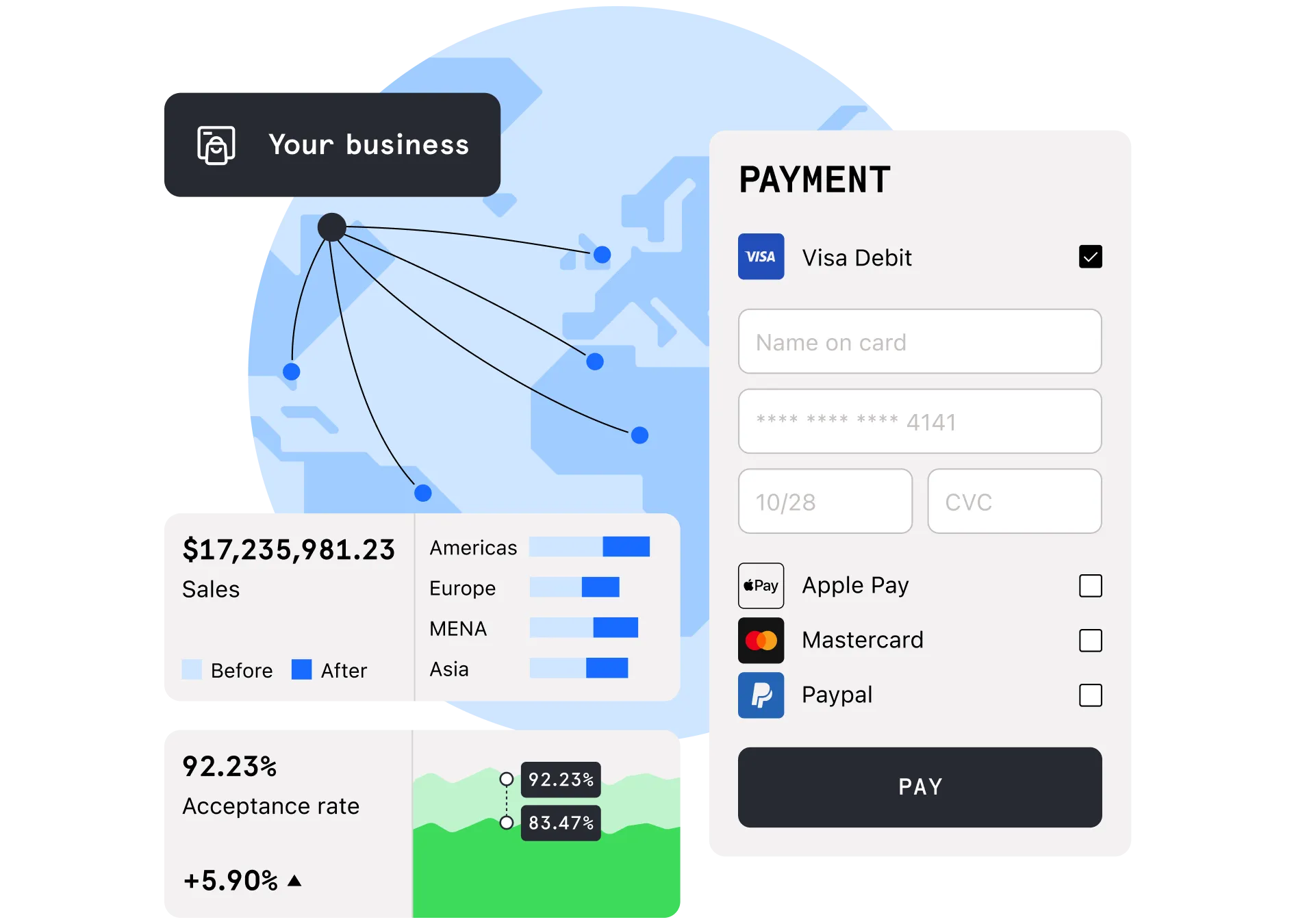
Step 5: Set Up Payments, Legal Basics, and Systems
This step is less exciting but absolutely essential. To run a real online business, you need reliable systems for payments, communication, and basic compliance.
Choose a payment processor that is trusted and easy for your audience to use. Set up a business email and basic bookkeeping from day one, even if your income is small. In 2026, automation tools make this much easier than it used to be.
You should also understand the basic legal requirements in your country, such as business registration and taxes. You do not need to overcomplicate this, but ignoring it entirely can create problems later. Think of this step as laying a solid foundation so your business can grow without stress.
Tools, Comparisons, and Recommendations for 2026
4
Choosing the right tools can dramatically speed up your progress, but choosing too many can slow you down. In 2026, the best tools are simple, integrated, and reliable.
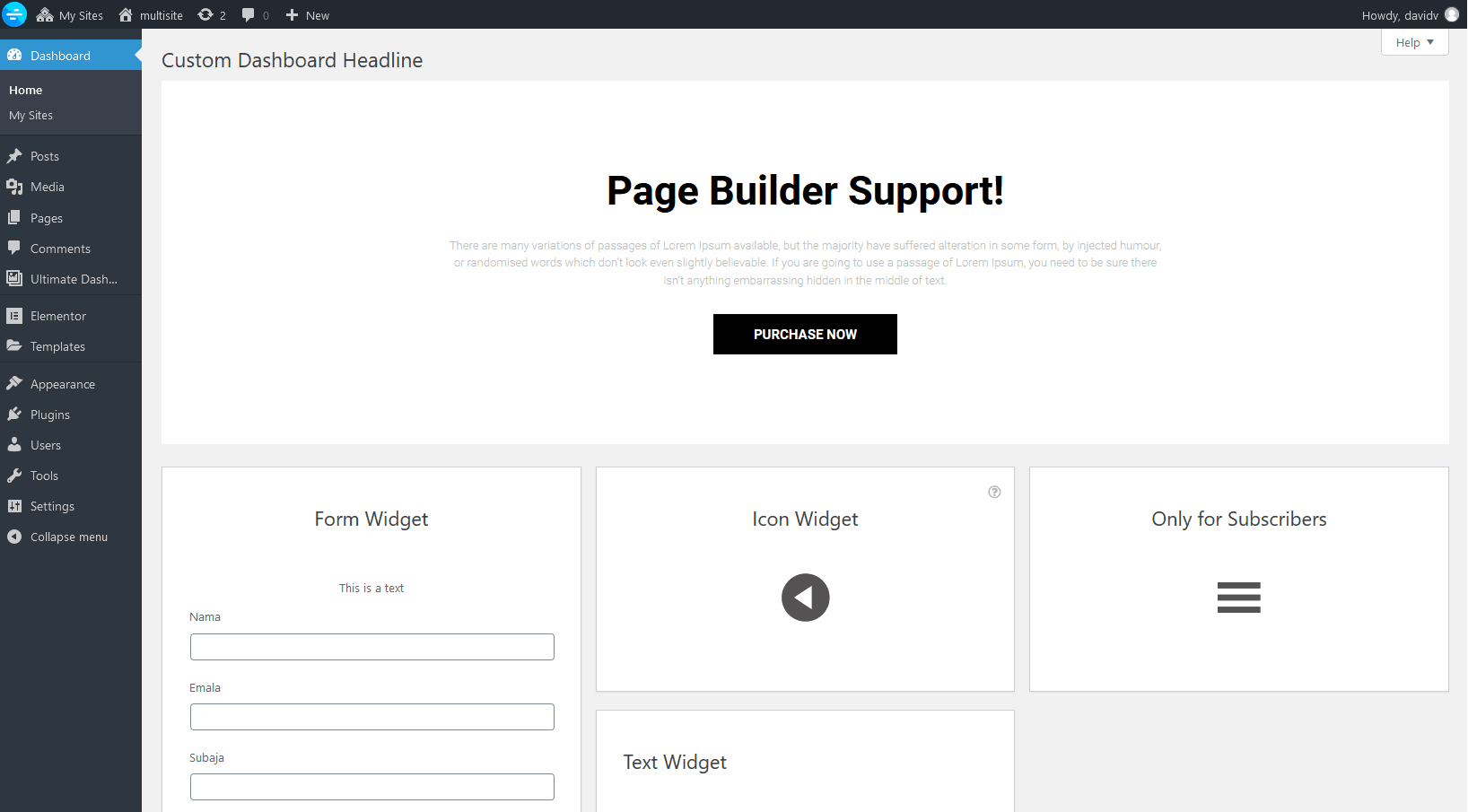
For websites and stores, platforms like Shopify and WordPress remain strong choices. Shopify is excellent for product-focused businesses, while WordPress offers flexibility for content and service-based models. Free options can work at the beginning, but paid plans usually save time and offer better support.
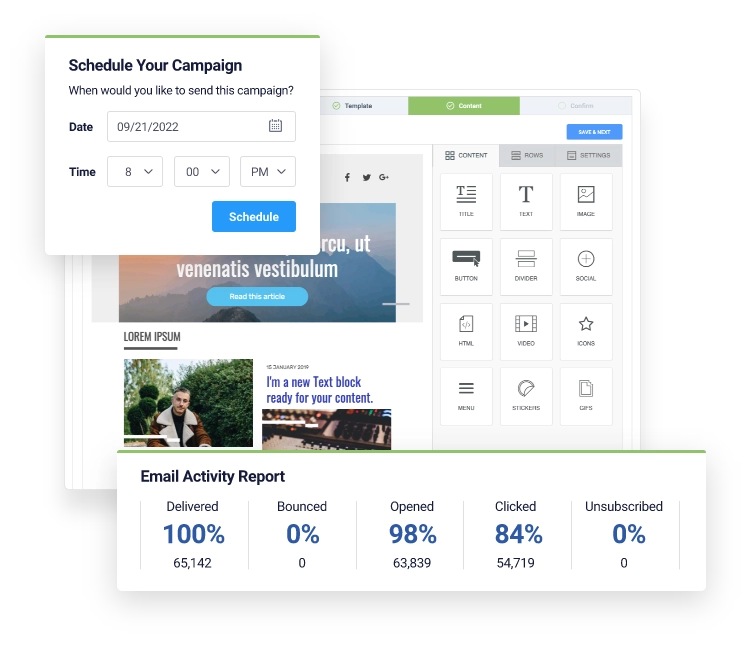
For marketing and analytics, tools like Google Analytics help you understand what is working and what is not. Email platforms such as ConvertKit are popular for creators because they balance power and ease of use.
When comparing free versus paid tools, think in terms of opportunity cost. Free tools reduce expenses but often increase complexity or limitations. Paid tools, when chosen carefully, can remove friction and let you focus on growth. Start lean, upgrade intentionally, and avoid tool subscriptions you are not actively using.
Common Mistakes and How to Fix Them
Almost every failed online business follows a familiar pattern. The founder works hard, feels busy, but sees little progress. The good news is that these mistakes are avoidable once you know what to look for.
One common mistake is trying to appeal to everyone. Broad ideas feel safer, but they rarely convert. Narrowing your focus makes your message clearer and your marketing more effective. Another mistake is overbuilding before validating. Spending months perfecting a product nobody has asked for is a painful lesson many beginners learn the hard way.
Inconsistency is another silent killer. Posting content for two weeks and then disappearing for two months confuses both algorithms and audiences. It is better to do less consistently than more sporadically. Finally, many people quit too early because they expect fast results. Most legitimate online businesses take months, not weeks, to gain traction.
The fix is simple but not easy: focus on one clear problem, validate early, build small, and show up consistently. Treat your business like a long-term project, not a lottery ticket.
Conclusion: Turning Your Online Business Idea Into Reality
Learning how to start a business online in 2026 step by step is not about chasing trends or copying what worked five years ago. It is about understanding people, solving real problems, and using modern tools wisely. The internet rewards clarity, consistency, and genuine value more than ever before.
If you take one thing away from this guide, let it be this: start before you feel ready. You do not need the perfect idea, the perfect website, or the perfect plan. You need a clear problem, a willingness to learn, and the discipline to keep going when progress feels slow.
An online business can change how you work, earn, and live, but only if you treat it seriously. Use this guide as your roadmap, take the first small step today, and let momentum do the rest. If you have questions or want to share your progress, leave a comment or explore one of the tools mentioned above and start building.
FAQs
How much money do I need to start an online business in 2026?
Most online businesses can be started with a small budget, often under a few hundred dollars. Many people begin with free tools and upgrade only after earning their first income.
How long does it take to make money online?
This depends on the business model and effort. Service businesses can earn within weeks, while content or product-based businesses may take several months to gain traction.
Is starting an online business still worth it in 2026?
Yes, but the approach matters. The opportunity is still huge, but success requires focus, differentiation, and consistency rather than shortcuts.
Do I need technical skills to start?
No advanced technical skills are required. Modern platforms handle most of the complexity, allowing beginners to focus on ideas and execution.
What is the easiest online business for beginners?
Service-based businesses are often easiest because they rely on existing skills and require minimal setup.

Michael Grant is a business writer with professional experience in small-business consulting and online entrepreneurship. Over the past decade, he has helped brands improve their digital strategy, customer engagement, and revenue planning. Michael simplifies business concepts and gives readers practical insights they can use immediately.