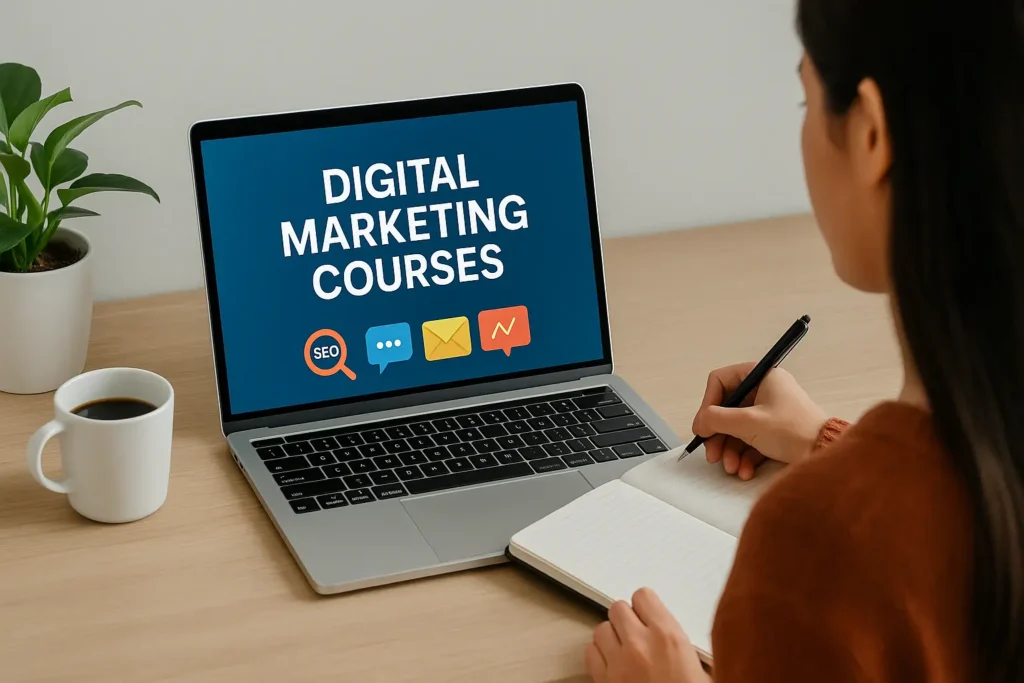
Last year, a friend of mine — let’s call her Ayesha — was stuck in a job she didn’t love. She spent her evenings scrolling reels, wondering how some people manage to build online businesses and personal brands from scratch. One day, she stumbled upon a digital marketing course, signed up out of curiosity… and fast-forward six months, she was creating social media campaigns for small businesses and earning more than her old monthly salary — all with skills she learned online.
Ayesha’s story isn’t unique. Digital marketing has become one of the most in-demand career paths today, and the best part? You don’t need a degree — you just need the right skills.
This guide will walk you through what digital marketing courses cover, who they’re for, how to choose the right one, and what to expect before you enroll.
What Is a Digital Marketing Course? (Simple Definition)
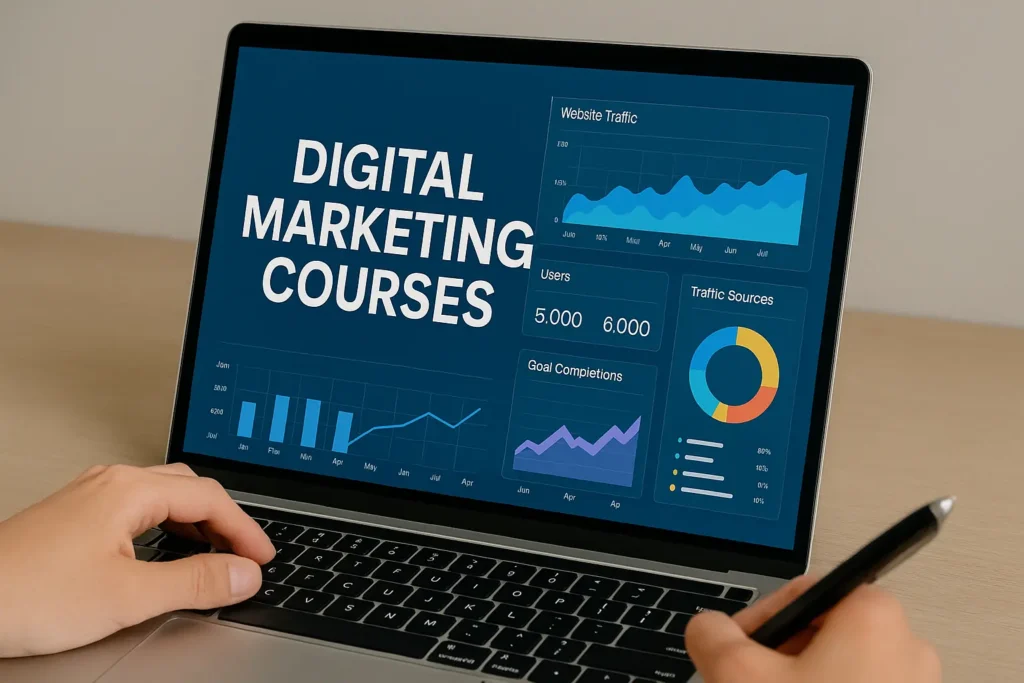
A digital marketing course teaches you how to promote products, services, or brands on the internet using various tools and strategies. Think of it like learning how to be visible where people hang out the most — online.
Most courses cover skills like:
| Skill | Why It Matters |
|---|---|
| SEO (Search Engine Optimization) | Helps websites rank on Google |
| Social Media Marketing | Builds brand awareness + audience |
| Content Marketing | Attracts and engages customers naturally |
| Google/Facebook Ads | Drives fast traffic & conversions |
| Email Marketing | Nurtures leads into buyers |
| Analytics & Data Tracking | Measures what’s working & what’s not |
If these sound exciting, you’re already on the right track.
Why Take Digital Marketing Courses? (Real Benefits)
1. High Demand & Better Career Opportunities
Businesses need an online presence. That means more job openings, freelancing gigs, and even remote work.
2. Learn Practical, Money-Making Skills
You can apply what you learn immediately — for businesses, personal brands, or your own online projects.
3. Start a Side Hustle or Full-Time Career
Whether you want a job, want to freelance, or dream of running your own agency — digital marketing supports all paths.
4. Short Learning Curve
You don’t need prior experience. Even a beginner can see progress in weeks with consistent practice.
How to Choose the Right Digital Marketing Course (Step-By-Step)
Choosing the wrong course feels like paying gym fees and never seeing results. To avoid that, here’s a simple selection roadmap:
Step 1: Identify Your Goal
Do you want a job? Freelance? Start a business?
Different goals may need different course focuses.
Step 2: Check the Course Curriculum
Look for modules on SEO, Google Ads, Social Media, Analytics, Content, Email + real projects.
Step 3: Ensure Hands-On Practice
Courses with assignments, projects, campaign building or live case studies are always better.
Step 4: Look for Mentorship or Instructor Support
Someone to guide you > reading PDFs alone.
Step 5: Read Reviews Not Only Ratings
See if past students actually learned and earned after completing the course.
Popular Platforms to Learn Digital Marketing
Here are some options learners often find helpful:
| Platform/Institute | Best For |
|---|---|
| Coursera & Udemy | Affordable beginner-friendly learning |
| Google Digital Garage | Free fundamentals course |
| HubSpot Academy | Great for content & inbound marketing |
| Simplilearn, upGrad, IIDE | Job-oriented learning + certification |
Tip: Start with free resources → upgrade to paid only when you want to go deeper.
Tools You’ll Use as a Digital Marketer
No need for expensive software — many tools are free or freemium.
- Google Analytics & Search Console
- Canva for creative design
- Meta/Google Ads Manager
- SEMrush, Ahrefs, or Ubersuggest for SEO
- Mailchimp/Sendinblue for email marketing
- Buffer or Hootsuite for social scheduling
The more you practice with these tools, the faster your confidence grows.
Common Mistakes Beginners Make
Avoid these early and you’ll progress much faster:
❌ Learning theory but not practicing
❌ Switching from one course to another without finishing
❌ Expecting overnight results
❌ Ignoring data & analytics
❌ Not building a portfolio or personal brand
Remember — consistency builds mastery.
Real-World Use Cases for Your New Skills
After learning digital marketing, you can:
- Manage social media for local businesses
- Grow e-commerce stores with paid ads
- Become an SEO consultant
- Start a YouTube channel/blog and monetize it
- Work remotely for agencies and global brands
Your skills can literally open doors anywhere in the world.
Final Takeaway
If you want a modern career with growth, flexibility, creativity, and real-earning potential — digital marketing courses are absolutely worth it. Start small, practice regularly, build your portfolio, and take one step at a time. Your learning journey could change your life — just like Ayesha’s.
FAQs
Can beginners learn digital marketing?
Yes! Most courses start from basics — no experience required.
How long does it take to learn?
3–6 months of consistent learning + practice is enough to get freelance-ready.
Do I need coding?
Not at all. It’s a skill based on strategy, creativity, and data.
Can I get a job after a digital marketing course?
Absolutely — if you practice, build projects, and apply what you learn.
Which is better — free or paid course?
Free is great to start, but paid courses often provide structure, mentorship & hands-on projects.

Adrian Cole is a technology researcher and AI content specialist with more than seven years of experience studying automation, machine learning models, and digital innovation. He has worked with multiple tech startups as a consultant, helping them adopt smarter tools and build data-driven systems. Adrian writes simple, clear, and practical explanations of complex tech topics so readers can easily understand the future of AI.