A story to kick things off
Remember huddling around the TV with friends, drawing a big bracket on paper and guessing who’ll end up in the final — only to see chaos unfold and your predictions blown apart? That excitement and unpredictability, mixed with strategy and wild upsets, is what makes the FIFA World Cup bracket so much fun. Whether you’re a die-hard fan or just diving in for the first time, knowing how the bracket works helps you follow along — and maybe even win that friendly “who’s going to lift the trophy” bet.
Let’s walk through what FIFA World Cup brackets really mean, how they’re structured, and how you can use them to track teams, make predictions, or run your own bracket challenge with friends.
What is a FIFA World Cup Bracket — explained simply
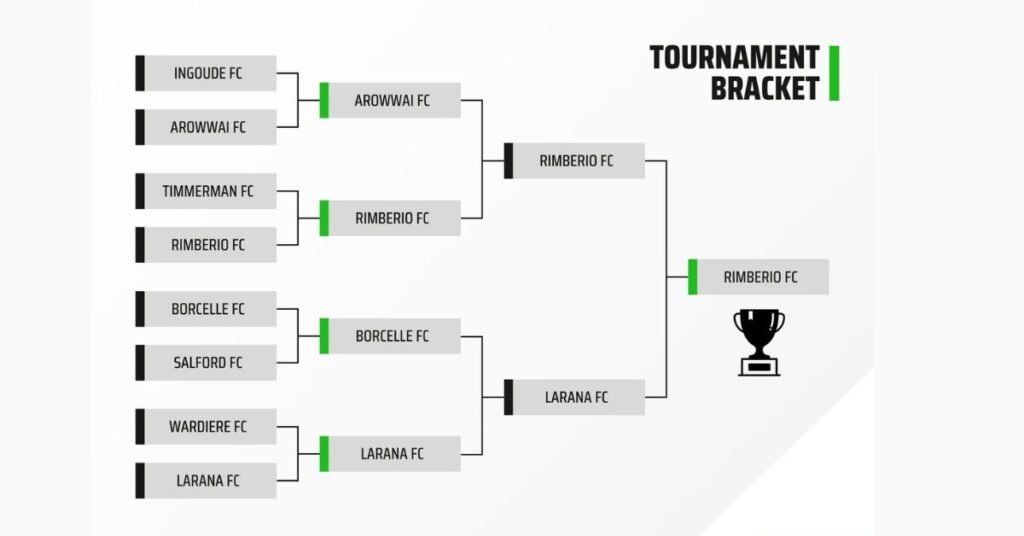
- A “bracket” is basically the tournament roadmap: which teams start where, how they play, and how winners advance.
- In the 2026 edition of the World Cup, there’s an expanded field of 48 teams — up from the usual 32.
- Those 48 teams are split into 12 groups, labeled Group A through L, each containing 4 teams.
- After the group stage, teams advance into a knockout bracket — essentially single-elimination, where losing means elimination.
Think of it as a two-phase journey:
- Group Stage — Everyone plays a few matches to prove themselves.
- Knockout Stage (Bracket) — Survive or go home.
How the Groups and Brackets are Structured (2026 Format)
The Pots & Draw
- Before the draw, all qualified teams (and playoff placeholders) are ranked and placed into four “pots.” There are 12 teams in each pot.
- Pot 1 includes the three host nations (for 2026: USA, Canada, Mexico) plus the top-ranked teams based on the latest world rankings.
- Pots 2, 3, and 4 contain the remaining teams, ordered roughly by ranking or confederation.
- The draw then randomly puts one team from each pot into each group — meaning a mix of stronger and weaker teams in every group.
What happens in the Group Stage
- Each team in a group plays 3 matches — one against each of the other three. ESPN+1
- Points are awarded: usually 3 for a win, 1 for a draw, 0 for loss (standard soccer scoring, though I didn’t re-list that since it’s common sense).
- At the end of all group matches:
- The top two teams from each group advance.
- Plus the eight best third-place teams — because of the expanded 48-team format this tournament will have.
Knockout Stage: The Real Bracket Begins
- After group stage comes the Round of 32, then Round of 16, Quarterfinals, Semifinals, and the Final.
- From this point on, it’s single-elimination: lose and you’re out.
Real-life Example: 2026 World Cup Draw & Bracket Path
- In the 2026 draw, the co-host U.S. Men’s National Team (USA) was placed in Group D, along with Paraguay National Football Team, Australia National Football Team, and a team to be determined from a European playoff.
- That means USA will play three group matches — each against one of those teams — to try and finish top two (or be among the best third-place teams) to advance to the knockout bracket.
- From there, depending on group results across the board, matchups in the Round of 32 will be decided, and the bracket starts to form.
This example shows how a bracket isn’t set in full at the start — it evolves based on group stage outcomes.
Why Brackets (Group + Knockout) Add Value — For Fans and Organizers
- Fair competition with balance: Because each group draws from different “pots,” there’s a mix of strong and modest teams — avoiding “all strong teams in one group.”
- More drama, more matches: The expanded 48-team format plus additional third-place slots means more nations get a shot — and more fans worldwide stay engaged.
- Clarity for fans: A bracket map helps visualize where a team might go, what they need to qualify, and potential matchups. Great for predictions or fantasy pools.
- Flexibility for organizers: They can distribute matches across various stadiums, assign hosts, and handle logistics better — which is important for 2026’s multi-country hosting (USA, Canada, Mexico).
How You Can Use a World Cup Bracket — Step-by-Step Guide
- Get the Official Draw Grid
- Once the draw is done, find a chart listing Group A–L with all four teams in each group. Use any official source or sports news outlet.
- Mark Schedule & Group Matches
- Note down when each group match will happen. Knowing the fixtures helps you plan viewing (or alert friends/family).
- Follow Results and Keep a Table
- After each match, update points, goal differences, etc. This keeps you on top of which teams are likely to qualify.
- Predict or Fill a Bracket Early (Optional)
- Before group matches finish, you can “guess” who’ll advance and chart a full-up bracket. Fun for competition among fans.
- Watch Knockout Phase with the Bracket Map
- Once group stage ends, bracket becomes clearer: see who plays who in Round of 32, Round of 16, etc.
- Update as You Go — It’s Dynamic
- Because third-place teams advance, you’ll sometimes have “unknowns” when bracket is first drawn. Keep updating as group results wrap up.
Tools required:
- Just a pencil or spreadsheet (Google Sheets / Excel works great).
- Optionally, a printed bracket from a trusted site or a PDF.
- A reliable scoreboard or live-result site to update matches quickly.
Common Mistakes to Avoid
- Assuming bracket is final at draw time: Because of third-place team slots and playoffs, many bracket positions remain uncertain until group stage ends.
- Forgetting tiebreakers: Goal difference, goals scored, head-to-head — these decide who advances when teams tie on points. Ignoring these can mess up your predictions.
- Underestimating “underdog” teams: Lower-ranked or playoff-winner teams can surprise — many bracket busts come from underdog upsets.
- Not following match schedules carefully: With lots of teams/stadiums (especially in 2026), time zones and venue scheduling matter — missing a kickoff is easy if you’re not careful.
ALSO READ: When Kids Adopt New Technologies: What Really Happens and How to Guide Them Wisely
When Brackets Are Useful — Real-World Use Cases
- Fan Pools / Bracket Challenges with Friends: Everyone predicts who goes far, and you track it live together.
- Tracking Your Favorite Team’s Path: See who they might face depending on results, helpful for prep or friendly rivalries.
- Fantasy Leagues / Betting Pools (Friendly): Even casual fantasy setups or friendly wagers get structure with clear bracket maps.
- Media or Blogging Coverage: If you’re writing about predictions, matchups, or “what-if” scenarios — a bracket helps to visualise possibilities.
Bracket Format in 2026 vs. Past Tournaments — What’s Changed
- Traditionally, the World Cup had 32 teams, 8 groups of 4, and then straight to Round of 16.
- For 2026, with 48 teams, there are 12 groups (A–L), and after group stage there’s a Round of 32 (instead of Round of 16) because of more qualified teams.
- Also, the inclusion of “best third-place teams” adds extra drama — third places may still advance if their record is good.
This means more matches, more nations, and (possibly) more surprises — perfect for fans and bracket lovers alike.
Key Takeaways
The World Cup bracket is like a giant roadmap: group stage to knockout, from 48 teams to one champion. Understanding how pots, draws, group stages, and knockout rounds work helps you follow the tournament smartly, make predictions, and enjoy the drama with friends — all without getting lost.
For 2026, the expanded format brings more teams, more matches, and more opportunity for upsets — which can make bracket-tracking even more fun.
FAQs
Q: Can a third-place team advance to the knockouts?
Yes — in 2026, after the group stage, the top two teams from each group advance, plus the eight best-performing third-placed teams.
Q: Are the bracket matchups fixed from the start?
Not completely. The group stage determines who advances, and because third-place qualifiers are decided late, some bracket slots remain open until group play finishes.
Q: How are groups decided before the tournament?
Teams are allocated into four pots based on rankings/host status. Then one team from each pot is randomly drawn into each group — that ensures balance (strong vs. modest teams) in each group.
Q: Does the expansion to 48 teams make the tournament unfair?
Not necessarily. The “pots + randomized draw” system helps maintain balance. The expanded format just gives more nations a chance — while preserving competitive fairness.
Final Thoughts — Why Brackets Matter
Whether you’re a seasoned football fan or someone tuning in for the first time in 2026 — understanding the FIFA World Cup bracket transforms the experience. It helps you follow the drama, make predictions with friends, and enjoy every upset and twist with full context.
If you’re excited about the 2026 tournament, I encourage you to print out a blank bracket, invite a few friends, and start your own World Cup challenge. It’s a fun way to stay engaged — and maybe win bragging rights too.

Hannah Price is a digital journalist who covers breaking news, global events, and trending stories with accuracy and speed. She has previously contributed to several online magazines and has built a reputation for verifying facts before publishing. Hannah believes in responsible reporting and aims to present stories in a way that readers can trust.