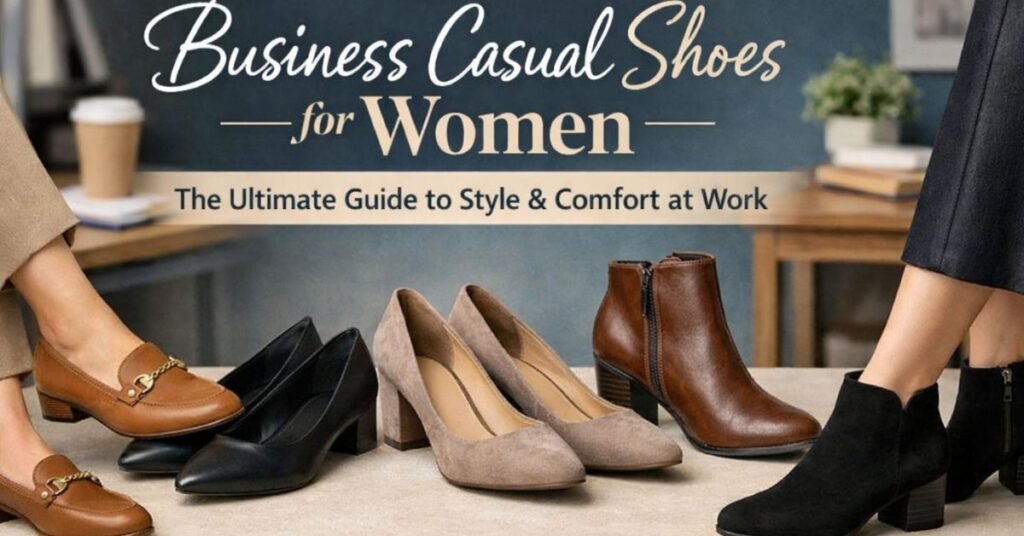
Introduction
If you’ve ever stood in your closet at 7:45 a.m., coffee cooling on the counter, staring at a perfectly good outfit while thinking, “These shoes are going to ruin everything,” you’re not alone. Business casual shoes for women sit right at the crossroads of style, comfort, professionalism, and practicality—and that intersection can feel surprisingly tricky to navigate.
The modern workplace has blurred the lines. We’re no longer choosing between stiff, formal pumps and weekend sneakers. Instead, we’re expected to look polished, approachable, and confident while still being able to walk between meetings, commute, and stand for long stretches without wincing. Shoes carry more weight than most people realize: they ground your outfit, signal professionalism, and quietly affect how you move through your day.
In this guide, we’re going deep—but in a human way. You’ll learn what business casual really means for women today, which shoe styles work best for different offices and lifestyles, how to choose shoes that support your feet (and your confidence), and how to avoid the most common mistakes professionals make. Whether you’re building a work wardrobe from scratch, upgrading tired shoes, or transitioning into a more polished role, this article will help you make smart, stylish choices that last.
What “Business Casual Shoes for Women” Really Means
At its core, business casual shoes for women are the footwear equivalent of a firm but friendly handshake. They’re professional without being rigid, stylish without being flashy, and comfortable without looking sloppy.
Think of business casual as a sliding scale rather than a fixed rule. On one end, you have traditional corporate environments—law offices, finance firms, executive roles—where conservative styles dominate. On the other end, there are creative agencies, tech startups, and hybrid workplaces where personality and comfort play a bigger role. Business casual shoes live in the middle, adapting to context.
A helpful analogy: if formal dress shoes are a tailored blazer and casual shoes are a hoodie, business casual shoes are a structured cardigan. Polished, intentional, but relaxed enough to feel like yourself.
Common traits of true business casual shoes for women include:
- Clean lines and intentional design
- Neutral or muted colors that complement workwear
- Moderate heel heights or supportive flats
- Quality materials like leather, suede, or refined synthetics
- A silhouette that works with trousers, skirts, and dresses
Importantly, business casual doesn’t mean boring. A pointed-toe loafer in soft leather, a block-heel pump in a warm neutral, or a sleek ankle boot can all be appropriate while still expressing personal style.
Understanding this definition is the foundation. Once you grasp why a shoe works in a business casual setting, choosing the right pair becomes far less stressful.
Why Business Casual Shoes Matter More Than You Think
Shoes are often the most underestimated part of a professional outfit, yet they quietly influence everything—from how others perceive you to how your body feels at the end of the day.
First impressions are real. People notice shoes because they signal attention to detail. Scuffed, overly casual, or uncomfortable-looking footwear can subtly undermine an otherwise polished outfit. On the flip side, thoughtfully chosen business casual shoes for women convey competence, reliability, and confidence without saying a word.
There’s also a physical component that’s impossible to ignore. Poorly designed shoes contribute to:
- Foot fatigue and pain
- Knee, hip, and lower-back strain
- Reduced energy and focus by mid-afternoon
When your feet hurt, your posture suffers, your mood dips, and your productivity takes a hit. Comfortable, supportive business casual shoes allow you to move naturally and stay mentally sharp throughout the day.
Then there’s versatility. The right pair of shoes can carry you from:
- Desk work to meetings
- Commute to client lunch
- Office hours to after-work plans
This versatility saves time, money, and mental energy. Instead of owning dozens of niche shoes, you can build a small, intentional rotation that works hard for you.
In short, business casual shoes are not an accessory—they’re infrastructure for your work life.
Core Types of Business Casual Shoes for Women

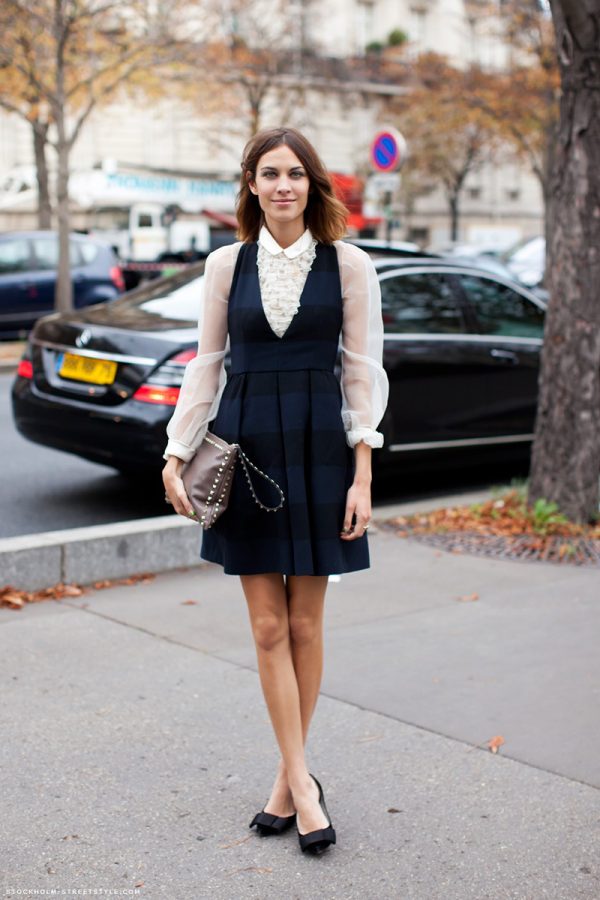

4
Loafers: The Modern Workhorse
Loafers have quietly become one of the strongest contenders in business casual footwear. They’re structured, timeless, and endlessly versatile. A well-made loafer pairs beautifully with tailored trousers, midi skirts, and even ankle-length dresses.
Look for loafers with:
- Cushioned insoles
- Slightly tapered or almond-shaped toes
- Leather uppers that soften over time
Avoid overly chunky soles or excessive hardware if your office leans conservative. In more relaxed environments, textured leather or subtle metallic accents can add personality.
Flats: Comfortable, But Choose Carefully
Flats are a staple, but not all flats qualify as business casual. The key lies in structure. A pointed-toe or almond-toe flat instantly looks more professional than a round, ballet-style shoe with thin soles.
Ideal business casual flats offer:
- Light arch support
- Slight padding
- A firm heel counter
These details prevent the “slipper effect” that makes some flats look too casual for work.
Block-Heel Pumps: Stability Meets Elegance
Block heels strike a near-perfect balance between style and practicality. Unlike stilettos, they distribute weight evenly and provide stability—especially important for long days or lots of walking.
A heel height between 1.5 and 3 inches is typically ideal. This range elongates the leg without straining the foot, making block-heel pumps a reliable choice for presentations, meetings, and formal business casual offices.
Ankle Boots: Seasonal Power Players
Ankle boots shine in fall and winter, adding polish and warmth to business casual outfits. Sleek silhouettes with low to mid heels work best. Look for boots that sit snugly around the ankle to avoid bunching with trousers.
Smooth leather ankle boots in black, brown, or taupe can easily replace pumps during colder months without sacrificing professionalism.
How to Choose the Right Business Casual Shoes Step by Step
Selecting the right business casual shoes for women isn’t about following trends—it’s about understanding your needs and environment. Here’s a practical, repeatable process.
Step 1: Assess Your Workplace Culture
Start by observing what respected colleagues wear. Notice heel heights, colors, and materials. This gives you a real-world benchmark that’s far more useful than a vague dress code.
Step 2: Prioritize Fit and Comfort
Always try shoes on at the end of the day when your feet are slightly swollen. Walk around, stand still, and notice pressure points. If a shoe feels “almost comfortable,” it won’t magically improve after eight hours.
Step 3: Choose Versatile Colors
Neutral tones maximize outfit compatibility. The most versatile options include:
- Black
- Nude or beige
- Navy
- Dark brown
- Taupe or gray
Once you have basics covered, you can add subtle statement colors like burgundy or forest green.
Step 4: Inspect Materials and Construction
Quality materials breathe better, age more gracefully, and support your feet. Genuine leather or high-quality vegan alternatives are worth the investment.
Step 5: Test Real-Life Scenarios
Before committing, imagine a full workday. Can you walk a few blocks? Stand during a presentation? Sit comfortably without pressure? If the answer isn’t yes across the board, keep looking.
Tools, Brands, and Shopping Strategies That Actually Help

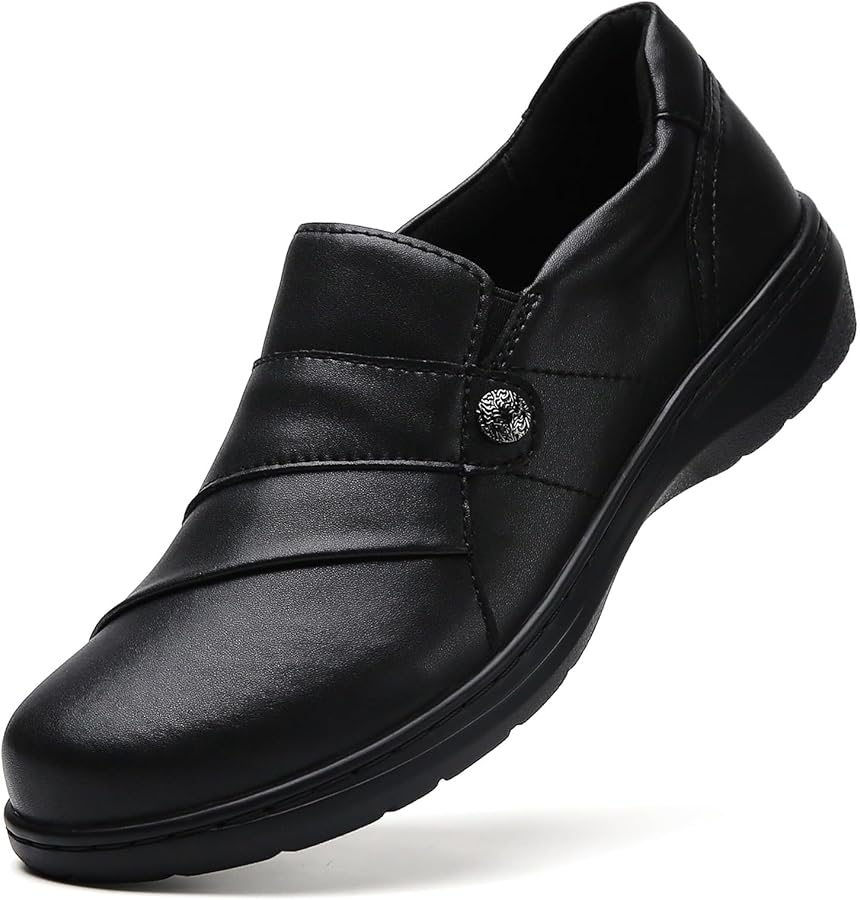

4
When shopping for business casual shoes, knowing where—and how—to look makes all the difference.
Many professionals gravitate toward brands known for balancing comfort and polish, such as Clarks, Cole Haan, Naturalizer, and Ecco. These brands often incorporate cushioning, arch support, and flexible soles into office-appropriate designs.
When comparing options:
Free or budget-friendly shoes often look good initially but may lack long-term comfort and durability. Paid or premium options typically offer better materials, foot support, and longevity, which can save money over time.
Smart shopping tips include:
- Reading reviews that mention all-day wear
- Checking return policies for at-home testing
- Rotating shoes to extend lifespan
A small, well-chosen collection beats a crowded closet every time.
Common Mistakes Women Make with Business Casual Shoes (and How to Fix Them)
One of the most common mistakes is prioritizing appearance over comfort. Shoes that look great but hurt by noon will eventually sabotage your productivity and posture. The fix is simple: never compromise on fit, no matter how attractive the design.
Another frequent error is drifting too casual. Sneakers, flip-flops, or worn-out flats often creep into business casual wardrobes, especially in relaxed offices. The solution is choosing structured alternatives that feel just as comfortable but look intentional.
Wearing shoes that clash with outfits is another issue. Extremely trendy shoes can overpower classic workwear. Balance bold shoes with simple outfits, or keep shoes neutral and let clothing carry the style.
Finally, neglecting maintenance undermines even the best shoes. Regular cleaning, polishing, and resoling can dramatically extend lifespan and keep shoes looking professional.
Conclusion: Building Confidence From the Ground Up
Business casual shoes for women are more than a dress-code checkbox—they’re a daily tool that supports how you work, move, and feel. The right pair offers quiet confidence, physical comfort, and effortless versatility. When your shoes work with you instead of against you, everything else falls into place more easily.
Start with understanding your environment, invest in quality over quantity, and listen to your body. Over time, you’ll build a footwear lineup that feels uniquely yours—polished, practical, and powerful.
If you’ve ever underestimated the impact of good shoes, consider this your sign to step differently. Your feet—and your confidence—will thank you.
FAQs
Are flats considered business casual shoes for women?
Yes, as long as they are structured, clean, and made from quality materials. Pointed-toe flats generally look more professional than rounded styles.
Can I wear low heels every day?
Absolutely. Block heels and low pumps are designed for daily wear and often provide better support than completely flat shoes.
Are ankle boots acceptable in business casual offices?
In most modern offices, yes—especially during fall and winter. Stick to sleek designs with moderate heels.
How many pairs of business casual shoes should I own?
Most women do well with four to six versatile pairs that rotate throughout the week.
Do business casual shoes need to be leather?
Leather is preferred for durability and polish, but high-quality vegan alternatives can work just as well.

Michael Grant is a business writer with professional experience in small-business consulting and online entrepreneurship. Over the past decade, he has helped brands improve their digital strategy, customer engagement, and revenue planning. Michael simplifies business concepts and gives readers practical insights they can use immediately.