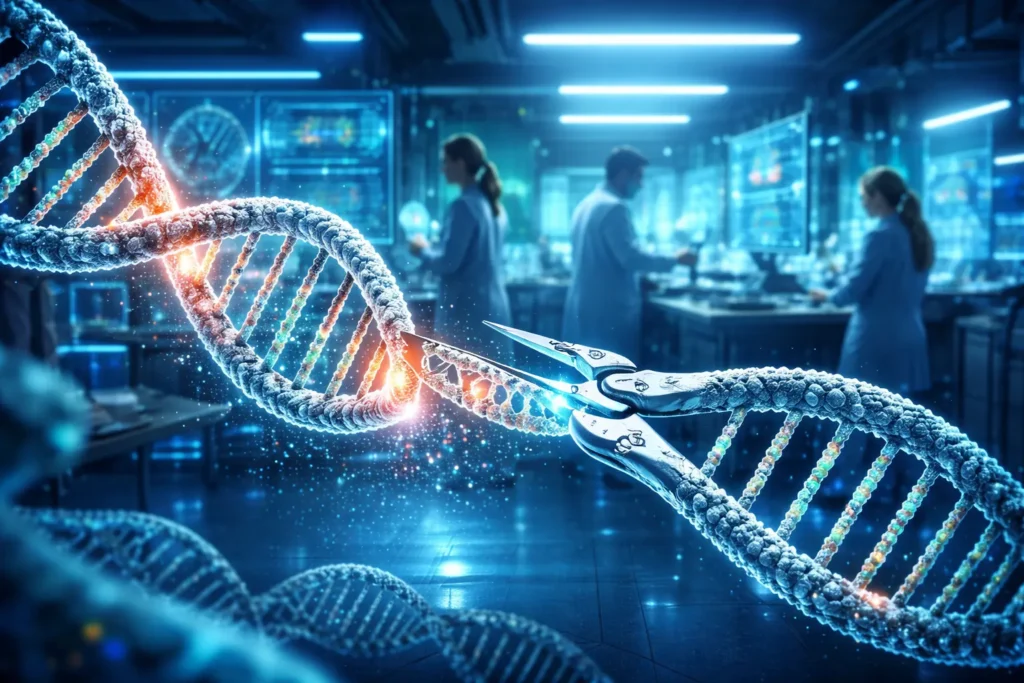
In the span of just over a decade, CRISPR has transformed from an obscure curiosity in bacterial biology to one of the most powerful and consequential technologies ever developed. For the first time in history, scientists possess a tool precise enough to locate a single sentence in the three-billion-letter instruction manual of human life and rewrite it—quickly, cheaply, and with remarkable accuracy.
CRISPR Technology, which stands for Clustered Regularly Interspaced Short Palindromic Repeats, is a natural defense mechanism found in bacteria. Scientists have repurposed it into a genome engineering platform that is reshaping medicine, agriculture, diagnostics, and our understanding of life itself. From curing previously untreatable genetic diseases to engineering drought-resistant crops, the applications of CRISPR technology are vast and still expanding.
This guide is designed to take you from the fundamental biology of CRISPR to its cutting-edge frontiers. Whether you are a curious newcomer or a seasoned researcher, you will find a comprehensive, accurate, and forward-looking account of everything CRISPR.What is CRISPR? From Bacterial Defense to Biotech Breakthrough
The Origin Story: A Bacterial Immune System
Long before CRISPR became a household name in biotechnology, it was doing quiet but vital work inside bacteria and archaea. In 1987, Japanese scientist Yoshizumi Ishino first noticed a strange pattern of repeated DNA sequences in bacteria—sequences he did not fully understand at the time. It would take nearly two more decades for the scientific community to recognize what these sequences represented.
In the early 2000s, Spanish microbiologist Francisco Mojica proposed a bold hypothesis: these repetitive sequences, interspaced with unique “spacer” sequences, were remnants of past viral infections. Bacteria, he argued, were using these sequences as a kind of molecular memory card—storing snippets of viral DNA so they could recognize and destroy the same virus if it attacked again. This was, in essence, an adaptive immune system for bacteria.
The mechanism works as follows: when a bacterium survives a viral infection, it captures a short piece of the virus’s genetic material and inserts it between the CRISPR repeats in its own genome. If the same virus attacks again, the bacterium transcribes this stored sequence into a CRISPR RNA (crRNA). This RNA acts as a guide, directing a Cas (CRISPR-associated) protein to scan incoming DNA for a matching sequence. When found, the Cas protein cleaves the viral DNA, neutralizing the threat.
The Nobel-Winning Discovery
The pivotal leap from bacterial biology to biotech tool came in 2012. Biochemist Jennifer Doudna at UC Berkeley and microbiologist Emmanuelle Charpentier, then at the University of Vienna, published a landmark paper in Science demonstrating that the CRISPR-Cas9 system could be programmed with a custom guide RNA to cut any DNA sequence of their choosing—in a test tube. They also simplified the system by combining two RNA molecules into a single synthetic guide RNA (sgRNA), making it far easier to work with.
The following year, in 2013, Feng Zhang at the Broad Institute and George Church at Harvard independently demonstrated that CRISPR-Cas9 could edit genes inside living human and mouse cells—a monumental proof of concept. The race to develop CRISPR as a practical tool accelerated almost overnight.
In 2020, Doudna and Charpentier were awarded the Nobel Prize in Chemistry for their discovery, becoming the first all-female duo to share the prize. The Nobel Committee described CRISPR as a tool that had “taken the life sciences into a new epoch.” The journey from a bacterial curiosity to a Nobel Prize in under a decade stands as one of the most astonishing accelerations in scientific history.
How CRISPR-Cas9 Works: The Molecular Machinery
The Key Components
The CRISPR-Cas9 system requires just two major components to perform gene editing, which is part of what makes it so elegantly simple compared to earlier technologies.
The first component is Cas9, a large protein that functions as a pair of molecular scissors. Cas9 is an endonuclease—an enzyme capable of cutting both strands of a DNA double helix. On its own, Cas9 is essentially “blind”—it cannot find a specific gene among the billions of base pairs in a genome without help.
The second component is the guide RNA (gRNA), specifically the single-guide RNA (sgRNA)—the simplified, synthetic version created by Doudna and Charpentier. This short RNA molecule, typically around 100 nucleotides long, has two functional regions. A scaffold region binds to Cas9 and holds the complex together. A spacer region—roughly 20 nucleotides—is programmed by the scientist to match the target DNA sequence. Think of the sgRNA as a GPS address label attached to the molecular scissors: it tells Cas9 exactly where to cut.
The Cutting Mechanism: Finding the Right Spot
The Cas9-sgRNA complex travels through the cell’s nucleus, scanning the genome for a DNA sequence that matches the guide RNA’s spacer. But it has an additional requirement before it can bind and cut: it needs to find a short DNA motif called the Protospacer Adjacent Motif, or PAM.
For the most commonly used Cas9 (from the bacterium Streptococcus pyogenes, or SpCas9), the PAM sequence is NGG (where N is any nucleotide). This sequence must be located immediately adjacent to the target site in the genome. The PAM serves as a molecular “checkpoint”—it originated as a way to prevent Cas9 from cutting the bacterium’s own CRISPR array, and it now serves as a necessary anchor for genome editing.
Once the complex locates a matching sequence with the correct PAM, the sgRNA hybridizes to the complementary DNA strand, and Cas9 changes shape to grip the DNA. Two catalytic domains within Cas9—RuvC and HNH—then each cleave one strand of the DNA double helix, creating what is known as a double-strand break (DSB) at a very precise location.
The Cell’s Repair: NHEJ vs. HDR
A double-strand break is a serious form of DNA damage, and cells have evolved sophisticated machinery to repair it. Scientists exploit these repair pathways to achieve different editing outcomes. There are two primary pathways of relevance.
Non-Homologous End Joining (NHEJ): This is the cell’s default, rapid repair pathway. It simply glues the two broken ends back together. However, NHEJ is error-prone: the process frequently introduces small insertions or deletions of nucleotides (called “indels”) at the break site. If the break occurs within a gene’s coding sequence, these indels often disrupt the gene’s reading frame, effectively knocking it out or destroying its function. NHEJ is therefore used when the goal is to inactivate or “knock out” a gene.
Homology-Directed Repair (HDR): If a DNA template with sequences matching the flanking regions of the break is provided along with the CRISPR components, the cell can use it as a blueprint to repair the break accurately. This allows scientists to make precise corrections (fixing a disease-causing mutation) or insertions (adding a new gene). HDR is more precise but less efficient, occurring primarily in dividing cells. It is the pathway used for therapeutic applications like correcting the mutations underlying sickle cell disease.
Beyond Cas9: The Expanding CRISPR Technology Toolbox
CRISPR-Cas9 was just the beginning. Researchers have discovered dozens of other Cas proteins, engineered modified versions of Cas9, and developed entirely new classes of genome-editing tools based on the CRISPR framework. The field has evolved so rapidly that it is now common to speak of “CRISPR 1.0” and “CRISPR 2.0.”
Cas12a (Cpf1) and Cas13: Different Scissors for Different Jobs
Cas12a, originally called Cpf1, was identified as a CRISPR effector protein with several properties distinct from Cas9. It uses a T-rich PAM (TTTV) on the 5′ side of the target sequence, expanding the range of editable genomic sites. Unlike Cas9, which creates blunt cuts, Cas12a creates staggered cuts with short single-stranded overhangs, which can be advantageous for certain types of precise insertion. Cas12a also has a useful secondary “collateral cleavage” activity: once it cleaves its target, it indiscriminately degrades nearby single-stranded DNA. This property has been harnessed for diagnostic applications.
Cas13 is fundamentally different from both Cas9 and Cas12a in that it targets RNA rather than DNA. This makes it valuable for studying gene expression and for therapeutic applications where reducing a gene’s messenger RNA output is preferable to permanently editing the DNA. Like Cas12a, Cas13 has a collateral cleavage activity (against RNA) that has been exploited for diagnostic tools such as SHERLOCK (Specific High-sensitivity Enzymatic Reporter unLOCKing), capable of detecting specific RNA sequences from pathogens like influenza or SARS-CoV-2 at attomolar concentrations.
The table below summarizes key differences between the major Cas proteins:
| Property | Cas9 | Cas12a | Cas13 | Best For |
| Target | DNA | DNA | RNA | Cas9/Cas12a for gene editing; Cas13 for RNA knockdown |
| PAM Sequence | NGG (3′) | TTTV (5′) | None required | Cas13 has broadest targeting |
| Cut Type | Blunt ends | Staggered/sticky | No DNA cut | Cas12a may improve HDR |
| Guide RNA | Single sgRNA | crRNA only | crRNA | Cas9 simplest to design |
| Key Use | Gene editing | Diagnostics/editing | RNA targeting/diagnostics | — |
Nickases and Dead Cas9 (dCas9): Precision Without the Cut
Scientists have engineered modified versions of Cas9 that dramatically expand the CRISPR toolkit. A Cas9 nickase (Cas9n) has one of its two cutting domains inactivated, so it cuts only one strand of the DNA double helix instead of both. Using two Cas9 nickases directed to adjacent sites on opposite strands creates a staggered DSB while requiring two simultaneous guide RNA matches—greatly reducing the probability of off-target cutting.
An even more radical modification yields “dead Cas9” or dCas9, in which both cutting domains are inactivated. dCas9 can still bind to a specific DNA sequence (guided by its sgRNA) but cannot cut it. This transforms Cas9 from a pair of scissors into a programmable, sequence-specific DNA anchor—a platform for recruiting virtually any other protein or functional domain to any location in the genome. This insight spawned an entire family of next-generation CRISPR tools.
CRISPR Activation and Interference (CRISPRa/CRISPRi)
By fusing dCas9 to transcriptional activators—proteins that boost gene expression—researchers can selectively turn up the activity of any chosen gene without altering the DNA sequence itself. This is known as CRISPR Activation (CRISPRa). Common activator domains include VP64 (four copies of the viral VP16 domain), VPR (a tripartite activator), and the SunTag and SAM systems, which recruit multiple activator molecules for stronger effects.
Conversely, fusing dCas9 to transcriptional repressors silences gene expression. This CRISPR Interference (CRISPRi) approach can achieve potent gene knockdown comparable to RNA interference (RNAi) but with greater specificity and durability. CRISPRa and CRISPRi are invaluable tools for functional genomics—enabling scientists to study what happens when a gene is turned up or down without permanently editing it.
Epigenetic Editing
Epigenetic modifications—chemical marks on DNA or its associated histone proteins—control gene expression without changing the underlying DNA sequence. DNA methylation, in particular, is associated with long-term gene silencing. By fusing dCas9 to epigenetic enzymes, scientists can now write or erase these marks at specific genes.
For example, fusing dCas9 to TET1 (a demethylase enzyme) allows researchers to remove methyl groups from specific regions of DNA, thereby reactivating silenced genes. Conversely, fusing dCas9 to methyltransferases adds methyl marks to silence genes. Epigenetic editing is particularly exciting because the changes can be heritable through cell division, offering the potential for long-lasting therapeutic effects without permanently altering the genetic code.
Base Editing
Base editing, pioneered by David Liu’s laboratory at the Broad Institute, uses a Cas9 nickase fused to a chemical editing enzyme to directly convert one DNA base into another. The first base editors converted cytosine (C) to uracil, which is read by the cell as thymine (T)—effectively a C-to-T (or G-to-A) edit. Later, adenine base editors were developed, enabling A-to-G (or T-to-C) edits. Together, these cover a large proportion of known disease-causing point mutations.
The crucial advantage of base editing is that it achieves precise single-base changes without creating a double-strand break, avoiding the indel-generating NHEJ pathway and reducing the risk of unintended chromosomal rearrangements. Base editing has already shown therapeutic promise in early clinical trials for conditions like high cholesterol and sickle cell disease.
Prime Editing
Described as a “search and replace” function for the genome, prime editing (also from David Liu’s lab, 2019) represents perhaps the most versatile CRISPR-based editing system yet developed. A prime editor consists of a Cas9 nickase fused to a reverse transcriptase enzyme, guided by an extended RNA molecule called a prime editing guide RNA (pegRNA). The pegRNA both specifies the target site and carries the sequence of the desired edit encoded in an RNA template.
The nick in one DNA strand created by Cas9n allows the pegRNA to hybridize and the reverse transcriptase to write the new sequence directly into the DNA. Prime editing can achieve all 12 types of point mutations, small insertions, small deletions, and combinations thereof—all without requiring a DSB or an external DNA template. It has a smaller safety concern around indel formation than traditional CRISPR and represents a major advance for correcting complex or diverse mutations.
Major Applications of CRISPR Technology
Transforming Medicine: Gene and Cell Therapy
The most anticipated application of CRISPR is in human medicine—specifically, curing genetic diseases caused by mutations in a patient’s DNA. In December 2023, the FDA approved Casgevy (exa-cel), a CRISPR-based therapy developed by Vertex Pharmaceuticals and CRISPR Therapeutics. Casgevy is the world’s first approved CRISPR medicine, designed to treat sickle cell disease and transfusion-dependent beta-thalassemia. The therapy works ex vivo: a patient’s own blood stem cells are extracted, edited with CRISPR to reactivate fetal hemoglobin production (which compensates for the defective adult hemoglobin), and then reinfused. Clinical trial data showed that the vast majority of patients achieved freedom from severe pain crises—a potentially curative outcome for diseases that previously had few good options.
Beyond sickle cell disease, CRISPR is being explored in clinical trials for a wide range of conditions. In oncology, CRISPR is being used to engineer CAR-T cells—immune cells extracted from patients, edited to better recognize and attack tumors, and reinfused. CRISPR is also being investigated for HIV (editing the CCR5 receptor to prevent infection), Duchenne muscular dystrophy (exon skipping to produce a functional form of dystrophin), inherited retinal diseases (in vivo delivery to the eye), and familial transthyretin amyloidosis (liver-targeted knockdown of the TTR gene).
The field is also advancing delivery methods. Ex vivo editing (outside the body) is currently more mature, but in vivo delivery—getting CRISPR components directly into target tissues—is accelerating through improved viral vectors (particularly adeno-associated viruses, or AAVs) and lipid nanoparticles (LNPs), the same delivery vehicle used in mRNA COVID-19 vaccines.
Advancing Biological Research
Long before CRISPR reached the clinic, it revolutionized basic science. The ability to quickly and inexpensively knock out, knock in, or regulate virtually any gene has transformed how researchers study biology. Creating mouse models of human diseases that once took years of laborious work can now be accomplished in weeks. Generating panels of cells with defined mutations allows drug developers to screen thousands of compounds against disease-relevant targets.
Genome-wide CRISPR screens—in which a library of guide RNAs systematically disrupts every gene in a cell population—have become a standard tool for identifying which genes are essential for a given cellular process, which genes are required for a pathogen to infect cells, or which genes, when lost, cause cells to become resistant or sensitive to a drug. These functional genomics approaches have accelerated the identification of therapeutic targets across cancer biology, infectious disease, neurodegeneration, and beyond.
Revolutionizing Agriculture and Food
Agriculture stands to be profoundly affected by CRISPR, which offers a path to crop improvements that traditional breeding cannot achieve quickly enough to meet 21st-century challenges. CRISPR-edited crops do not always involve the insertion of foreign DNA, which has led some regulators (including in the United States) to treat them differently from conventional GMOs.
Notable agricultural applications already in development or approved include a high-oleic soybean with a healthier fat profile, hornless cattle engineered by editing a single gene (eliminating a painful and dangerous livestock management practice), wheat with reduced gluten content, and tomatoes and bananas engineered for extended shelf life. Researchers are also working on crops with enhanced drought resistance, disease tolerance, and nutritional profiles—improvements that could be critical for food security in a warming world.
Building the Future of Biotech and Diagnostics
CRISPR’s reach extends well beyond medicine and agriculture. In industrial biotechnology, CRISPR is being used to engineer microorganisms for more efficient production of biofuels, biodegradable plastics, pharmaceutical intermediates, and flavor compounds. The precision of CRISPR allows metabolic engineers to fine-tune complex microbial pathways in ways that were previously impractical.
In diagnostics, the collateral cleavage activities of Cas12a and Cas13 have been converted into powerful detection platforms. SHERLOCK (using Cas13) and DETECTR (using Cas12a) can identify the presence of a specific pathogen’s nucleic acid sequence at very low concentrations—in some cases, matching the sensitivity of PCR. During the COVID-19 pandemic, DETECTR-based tests were authorized for emergency use as rapid, low-cost alternatives to laboratory PCR. These platforms are also being developed for diagnosing HPV, Zika virus, dengue fever, and bacterial infections in low-resource settings.
The Challenges and Ethical Considerations
Technical Hurdles: Safety, Specificity, and Delivery
Despite its remarkable capabilities, CRISPR is not yet a perfect technology. The most significant technical concerns are off-target effects and delivery.
Off-target effects refer to unintended edits at genomic locations that share sequence similarity with the intended target. While guide RNAs are designed to be specific, the binding can be imperfect—particularly if multiple mismatches are tolerated. An off-target edit in or near an oncogene, for instance, could in theory trigger cancer. The field has made substantial progress in addressing this through improved guide RNA design algorithms, high-fidelity Cas9 variants engineered to have stricter binding requirements, and next-generation tools like base editing and prime editing that avoid DSBs altogether. Critically, methods for detecting off-target events have also advanced significantly, allowing researchers to profile the entire genome after editing.
Mosaicism—the situation in which only some cells in an organism are edited, while others are not—is another challenge, particularly when editing early embryos. Non-mosaic editing, where all target cells are edited uniformly, is generally required for therapeutic efficacy.
Delivery remains one of the largest practical barriers to in vivo CRISPR therapy. Getting the right amount of Cas9 and guide RNA into the right cells of a living patient without causing immune reactions or off-target exposure to non-target tissues requires sophisticated engineering. Current approaches include AAV vectors (effective but with limited cargo capacity and potential immunogenicity), LNPs (effective for liver delivery), and emerging non-viral methods such as electroporation and ribonucleoprotein complexes.
The Ethical Debate: Germline Editing and the Future of Human Genetics
The most profound ethical questions in CRISPR research surround germline editing—modifying the DNA of eggs, sperm, or early embryos in ways that would be inherited by all future generations. This is fundamentally different from somatic cell editing (editing non-reproductive cells in a living patient), where changes affect only that individual and cannot be passed on.
Germline editing was thrust into global consciousness in November 2018 when Chinese scientist He Jiankui announced the birth of twin girls whose embryos he had edited using CRISPR to disrupt the CCR5 gene—theoretically conferring resistance to HIV. The announcement was met with near-universal condemnation from the scientific community. The editing was deemed premature, medically unjustifiable (the girls were not at elevated HIV risk), and conducted without adequate oversight or transparency. He Jiankui was subsequently convicted of illegal medical practice and sentenced to prison by Chinese authorities.
The incident underscored the urgent need for a coherent global governance framework for human germline editing. Scientific bodies including the World Health Organization (WHO), the National Academies of Sciences, Engineering, and Medicine, and an international commission on heritable human genome editing have all recommended that clinical uses of germline editing proceed only after much more research, broad societal consensus, and robust regulatory mechanisms are in place. The concern extends beyond individual safety to deeper questions: Who decides what constitutes a “disease” worth editing out versus a “trait” worth preserving? Could germline editing, if widely available, exacerbate social inequality? These are questions that science alone cannot answer.
Meanwhile, somatic cell therapies like Casgevy continue to advance through normal regulatory channels, and the scientific community broadly agrees that these applications—where only the treated patient is affected—can proceed with appropriate oversight and patient consent.
Key Milestones in CRISPR History
- 1987 — Yoshizumi Ishino observes unusual repetitive sequences in bacterial DNA (origin of CRISPR).
- 2005 — Francisco Mojica and colleagues publish the adaptive immunity hypothesis, linking CRISPR to viral defense.
- 2011 — Charpentier’s lab identifies the role of tracrRNA in CRISPR systems.
- 2012 — Doudna and Charpentier demonstrate that Cas9 can be programmed with a synthetic sgRNA to cut any target DNA in vitro (landmark Science paper).
- 2013 — Feng Zhang (Broad Institute) and George Church (Harvard) independently demonstrate CRISPR editing in human and mouse cells.
- 2015 — International Summit on Human Gene Editing convenes; scientists call for moratorium on clinical germline editing.
- 2018 — He Jiankui announces the birth of CRISPR-edited twin girls; worldwide condemnation follows.
- 2019 — David Liu’s lab describes prime editing.
- 2020 — Jennifer Doudna and Emmanuelle Charpentier win the Nobel Prize in Chemistry. COVID-19 diagnostics using CRISPR (DETECTR) receive emergency authorization.
- 2023 — FDA approves Casgevy, the world’s first CRISPR-based medicine, for sickle cell disease and beta-thalassemia.
CRISPR vs. Earlier Genome Editing Tools
CRISPR was not the first genome editing technology, but it rapidly displaced its predecessors due to its ease of use, low cost, and flexibility. The table below compares CRISPR-Cas9 with Transcription Activator-Like Effector Nucleases (TALENs) and Zinc Finger Nucleases (ZFNs), the two dominant tools before CRISPR’s emergence.
| Feature | CRISPR-Cas9 | TALENs | ZFNs |
| Design Complexity | Low (RNA-based) | Moderate (protein) | High (protein) |
| Cost | Low | Moderate | High |
| Editing Speed | Weeks | Months | Months |
| Specificity | High (improving) | High | Moderate |
| Multiplexing | Easy | Difficult | Very difficult |
| Off-target Risk | Moderate (improvable) | Lower | Higher |
faqs
Is CRISPR the same as gene therapy?
Not exactly, though the terms are related. Gene therapy is a broad category of medical treatments that aim to treat or prevent disease by altering genes. CRISPR is a specific tool—a molecular editing system—that can be used to perform gene therapy. Other forms of gene therapy exist, such as introducing viral vectors that add functional copies of a gene without editing the existing genome. When CRISPR is used therapeutically to correct a disease-causing mutation, it is a form of gene therapy.
What is the difference between CRISPR-Cas9 and CRISPR-Cas12a (Cpf1)?
Both are CRISPR systems that cut DNA, but they differ in several ways. Cas9 requires a G-rich PAM (NGG) on the 3′ side of the target and creates blunt-ended cuts. Cas12a requires a T-rich PAM (TTTV) on the 5′ side and creates staggered cuts with short single-stranded overhangs. Cas12a also processes its own crRNA (it does not need tracrRNA) and has collateral single-stranded DNA cleavage activity, making it useful for diagnostics. Cas9 is generally simpler to use for most editing applications, while Cas12a opens up different target sites and has advantages in some diagnostic platforms.
What are off-target effects and how serious are they?
Off-target effects are unintended edits at genomic locations that are similar to the intended target sequence. Because Cas9 can tolerate some degree of mismatch between the guide RNA and its target, it can occasionally cut at the wrong place. The severity depends on where these cuts occur: an off-target edit in a non-coding region may have no consequence, while one in a tumor-suppressor gene could be dangerous. The field has developed high-fidelity Cas9 variants, improved guide RNA design tools, and sensitive genome-wide methods for detecting off-target events. Next-generation tools like base editing and prime editing, which do not create double-strand breaks, significantly reduce (though do not eliminate) off-target risks.
Has CRISPR been used in human patients?
Yes, CRISPR has been used in numerous clinical trials. The most successful to date is for sickle cell disease and beta-thalassemia, which led to the 2023 FDA approval of Casgevy—the first licensed CRISPR therapy. Clinical trials are also ongoing for various cancers, HIV, muscular dystrophy, and inherited retinal diseases, among others. In addition, the controversial germline editing by He Jiankui in 2018 (editing human embryos that were brought to term) was conducted in humans, but it was widely condemned and is not considered ethical or authorized research.
What is the future of CRISPR?
The near-term future will likely see more CRISPR therapies gaining regulatory approval, particularly for blood disorders, liver diseases, and some cancers. In vivo delivery technologies are improving rapidly, which will expand the range of treatable conditions. Base editing and prime editing are entering clinical trials and may eventually offer more precise and safer alternatives to nuclease-based editing for many applications. In the longer term, epigenetic editing could enable treatments that regulate genes without altering DNA sequences—potentially with reversible effects. CRISPR diagnostics are expected to become faster, cheaper, and more widely deployable, particularly in resource-limited settings. In agriculture, an increasing number of CRISPR-edited crops will reach consumers.
Why did CRISPR win the Nobel Prize?
The Nobel Prize in Chemistry 2020 was awarded to Jennifer Doudna and Emmanuelle Charpentier for developing CRISPR-Cas9 into a precise, programmable gene editing tool. The Nobel Committee recognized that their 2012 discovery—showing that a bacterial immune system could be repurposed with a synthetic guide RNA to cut any target DNA—had fundamentally transformed life sciences. It provided researchers with a tool of extraordinary power and simplicity, enabling discoveries in basic science and opening pathways to entirely new classes of medicine. The prize acknowledged not just a technical achievement but a paradigm shift in how humans can interact with the genetic code of living organisms.
What does PAM stand for and why does it matter?
PAM stands for Protospacer Adjacent Motif. It is a short DNA sequence (for SpCas9, typically NGG) that must be located immediately next to the target site for Cas9 to bind and cut. The PAM requirement evolved in bacteria to prevent Cas9 from cutting the bacteria’s own CRISPR array, which also contains sequences matching viral spacers. For researchers, the PAM is both a constraint (target sites must have an adjacent PAM) and a feature that ensures specificity—Cas9 will not cut a site unless the PAM is present. Different Cas proteins have different PAM requirements, and engineering PAM-flexible Cas9 variants has been an active area of research to expand the range of editable sites.
Conclusion: A Technology That Is Rewriting the Future
CRISPR technology has traversed an extraordinary arc: from a puzzling pattern in a bacterium’s DNA to a Nobel Prize-winning toolkit for rewriting the genetic code of living organisms. In less than fifteen years, it has moved from laboratory curiosity to FDA-approved medicine, from a research novelty to an agricultural tool, from a basic science instrument to a rapid pathogen-detection platform.
What makes CRISPR so remarkable is not just its power, but its accessibility. Unlike the expensive, slow, and technically demanding genome editing tools that preceded it, CRISPR is relatively inexpensive and can be implemented in virtually any molecular biology laboratory. This democratization of genome engineering has accelerated scientific progress on a global scale, enabling research that would have been unthinkable a generation ago.
Yet the technology arrives with profound responsibilities. The same precision that allows a CRISPR therapy to correct a life-threatening mutation in a patient’s cells could theoretically be used to make heritable changes to the human germline—changes that would ripple through all future generations. The scientific community, policymakers, and the public must together navigate the ethical terrain that these capabilities open up.
The next chapter of CRISPR is already being written. Base editing and prime editing are entering clinical trials. Epigenetic editing promises gene regulation without altering DNA. Improved delivery methods are bringing CRISPR to tissues and organs once out of reach. And a new generation of Cas proteins continues to be discovered and engineered, each adding new dimensions to what is possible.
We stand at the beginning of the age of genome engineering. CRISPR has handed humanity an extraordinary set of tools. What we build with them is the question that will define generations to come.

Adrian Cole is a technology researcher and AI content specialist with more than seven years of experience studying automation, machine learning models, and digital innovation. He has worked with multiple tech startups as a consultant, helping them adopt smarter tools and build data-driven systems. Adrian writes simple, clear, and practical explanations of complex tech topics so readers can easily understand the future of AI.