If you’ve ever watched Back to the Future, there’s a good chance the phrase flux capacitor instantly triggers a mix of excitement, curiosity, and nostalgia. Maybe you remember the first time Doc Brown shouted, “It’s what makes time travel possible!” Or maybe you’ve heard the term referenced online, in memes, tech jokes, or pop-culture conversations and wondered, What exactly is a flux capacitor… and why does it matter so much?
The fluxcapacitor isn’t just a fictional gadget. It has become a cultural symbol — a shorthand for innovation, imagination, and humanity’s endless fascination with bending time itself. Even decades after its debut, people still search for the flux capacitor, debate how it works, build replicas, and use it as a metaphor in science, engineering, marketing, and storytelling.
In this guide, I’ll walk you through everything you need to know about the fluxcapacitor — from its origins and explanation to its benefits, use cases, real-world inspirations, step-by-step breakdowns, tools, common misconceptions, and why it remains relevant today. Whether you’re a movie fan, a curious learner, a science enthusiast, or a creator looking for inspiration, you’ll leave with a deeper understanding and plenty of practical insights.
What Is a Flux Capacitor? A Beginner-Friendly Explanation
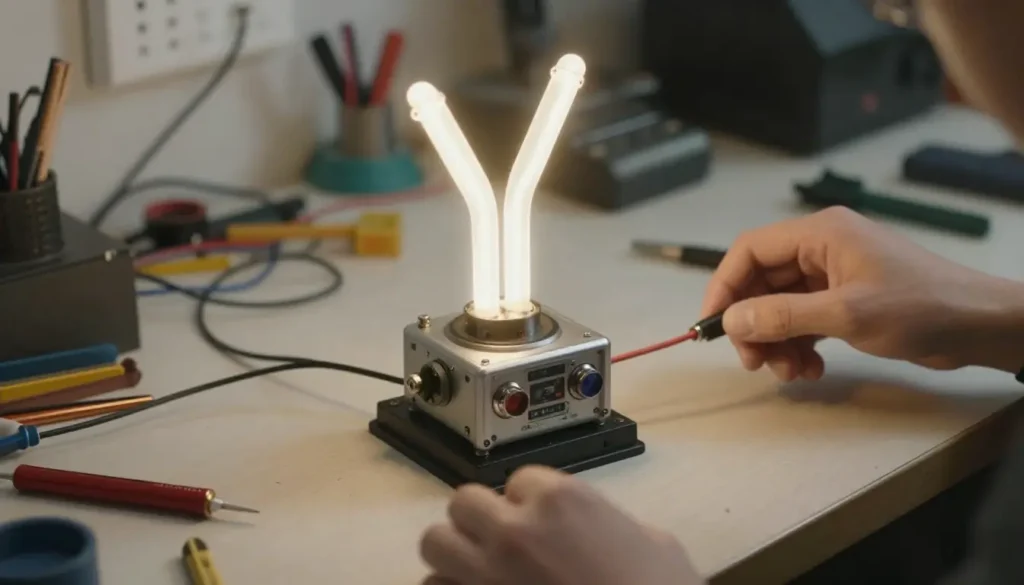
At its core, the flux capacitor is a fictional device introduced in the 1985 film Back to the Future. According to the movie, it’s the key component that enables time travel when installed in a vehicle capable of reaching 88 miles per hour and supplied with enough energy — famously 1.21 gigawatts.
But let’s slow that down and make it relatable.
Think of the fluxcapacitor like the engine of time travel. Just as a car engine converts fuel into motion, the flux capacitor converts immense energy into temporal displacement — moving an object from one point in time to another. Without it, the DeLorean is just a stylish car. With it, the car becomes a time machine.
Visually, the fluxcapacitor is shown as a Y-shaped device with three glowing tubes pulsing energy. This design wasn’t random. It was intentionally mysterious, futuristic, and slightly incomprehensible — much like real advanced technology often feels to non-experts.
What makes the flux capacitor so memorable isn’t scientific accuracy, but believability. It sounds technical enough to feel plausible, yet vague enough to avoid explanation overload. That balance is why it stuck.
Flux Capacitor and Its Role in Back to the Future
The fluxcapacitor isn’t just a background prop — it’s central to the story. In Back to the Future, Doc Brown invents it after slipping and hitting his head, which leads to the realization that time travel is possible.
Here’s how it functions within the movie’s logic:
- The flux capacitor generates a time field.
- The DeLorean must reach 88 mph to activate it.
- A massive power source provides the energy required.
- Once activated, the vehicle disappears in a flash of light and fire trails.
From a storytelling perspective, the flux capacitor solves a major narrative challenge: it gives the audience one clear, repeatable rule for time travel. You don’t need to understand physics — you just need to remember the conditions.
That clarity is one reason the movie resonates so strongly. The flux capacitor becomes a character in its own right — fragile, essential, and often the source of tension when it malfunctions.
Why the Flux Capacitor Matters Beyond Movies
You might wonder why a fictional device deserves such detailed attention. The answer is simple: the flux capacitor represents human curiosity and creative problem-solving.
Over time, it has evolved into:
- A metaphor for breakthrough ideas
- A symbol of innovation and experimentation
- A teaching tool for explaining complex science concepts
- A pop-culture icon referenced across tech, science, and media
In tech circles, people joke about “inventing the flux capacitor” when working on impossible problems. In education, it’s used to spark interest in physics. In marketing, it symbolizes bold, futuristic thinking.
Very few fictional inventions achieve this level of cultural penetration — and that’s what makes the flux capacitor special.
How the Flux Capacitor Is Supposed to Work
While the flux capacitor is fictional, its internal logic follows a surprisingly consistent framework.
Here’s a simplified breakdown:
- Energy Accumulation
The device requires an enormous amount of energy. In the movie, this comes from plutonium or lightning strikes. This sets a clear constraint — time travel isn’t easy or casual. - Temporal Flux Generation
The capacitor creates a “flux” — essentially a distortion in the space-time continuum. While the movie never defines flux precisely, the term suggests flow, change, and instability. - Synchronization with Speed
The vehicle must reach exactly 88 mph. This speed acts as a trigger point, aligning energy, motion, and time. - Temporal Displacement
Once conditions are met, the object is displaced in time, leaving behind visual evidence like fire trails.
This pseudo-scientific structure gives the flux capacitor credibility. It doesn’t pretend to be real science — but it respects the rules of science storytelling.
Benefits and Use Cases of the Flux Capacitor Concept
Even though the flux capacitor isn’t real, its concept has practical benefits and applications across multiple fields.
Educational Use
Teachers often reference the flux capacitor when introducing complex ideas like time dilation, energy requirements, and causality. It’s familiar, engaging, and non-intimidating.
Creative Storytelling
Writers and filmmakers use flux-capacitor-like devices to:
- Establish clear rules for time travel
- Avoid confusing explanations
- Keep audiences emotionally invested
Innovation and Ideation
In business and tech, the flux capacitor is shorthand for:
- Radical innovation
- Thinking beyond current limitations
- Pursuing breakthrough solutions
DIY and Maker Culture
Fans build physical replicas of flux capacitors for:
- Cosplay
- Home décor
- Film props
- Educational demonstrations
These builds often involve LEDs, acrylic panels, wiring, and microcontrollers — making them excellent learning projects.
Step-by-Step Guide: Building a Flux Capacitor Replica
While you can’t build a real flux capacitor, you can build a convincing replica. I’ve seen dozens over the years, and the best ones follow a clear process.
Step 1: Plan the Design
Decide whether you want:
- A wall-mounted display
- A wearable prop
- A car-mounted replica
Study reference images from the film carefully.
Step 2: Gather Materials
Common materials include:
- Clear acrylic or polycarbonate panels
- LED light strips or tubes
- Microcontroller (Arduino or similar)
- Wiring and resistors
- Power supply
Step 3: Build the Frame
Create the iconic Y-shaped structure using acrylic rods or tubing. Precision matters here — symmetry sells realism.
Step 4: Install Lighting
Use programmable LEDs to create pulsing or sequential light effects. This adds life to the device.
Step 5: Program the Effects
Basic microcontroller code can control brightness, timing, and color transitions. Many open-source examples exist.
Step 6: Final Assembly and Testing
Secure everything, test power stability, and adjust lighting patterns until it feels right.
The result won’t send you through time — but it will spark conversations.
Tools, Comparisons, and Recommendations
If you’re exploring flux capacitor projects or inspiration, the right tools matter.
Free Tools
- Tinkercad for circuit planning
- Arduino IDE for programming
- YouTube tutorials for visual guidance
Pros: Free, beginner-friendly
Cons: Limited realism without upgrades
Paid Tools
- Professional LED controllers
- CNC-cut acrylic services
- Advanced microcontrollers
Pros: High realism, durability
Cons: Higher cost, learning curve
Alternatives
If a full replica feels overwhelming, consider:
- Digital 3D models
- Poster designs
- Desktop miniatures
Each option keeps the spirit alive without heavy investment.
Common Mistakes and How to Fix Them
Even passionate fans make mistakes when working with flux capacitor concepts or replicas.
Mistake 1: Overcomplicating the Science
Trying to make it scientifically accurate often leads to confusion. Fix: Focus on visual storytelling and consistency.
Mistake 2: Poor Lighting Design
Static lights kill realism. Fix: Use pulsing or sequential patterns.
Mistake 3: Weak Power Management
Flickering or overheating ruins builds. Fix: Use proper resistors and stable power supplies.
Mistake 4: Ignoring Proportions
Scale matters. Fix: Reference film measurements and images.
Learning from these errors saves time and frustration.
The Flux Capacitor as a Cultural Icon
Few fictional devices achieve the status of the flux capacitor. It sits alongside lightsabers, warp drives, and sonic screwdrivers as a universally recognized symbol.
Why?
- Simple name
- Memorable design
- Clear purpose
- Emotional connection
It represents hope — the idea that with enough creativity and courage, the impossible might become possible.
Relevant Video Resource
A highly recommended watch for fans and builders:
https://www.youtube.com/watch?v=9p8Q4VZK1l8
This video explores the design, history, and fan recreations of the flux capacitor in detail.
Conclusion: Why the Flux Capacitor Still Matters
The flux capacitor may be fictional, but its impact is very real. It inspires creativity, fuels curiosity, and reminds us why we fell in love with science fiction in the first place.
Whether you see it as a movie prop, a teaching tool, or a metaphor for innovation, the flux capacitor continues to spark imagination decades after its debut.
If nothing else, it proves one powerful idea: great concepts don’t need to be real to change the way we think.
FAQs
What is a flux capacitor?
A fictional device from Back to the Future that enables time travel by manipulating energy and time.
Is the flux capacitor real?
No, it’s purely fictional, though inspired by scientific concepts.
Why does the flux capacitor require 88 mph?
It’s a narrative rule designed to create tension and consistency.
Can you build a real flux capacitor?
Not for time travel, but realistic replicas are common.
Who invented the flux capacitor in the movie?
Dr. Emmett Brown, after a head injury inspired the idea.

Adrian Cole is a technology researcher and AI content specialist with more than seven years of experience studying automation, machine learning models, and digital innovation. He has worked with multiple tech startups as a consultant, helping them adopt smarter tools and build data-driven systems. Adrian writes simple, clear, and practical explanations of complex tech topics so readers can easily understand the future of AI.