
Sometimes in sports — as in life — being great doesn’t guarantee instant recognition. And that’s exactly the story of Jeff Kent. Imagine giving your all for years, producing solid numbers, only to be overlooked because you don’t fit the “flashiest” mold. But then imagine persistence — and finally getting the honor you deserve. That’s Kent’s journey.
Recently, Kent was elected to the National Baseball Hall of Fame and Museum (Cooperstown) by the Contemporary Baseball Era Committee, after years of coming up short under traditional voting. That long-awaited moment reflects not only his raw stats, but often-ignored consistency, power, and longevity.
In this post, we’ll walk through why Kent’s story matters — what he accomplished, why it took so long, and what we can learn from his journey. Whether you’re a baseball fan or someone who appreciates underdog stories, there’s something here for you.
Who Is Jeff Kent — Quick Bio & Career Highlights
- Jeff Kent played 17 seasons in Major League Baseball (1992–2008) for six teams: Blue Jays, Mets, Indians, Giants, Astros, and Dodgers.
- He finished with 2,461 hits, 377 home runs, and 1,518 RBIs — which translates to a .290 batting average, .855 OPS, 560 doubles, and more.
- Notably, Kent is the all-time home-run leader among second basemen, an incredibly tough position to post big power numbers.
- Over his career: 5× All-Star, 4× Silver Slugger, and — in 2000 — NL MVP.
- From 1997–2002 he drove in 90+ runs each season. That kind of sustained productivity from a second baseman is rare.
Why Kent Mattered — What Sets Him Apart
Power at a Premium Position
Second base is traditionally a defense- and speed-oriented spot. Having someone who could be a power threat there is a rarity. Kent didn’t just hit a few homers — he changed expectations for what a second baseman could be.
In a 2018 look at his Hall of Fame case, analysts noted that while some second basemen had great defense or speed, few matched Kent’s power output and consistency.
Consistency Over Time
Kent’s career wasn’t defined by a few flash seasons — he produced year after year, even peaking in his 30s. That long-term reliability adds up when you consider total impact. By the time he retired, his cumulative stats made a strong case for Hall-of-Fame consideration.
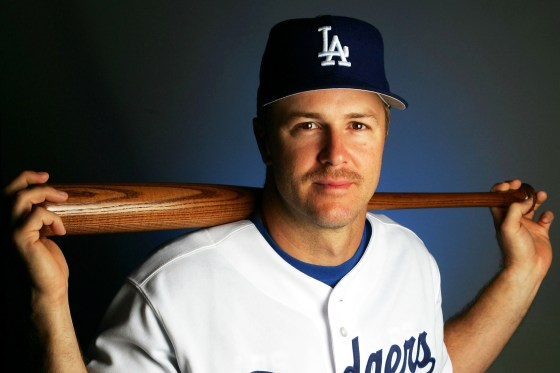
The Underdog Vibe — And Resilience
Kent wasn’t a flashy phenom that dominated headlines from day one. Early on, he flew under the radar. But he kept improving, reinvented his swing, added power, and refused to stop working. That journey from “also-ran” to “legend” resonates — and it’s part of why many respect him.
What Changed: How Kent Finally Got Into the Hall of Fame
When Kent retired, he was eligible for the Hall through the traditional writers’ ballot (Baseball Writers’ Association of America, BBWAA). But over his full 10 years of eligibility, he never got near the required vote threshold — his peak was ~46.5%.
However, under the Hall’s newer process, the Contemporary Baseball Era Committee reviews players who may have been overlooked. In December 2025, that Committee voted — and Kent got 14 of 16 votes, clearing the 75% threshold. He will be inducted in Cooperstown in summer 2026.
The result underscores that sometimes broader context — position difficulty, era comparisons, changing metrics — can shift opinions.
What We Can Learn from Kent — Lessons Off the Field
Even if you’re not a baseball player, Kent’s journey offers universal inspiration:
- Consistency matters more than flash. Being good over many years often beats being great for a short burst.
- Stick with it — even if recognition doesn’t come immediately. Kent didn’t give up after being snubbed. He kept improving.
- Change can pay off — adapt, learn, evolve. Kent didn’t stick to his early approach; he refined his swing, became a different hitter, and unlocked new potential.
- Timing and perspective can change success. What might not have mattered in one era (e.g., home runs from a second baseman) can matter a lot in another — especially when re-evaluated fairly.

Real-World Use Cases & Comparisons
- For fans debating “who deserves Cooperstown,” Kent’s case is a powerful counterpoint to the idea that only the flashiest superstars matter. He shows that sustained excellence matters too.
- For younger players (or anyone pursuing long-term goals), Kent’s story is a blueprint — perform steadily, be adaptable, and value consistency.
- In comparing second basemen historically, Kent stands out as the best power-hitting second baseman ever — even when compared to speed- or defense-first peers.
Common Misconceptions & Mistakes to Avoid (When Evaluating Greatness)
| Misconception / Mistake | Why It Leads to Underestimating Players Like Kent |
|---|---|
| “Defense matters more at middle infield, so offense is secondary.” | That underestimates how rare and valuable offensive production is at those positions — Kent’s power was elite. |
| “You must be a first-ballot Hall of Famer to be a real legend.” | Voting can be flawed or biased; sometimes greatness is only recognized later via different panels or metrics. Kent’s delayed election shows that. |
| “A few good seasons equal a great career.” | Longevity and consistency — over 15–20 years — often have more impact than a few stellar seasons. |
| “Traditional stats are enough.” | Newer perspectives (like value by position, era adjustments) often reveal overlooked value — exactly what helped Kent’s case with the Committee. |
Final Takeaway
Jeff Kent’s election to the Hall of Fame isn’t just about stats — it’s about patience, consistency, humility, and evolution. He reminds us that success isn’t always flashing bright from the start. Sometimes real greatness glows gradually, then bursts into full view. Kent’s story is tailored for anyone who’s ever felt overlooked — and proved wrong the doubters.
ALSO READ: How I Finally Understood dbt Certification (And Why It Might Be Your Next Career Win)
FAQs (Frequently Asked Questions)
Q: Why wasn’t Jeff Kent elected earlier when he retired?
A: While his offensive numbers were strong, his position (second base) often favored defense and speed, and earlier voters may have undervalued his power. Also, his WAR and defensive numbers weren’t elite, which may have hurt his appeal under traditional metrics.
Q: What changed in 2025 to get him inducted?
A: The Hall’s Contemporary Baseball Era Committee re-evaluated his entire body of work — position-adjusted, long-term consistency, and context of era. That broader evaluation finally tipped the scales in his favor.
Q: Does this mean power-hitting second basemen are now more valued historically?
A: Kent’s induction certainly raises the profile — it shows offense from middle infield is legitimate and valued, as long as it’s sustained over time.
Q: How many home runs did Kent hit compared to other second basemen?
A: He hit 377 career home runs, making him the all-time home run leader among players who spent most of their careers at second base.

Hannah Price is a digital journalist who covers breaking news, global events, and trending stories with accuracy and speed. She has previously contributed to several online magazines and has built a reputation for verifying facts before publishing. Hannah believes in responsible reporting and aims to present stories in a way that readers can trust.