If you’ve ever purchased something online, subscribed to a software tool, or bought supplies for a company, you’ve participated in the world of commerce. But here’s a question many people never stop to think about: who exactly is the consumer in a business transaction?
Most people assume the answer is simple — the person buying the product. But in reality, the concept of a business consumer is more nuanced than that.
Understanding what is a business consumer is crucial for entrepreneurs, marketers, sales teams, and even everyday professionals who interact with products and services in a professional setting. Whether you’re running a startup, building a marketing strategy, or simply trying to understand how modern commerce works, knowing the difference between a business consumer and a regular consumer can completely reshape how you view the marketplace.
Businesses do not always sell directly to individuals. Sometimes they sell to other companies. Sometimes they sell to institutions. And sometimes the person making the decision is not the person actually using the product.
That’s where the idea of the business consumer comes in.
In this comprehensive guide, we’ll explore everything you need to know about business consumers, including:
- The clear definition of a business consumer
- How business consumers differ from regular consumers
- Real-world examples from different industries
- The benefits and use cases of understanding business consumers
- How companies identify and serve business consumers
- Tools and strategies businesses use to target them
- Common mistakes companies make when marketing to business consumers
- Frequently asked questions that clarify the concept even further
By the end of this article, you’ll have a deep, practical understanding of business consumers and how they influence modern markets.
Let’s start with the basics.
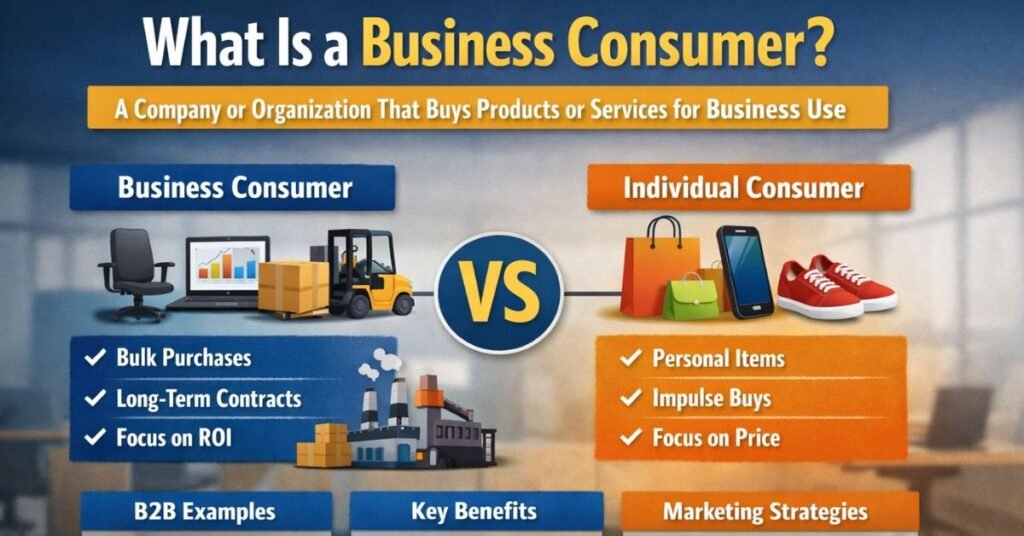
What Is a Business Consumer? (Simple Definition)
A business consumer is a company, organization, or professional entity that purchases goods or services for operational use, resale, or production — rather than for personal consumption.
In simpler terms:
A business consumer buys products or services to help run a business.
This concept is commonly associated with B2B (Business-to-Business) markets, where one company sells to another company instead of to an individual shopper.
For example:
- A restaurant buying ingredients from a food distributor
- A marketing agency purchasing SEO software
- A construction company buying building materials
- A hospital ordering medical equipment
- A retail store purchasing inventory from a manufacturer
In each of these cases, the buyer is not purchasing the product for personal enjoyment. Instead, the purchase supports business operations or revenue generation.
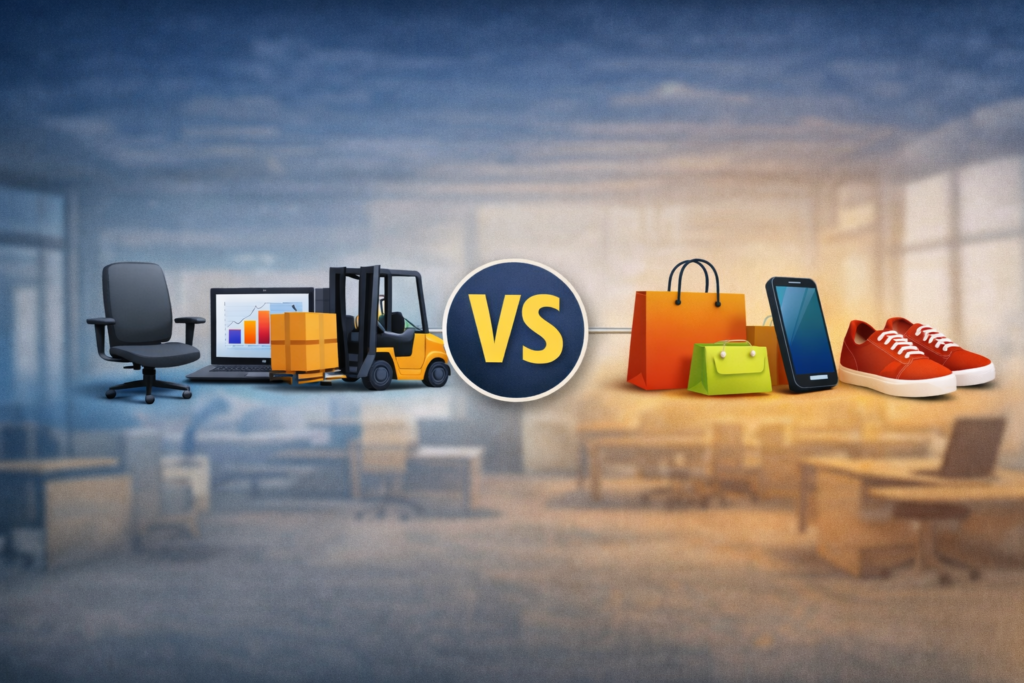
Here’s an easy comparison to clarify the difference.
Consumer buyer example:
You buy a laptop to watch movies and browse the internet.
Business consumer example:
A company buys 50 laptops for employees to use at work.
The product is the same, but the purpose of the purchase is completely different.
Business consumers typically make buying decisions based on factors like:
- Efficiency
- Profitability
- Scalability
- Reliability
- Long-term value
Personal consumers, on the other hand, often prioritize:
- Price
- Convenience
- Personal taste
- Brand loyalty
- Emotional appeal
Because of these differences, companies use very different marketing and sales strategies when targeting business consumers versus regular customers.
How Business Consumers Differ From Individual Consumers
Understanding the difference between business consumers and individual consumers is essential for anyone involved in marketing, product development, or sales.
At first glance, both groups simply purchase products. But the motivations, decision-making processes, and expectations behind those purchases are very different.
Let’s break down the major distinctions.
Purpose of the Purchase
Individual consumers buy products for personal use or enjoyment.
Examples include:
- Clothing
- Smartphones
- Groceries
- Entertainment subscriptions
- Home appliances
Business consumers purchase products for organizational use or economic activity.
Examples include:
- Office furniture
- Accounting software
- Manufacturing equipment
- Inventory for resale
- Logistics services
In other words, business purchases are usually tied to productivity or revenue generation.
Decision-Making Process
Individual buying decisions are often quick and emotional.
A consumer might buy a pair of shoes simply because they like the style.
Business purchasing decisions tend to be more structured and analytical. They often involve:
- Budget approval
- Vendor comparisons
- Contract negotiations
- Procurement teams
- Multiple stakeholders
For example, when a company chooses a CRM software platform, the decision might involve:
- The marketing department
- The sales team
- IT specialists
- Financial managers
- Senior executives
This longer decision-making process is called the B2B buying cycle, and it’s a defining feature of business consumers.
Purchase Volume
Business consumers frequently buy in large quantities or long-term contracts.
Examples include:
- 1,000 units of inventory
- Annual software subscriptions
- Bulk raw materials
- Enterprise licensing agreements
Individual consumers usually buy in smaller quantities.
Relationship With Sellers
Business transactions often involve long-term partnerships.
Companies may work with the same suppliers for years because reliability and consistency are essential.
Individual consumers tend to switch brands more frequently.
Price Sensitivity vs Value Sensitivity
Consumers usually focus on price.
Businesses focus on return on investment (ROI).
For example, a company may choose expensive software if it saves hundreds of hours in labor costs.
Types of Business Consumers
Not all business consumers are the same. In fact, the category includes several different types of organizations.
Understanding these categories helps businesses tailor their products and marketing strategies more effectively.
Manufacturers
Manufacturers buy raw materials and components to produce finished goods.
Examples include:
- A car manufacturer buying steel
- A clothing brand purchasing fabric
- A furniture company sourcing wood
These purchases are critical to the production process.
Resellers
Resellers purchase products with the intention of selling them again for profit.
Examples include:
- Retail stores
- Wholesalers
- E-commerce retailers
- Distributors
For example, a supermarket buying packaged foods from a supplier is acting as a business consumer.
Government Organizations
Government agencies are also business consumers.
They purchase large quantities of goods and services for public use, such as:
- Infrastructure equipment
- Medical supplies
- Office technology
- Security systems
Government procurement often involves strict bidding processes and regulations.
Institutions
Institutions like hospitals, universities, and nonprofits also act as business consumers.
They buy products and services needed to operate their organizations.
Examples include:
- Hospitals buying medical devices
- Universities purchasing software licenses
- Schools ordering educational materials
These purchases often prioritize reliability and compliance.
Why Understanding Business Consumers Matters
Understanding what is a business consumer isn’t just a theoretical concept. It has real, practical implications for how companies operate and grow.
Businesses that deeply understand their customers tend to outperform competitors in marketing, product development, and customer retention.
Let’s explore why this concept matters so much.
More Effective Marketing Strategies
Marketing to businesses requires a completely different approach than marketing to individuals.
For example, emotional advertising that works for consumer products may not work in B2B environments.
Business consumers typically respond better to:
- Data-driven messaging
- Case studies
- ROI calculations
- Product demonstrations
- Industry expertise
Understanding your business consumer allows you to craft marketing campaigns that resonate with professional decision-makers.
Better Product Development
Companies that know how business consumers operate can design products that solve real operational challenges.
For instance:
A project management tool built for freelancers will look very different from one designed for enterprise teams managing thousands of tasks.
Business consumers demand:
- Scalability
- Integration with existing systems
- Security features
- Customization options
- Dedicated support
Understanding these needs leads to stronger products and better adoption rates.
Stronger Long-Term Partnerships
Business consumers often prefer reliable suppliers they can trust over time.
When companies deliver consistent value, they can build long-term partnerships that lead to:
- Recurring revenue
- Larger contracts
- Referrals within industries
- Reduced marketing costs
Many successful B2B companies generate the majority of their revenue from long-term clients.
Higher Customer Lifetime Value
Compared to individual consumers, business consumers often generate significantly higher lifetime value.
For example:
A personal customer might buy a $50 product once.
A business customer might sign a $20,000 annual contract.
This difference is why many startups focus heavily on the B2B market.
Real-World Examples of Business Consumers
Sometimes the easiest way to understand a concept is by seeing how it works in real life.
Here are several examples of business consumers across different industries.
Software Industry
Many technology companies focus on business consumers.
Examples include:
- Accounting software for businesses
- Customer relationship management (CRM) platforms
- Email marketing software
- Cybersecurity tools
Companies purchase these tools to improve productivity, manage data, and streamline operations.
Hospitality Industry
Hotels and restaurants are major business consumers.
They regularly purchase:
- Food supplies
- Kitchen equipment
- Cleaning services
- Reservation software
- Furniture
Without these purchases, the business simply could not operate.
Retail Industry
Retail stores purchase inventory from manufacturers or wholesalers.
For example:
A clothing boutique might buy hundreds of items from apparel brands to sell to customers.
In this case, the boutique is a business consumer, while shoppers are end consumers.
Construction Industry
Construction companies buy large amounts of materials and equipment such as:
- Cement
- Steel
- Safety gear
- Heavy machinery
- Project management tools
These purchases directly support building projects.
Healthcare Sector
Hospitals and clinics regularly buy:
- Medical equipment
- Pharmaceuticals
- Software systems
- Diagnostic tools
- Protective equipment
These purchases help healthcare professionals deliver patient care.
Step-by-Step Guide: How Businesses Identify Their Business Consumers
For companies operating in B2B markets, identifying the right business consumers is critical.
Here is a structured process many successful companies follow.
Step 1: Define the Ideal Customer Profile (ICP)
An Ideal Customer Profile describes the type of business that benefits most from a product or service.
Key factors may include:
- Industry
- Company size
- Annual revenue
- Location
- Technology usage
- Operational challenges
For example, a payroll software company may target businesses with 20–200 employees.
Step 2: Understand the Buying Committee
Unlike individual purchases, business buying decisions often involve multiple stakeholders.
Common roles include:
- Decision makers
- Budget approvers
- Technical evaluators
- End users
Understanding each role helps companies tailor messaging to different concerns.
Step 3: Research Customer Pain Points
Business consumers typically buy solutions to specific problems.
For example:
A logistics company might need software that reduces delivery delays.
Identifying these pain points allows businesses to position their products effectively.
Step 4: Build Targeted Marketing Campaigns
Once the target audience is clear, businesses can create focused marketing strategies such as:
- LinkedIn marketing
- Industry webinars
- Whitepapers
- Trade shows
- B2B content marketing
These channels are particularly effective for reaching business consumers.
Step 5: Create a Value-Based Sales Process
Instead of focusing on features alone, successful B2B sales teams highlight:
- Business outcomes
- Efficiency improvements
- Cost savings
- Competitive advantages
This approach resonates strongly with professional buyers.
Tools Businesses Use to Reach Business Consumers
Reaching business consumers requires specialized marketing and sales tools.
Here are some widely used categories.
CRM Platforms
Customer relationship management tools help companies track leads and manage business relationships.
Popular options include:
- Salesforce
- HubSpot
- Zoho CRM
These systems store contact data, track sales pipelines, and automate communication.
Marketing Automation Tools
These tools help companies nurture potential business consumers through email campaigns, lead scoring, and behavioral tracking.
Examples include:
- HubSpot
- ActiveCampaign
- Marketo
B2B Data Platforms
These platforms provide company information and decision-maker contact details.
Examples include:
- ZoomInfo
- Apollo
- Clearbit
LinkedIn Marketing Tools
LinkedIn is one of the most effective platforms for reaching business consumers.
Companies use it for:
- Lead generation
- Brand authority
- Targeted advertising
- Thought leadership content
Common Mistakes Businesses Make When Targeting Business Consumers
Even experienced companies sometimes struggle to effectively reach business consumers.
Here are several common mistakes and how to avoid them.
Treating B2B Like B2C Marketing
Many businesses mistakenly use consumer-style advertising when targeting companies.
Instead of flashy messaging, B2B buyers prefer:
- Detailed information
- Industry insights
- Case studies
- Data-backed results
Ignoring the Buying Committee
Focusing on only one decision-maker can derail deals.
Companies should create messaging for multiple stakeholders.
Overlooking Customer Education
Business consumers often require deeper product understanding before purchasing.
Educational content such as webinars, demos, and guides can significantly increase conversions.
Weak Value Propositions
Business buyers want clear answers to questions like:
- How will this improve efficiency?
- What ROI can we expect?
- How quickly will we see results?
Failing to answer these questions can stall sales.
Poor Customer Support
Business consumers often depend heavily on products and services.
Reliable customer support is critical for retention and long-term partnerships.
Conclusion
Understanding what is a business consumer is fundamental to navigating today’s commercial landscape.
At its core, a business consumer is an organization that purchases goods or services to support operations, generate revenue, or deliver services to others.
While the concept sounds simple, the implications are powerful.
Business consumers behave very differently from individual consumers. They evaluate purchases more carefully, involve multiple stakeholders, and prioritize long-term value over short-term satisfaction.
For companies, recognizing these differences unlocks major advantages:
- More effective marketing strategies
- Better product development
- Stronger partnerships
- Higher lifetime customer value
Whether you’re an entrepreneur, marketer, business student, or industry professional, understanding how business consumers operate will give you a clearer view of how modern commerce truly works.
If you’re building a business or selling products, take time to deeply understand the companies you serve. Their needs, goals, and challenges will shape everything from your marketing strategy to your product roadmap.
And the better you understand your business consumers, the easier it becomes to create products and services they genuinely rely on.
FAQs
What is a business consumer in simple terms?
A business consumer is a company or organization that buys products or services to support its operations, produce goods, or resell items to other customers.
What is the difference between a consumer and a business consumer?
A consumer buys products for personal use, while a business consumer purchases goods or services for professional or organizational purposes.
Are business consumers part of B2B markets?
Yes. Business consumers typically exist in business-to-business (B2B) markets where companies sell products or services to other companies.
Can small businesses be business consumers?
Absolutely. Small businesses, freelancers, and startups often act as business consumers when purchasing tools, equipment, or services for their operations.
What industries rely heavily on business consumers?
Industries with strong B2B markets include technology, manufacturing, healthcare, logistics, construction, and wholesale distribution.

Michael Grant is a business writer with professional experience in small-business consulting and online entrepreneurship. Over the past decade, he has helped brands improve their digital strategy, customer engagement, and revenue planning. Michael simplifies business concepts and gives readers practical insights they can use immediately.