
A friend recently told me he added “Learn AI” to his New Year’s resolution list back in 2021. Fast-forward to today: his notes app is full of half-finished online courses, and his browser has approximately 287 tabs titled something like “How to Use AI for ——”. If that sounds even slightly familiar, you’re not alone. AI hype is everywhere. Investors are pouring in money, companies are rushing to sprinkle “AI-powered” into product descriptions, and ordinary users are experimenting daily.
And that leads us to the question everyone’s whispering — are we in an AI bubble?
What Everyone Means by the “AI Bubble”
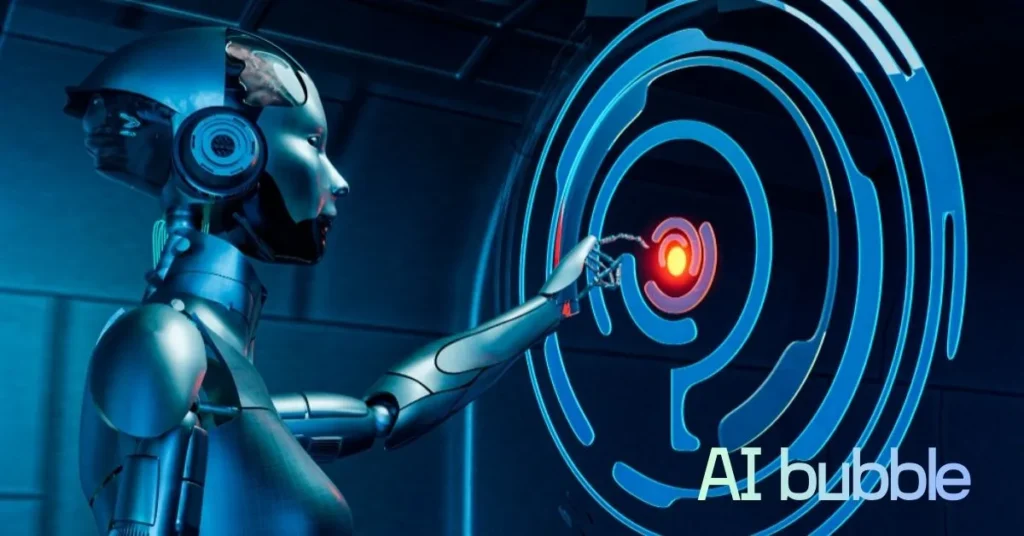
An AI bubble describes a period where excitement, investment, and expectations about artificial intelligence grow faster than actual adoption and proven long-term value. Think dot-com boom vibes — lots of enthusiasm, not always enough substance.
Signs that look very bubble-like:
- Sky-high valuations for companies with barely a product.
- Startups raising millions with nothing more than a pitch deck.
- Businesses adopting AI because it’s trendy, not because it solves a real problem.
- Overpromises like “AI will replace every job in 2 years” (deep breath — it won’t).
But before we panic, there’s the other side of the story.
Why the AI Boom Might Be More Than Just Hype
Even if hype is inflated, something real is happening beneath it. AI isn’t just vapor — it’s already delivering tangible wins.
Real-world AI examples happening today:
| Industry | Real Use Case | Why It Matters |
|---|---|---|
| Healthcare | AI assists doctors with diagnosis | Faster results, early disease detection |
| Marketing | Content generation & personalization | Saves hours of creativity work |
| Finance | Fraud detection & risk analysis | Safer transactions, reduced losses |
| Manufacturing | Predictive maintenance | Avoids breakdowns and downtime |
Like the early internet, some ideas will crash — but the survivors could reshape everything.
So… Are We in a Bubble? Yes, and No.
It’s possible we’re experiencing a short-term bubble around expectations
but a long-term transformation in technology.
In simpler terms:
Some companies will fade.
The technology isn’t going away.
Instead of fearing the bubble, here’s how to ride the wave responsibly and benefit from it.
1. Learn practical AI skills
Not every course must be five hours long. Start small:
- Practice with AI tools weekly
- Build tiny projects or automations
- Follow creators who share real workflows, not just hype
2. Use AI to solve problems, not replace thinking
Ask yourself:
❓ Does AI make this task faster, easier, or more accurate?
If yes — green light.
If not — you’re forcing the trend.
3. Stay curious, but grounded
Explore AI like you’d explore a new city — excited, but not blindly trusting every shortcut offered.
Tools to Experiment With (Beginner-Friendly)
| Tool | Best For | Why Try It |
|---|---|---|
| ChatGPT | writing, research, brainstorming | Conversational + versatile |
| Claude | long-form reasoning | Great for deep analysis |
| Midjourney | images & brand visuals | Inspiring creative output |
| Notion AI | productivity + writing | Helps organize life + ideas |
| Perplexity | factual research | Search with summaries + citations |
You don’t need all of them. Start with one or two. Explore, play, iterate.
Common Mistakes to Avoid During the AI Craze
❌ Expecting AI to replace skills instead of enhance them
❌ Buying every new AI subscription you see
❌ Waiting too long to start because it feels overwhelming
❌ Believing every promised feature or viral claim
Use AI to amplify your strengths — not bypass them.
Final Takeaway
The AI bubble conversation isn’t about whether AI will vanish — it’s about how fast the world can absorb it. Some hype will pop, yes. But innovation is moving forward regardless.
If you stay grounded, learn consistently, and adopt tools that genuinely make life easier, you won’t just survive the AI bubble — you’ll benefit from it.
Frequently Asked Questions
Will AI replace jobs?
Some tasks, yes. Entire professions overnight? Unlikely. The winners will be those who adapt and collaborate with AI.
Should I invest in AI companies?
Only after research — not because everyone else is. Trends shift fast.
How do beginners start with AI?
Pick one tool. Set one small goal. Build habits over time.
Is AI just a fad?
The hype may fade — the technology won’t.

Adrian Cole is a technology researcher and AI content specialist with more than seven years of experience studying automation, machine learning models, and digital innovation. He has worked with multiple tech startups as a consultant, helping them adopt smarter tools and build data-driven systems. Adrian writes simple, clear, and practical explanations of complex tech topics so readers can easily understand the future of AI.