Artificial intelligence job loss is one of those phrases that instantly tightens your chest. Maybe you’ve seen headlines predicting millions of jobs disappearing. Maybe someone at work joked—half nervously—that an AI tool could already do part of your role. Or maybe you’re quietly wondering if the skills you’ve spent years building will still matter five years from now.
You’re not alone. I’ve spent the last decade watching technology reshape industries from the inside—working with content teams, marketers, analysts, developers, and business owners as automation slowly crept into daily workflows. What’s happening now with AI feels faster, louder, and more personal. And that’s exactly why this topic matters.
In this guide, we’re going to talk honestly about artificial intelligence job loss—without hype, fear-mongering, or tech evangelism. You’ll learn what AI is actually replacing, what it’s transforming instead of eliminating, which jobs are most at risk, and where new opportunities are emerging. Most importantly, you’ll walk away with a clear, step-by-step plan to future-proof your career in a world where AI isn’t going away.
Understanding Artificial Intelligence Job Loss in Simple, Human Terms
Artificial intelligence job loss doesn’t mean “robots take all jobs and humans become obsolete.” That idea makes for dramatic headlines, but it’s not how economic change has ever worked. A more accurate way to think about it is this: AI replaces tasks first, not entire jobs.
Think back to when calculators became common. Accountants didn’t disappear. Instead, tedious arithmetic vanished, freeing people to focus on analysis and strategy. The same pattern is playing out now—but across many more industries at once.
AI systems can process information faster, recognize patterns at scale, and operate 24/7 without fatigue. That makes them incredibly good at repetitive, rules-based work. When a job is mostly composed of those tasks, it becomes vulnerable. When a job combines technical skill with judgment, empathy, creativity, or context, AI usually becomes an assistant rather than a replacement.
Artificial intelligence job loss is really about job reshaping. Some roles shrink. Some disappear. Others evolve into something new. And entirely new jobs—ones that didn’t exist five years ago—appear alongside them.
This distinction matters because fear tends to flatten everything into “AI vs humans.” Reality is more nuanced. The real question isn’t “Will AI take jobs?” It’s “Which parts of which jobs are most exposed—and how do we adapt before we’re forced to?”
Why Artificial Intelligence Job Loss Is Accelerating Now
Technology Finally Crossed a Threshold
AI has existed for decades, but only recently did it become accessible, affordable, and powerful enough for everyday business use. Cloud computing, massive datasets, and improved machine learning models pushed AI from research labs into offices, call centers, hospitals, and creative studios.
Tools that once required specialized engineers can now be used by non-technical employees with a few clicks. That speed of adoption is unprecedented—and it’s a big reason artificial intelligence job loss feels sudden.
Businesses Are Under Pressure to Automate
Rising labor costs, global competition, and post-pandemic restructuring have pushed companies to look for efficiency wherever they can find it. AI promises faster output, fewer errors, and lower costs. For leadership teams, automation often looks like a survival strategy, not a luxury.
Organizations influenced by research from firms like McKinsey & Company frequently frame AI adoption as a competitive necessity. When one company automates successfully, others feel pressure to follow or fall behind.
AI Tools Are No Longer Just “Back Office”
Earlier automation targeted manufacturing or clerical work. Today, AI writes emails, generates designs, analyzes legal documents, edits videos, and even assists in medical diagnostics. This expansion into white-collar and creative fields has broadened the conversation around artificial intelligence job loss—and made it more personal for professionals who once felt safe.
Which Jobs Are Most Affected by Artificial Intelligence Job Loss

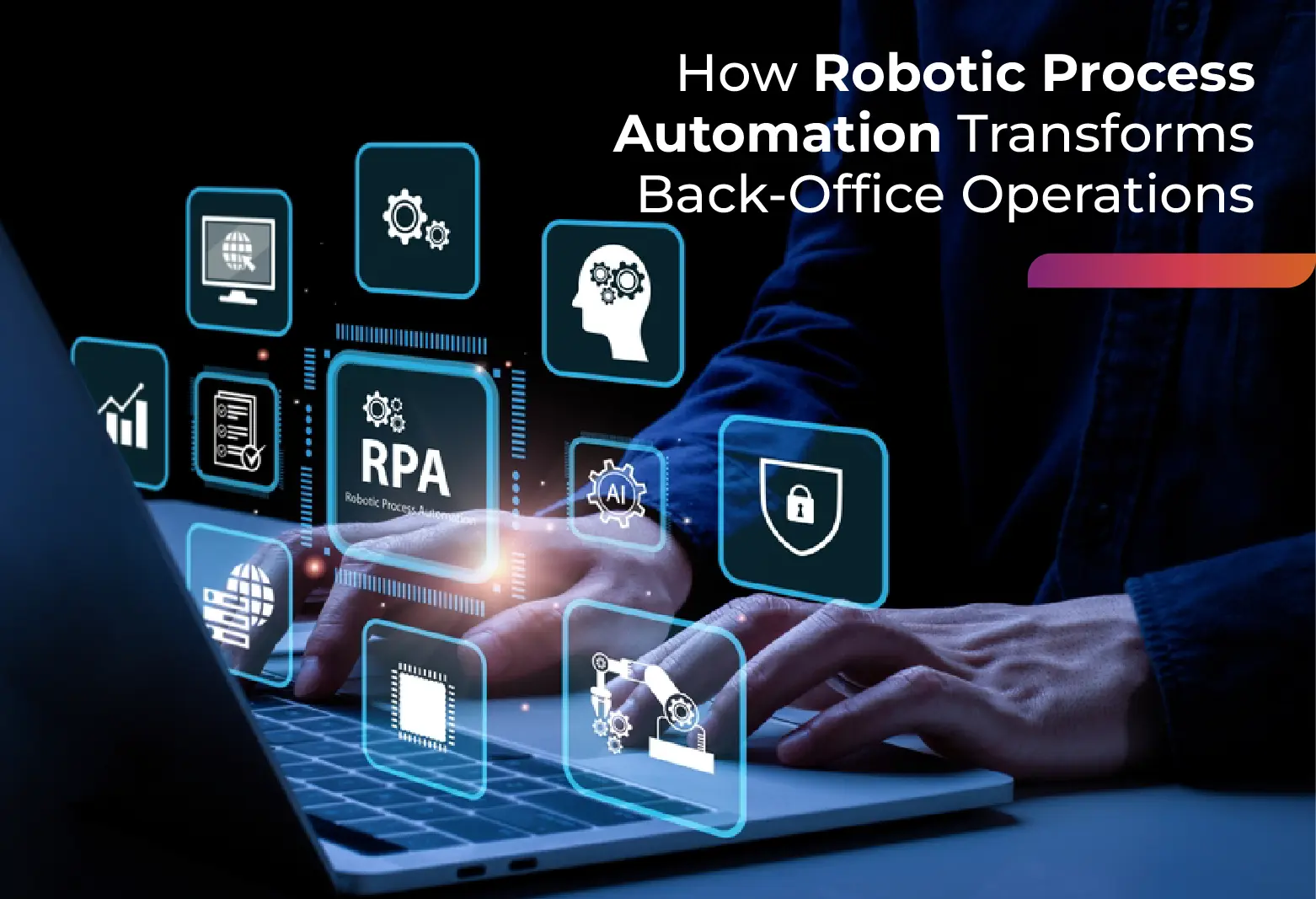
Roles With High Automation Risk
Jobs that rely heavily on predictable, repeatable processes are most vulnerable. These include:
Administrative assistants who primarily handle scheduling, data entry, and document formatting. Many of these tasks can already be handled by AI-driven productivity tools.
Customer service representatives working with scripted responses. Chatbots and AI voice systems now resolve a significant percentage of routine inquiries without human involvement.
Basic data analysts focused on reporting rather than interpretation. AI excels at pulling data, generating dashboards, and summarizing trends.
Entry-level content roles that involve rewriting, summarizing, or templated writing without original insight.
Retail roles centered on checkout and inventory tracking, where self-service kiosks and smart inventory systems reduce staffing needs.
In these cases, artificial intelligence job loss often begins subtly. Headcount doesn’t drop overnight. Instead, roles stop being backfilled, teams shrink through attrition, and remaining employees are expected to “do more with less.”
Jobs Being Transformed, Not Eliminated
Many professions aren’t disappearing—they’re changing shape. Marketers now spend less time drafting basic copy and more time refining strategy, brand voice, and customer insights. Developers rely on AI for code suggestions while focusing more on architecture and problem-solving. Recruiters automate resume screening but invest more energy in candidate relationships.
This is where opportunity lives. People who adapt early often become more valuable, not less.
The Surprising Upside: Benefits and Real-World Use Cases
Artificial intelligence job loss is a real concern—but it’s only half the story. AI also creates benefits that often go unmentioned in fear-driven narratives.
Productivity Without Burnout
In many teams I’ve worked with, AI reduced hours spent on soul-crushing tasks. Writers used AI to organize research. Analysts automated data cleaning. Operations teams eliminated repetitive reporting. The result wasn’t layoffs—it was less burnout and higher-quality work.
New Career Paths Emerging
Roles like AI prompt specialists, automation consultants, model trainers, and AI ethics reviewers barely existed a few years ago. Now they’re legitimate career options. Companies deploying AI need humans who understand both the technology and the business context.
Organizations tied to innovation ecosystems—such as those influenced by research and tooling from OpenAI—often hire people specifically to bridge the gap between AI capabilities and real-world application.
Small Teams Competing With Giants
AI allows startups and freelancers to operate at a scale that once required large teams. That democratization creates opportunity for individuals willing to learn how to use AI strategically rather than fear it.
A Step-by-Step Guide to Protecting Your Career From AI Displacement


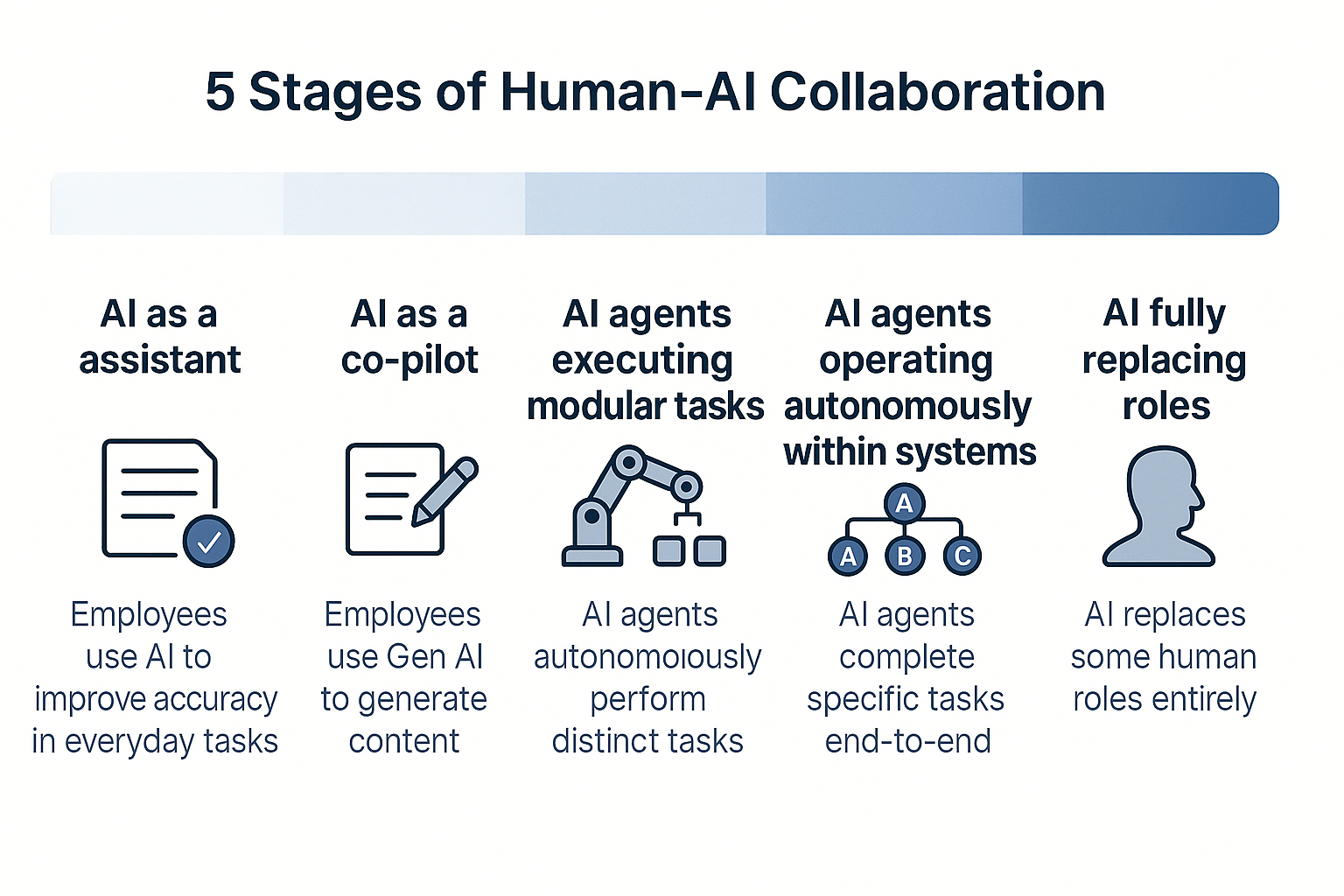
Step 1: Audit Your Job Honestly
List the tasks you perform weekly. Highlight which ones are repetitive, rule-based, or purely informational. Those are the tasks AI will likely handle soon—if it isn’t already.
This exercise isn’t meant to scare you. It’s meant to clarify where you need to grow.
Step 2: Lean Into Human Skills AI Can’t Replace
Communication, persuasion, leadership, creativity, ethical judgment, and contextual decision-making remain deeply human strengths. The more your role emphasizes these, the safer—and more valuable—you become.
Step 3: Learn to Work With AI
Instead of resisting AI tools, master them. Learn how to prompt effectively, validate outputs, and integrate AI into workflows. People who can supervise AI systems outperform those who compete against them.
Step 4: Build Transferable Expertise
Avoid being locked into a single tool or platform. Focus on problem-solving frameworks, industry knowledge, and adaptable skills that survive tool changes.
Step 5: Invest in Continuous Learning
The professionals least affected by artificial intelligence job loss are lifelong learners. Short courses, certifications, and hands-on experimentation matter more than formal degrees in many fields now.
Tools, Comparisons, and Smart Recommendations
AI tools come in free and paid flavors, and choosing wisely matters.
Free tools are excellent for experimentation and learning. They help you understand AI capabilities without financial risk. Paid tools usually offer better reliability, integrations, and support—making them suitable for professional workflows.
When comparing tools, don’t ask “Can this replace me?” Ask “Can this make me faster, better, or more strategic?” That mindset shift alone changes how you approach artificial intelligence job loss.
Alternatives always exist, and no single platform stays dominant forever. The skill is not tool mastery—it’s adaptability.
Common Mistakes People Make About Artificial Intelligence Job Loss
One major mistake is denial. Ignoring AI doesn’t protect your job; it delays your response until options narrow.
Another is panic-learning—jumping between tools without understanding fundamentals. This leads to shallow knowledge that quickly becomes obsolete.
Finally, many people underestimate their human value. AI outputs still need interpretation, quality control, and ethical oversight. Professionals who position themselves as decision-makers rather than task-doers remain indispensable.
The Emotional Side of Job Displacement (And Why It Matters)
Artificial intelligence job loss isn’t just economic—it’s emotional. Work is tied to identity, purpose, and security. Feeling threatened by automation is a natural response, not a weakness.
Acknowledging that fear allows you to respond strategically rather than reactively. The goal isn’t to outpace AI. It’s to evolve alongside it.
The Future Outlook: What the Next 5–10 Years Likely Hold
Most experts agree we’re entering a prolonged transition period rather than a sudden collapse. Jobs will continue to change faster than educational systems can adapt. People who reskill proactively will thrive. Those who wait for clarity may struggle.
Governments, businesses, and workers all play roles in shaping outcomes. Policy, education, and corporate responsibility matter—but individual action matters too.
Artificial intelligence job loss will remain a headline topic, but the quieter story will be about people who reinvented themselves in time.
Conclusion: Turning Uncertainty Into Opportunity
Artificial intelligence job loss is real, uneven, and disruptive—but it’s not the end of meaningful work. It’s a signal that the definition of “valuable skills” is shifting.
The people who succeed won’t be the ones who memorized tools. They’ll be the ones who understood problems, communicated clearly, adapted quickly, and kept learning when it felt uncomfortable.
If there’s one takeaway from everything you’ve read here, it’s this: AI rewards initiative. Start now. Experiment. Upskill. And treat change as something you can influence, not something that simply happens to you.
If you found this guide helpful, explore related resources, test a new AI tool this week, or share your thoughts—your next step matters more than you think.
FAQs
Will AI really take my job?
AI is more likely to change your job than eliminate it outright, especially if your role involves judgment, creativity, or human interaction.
Which industries face the highest AI-driven job loss?
Administrative work, customer service, basic data processing, and routine content production face higher disruption risk.
How fast is artificial intelligence job loss happening?
Gradually but steadily. Most changes occur through role evolution and hiring freezes rather than sudden layoffs.
Can reskilling actually protect me?
Yes. Workers who combine domain expertise with AI literacy consistently outperform those who don’t.
Is AI a threat to creative jobs?
AI can generate content, but originality, taste, and storytelling remain human-driven advantages.

Adrian Cole is a technology researcher and AI content specialist with more than seven years of experience studying automation, machine learning models, and digital innovation. He has worked with multiple tech startups as a consultant, helping them adopt smarter tools and build data-driven systems. Adrian writes simple, clear, and practical explanations of complex tech topics so readers can easily understand the future of AI.