If you work anywhere near technology, business, policy, or content, December 2025 probably felt like a turning point for AI in the United States. Over the past few years, AI regulation has moved from abstract debate to very real rules that affect how products are built, marketed, and governed. By December 2025, the conversation was no longer “Should the US regulate AI?” but “How exactly will these rules shape innovation, risk, and accountability?”
That’s why US AI regulation news December 2025 matters so much. It’s not just another policy update buried in a government press release. It represents a shift in how the US balances innovation with responsibility, especially as AI systems increasingly influence hiring, healthcare decisions, finance, education, national security, and everyday consumer products.
In this article, I’ll walk you through what actually happened in December 2025, what it means in plain English, and why you should care whether you’re a founder, marketer, developer, policymaker, or curious professional. We’ll break down complex regulatory language into practical insights, look at real-world use cases, highlight tools and compliance strategies, and call out common mistakes companies are already making. By the end, you’ll have a clear mental model of where US AI regulation stands and how to navigate it confidently.
Topic Explanation: What “US AI Regulation News December 2025” Really Means
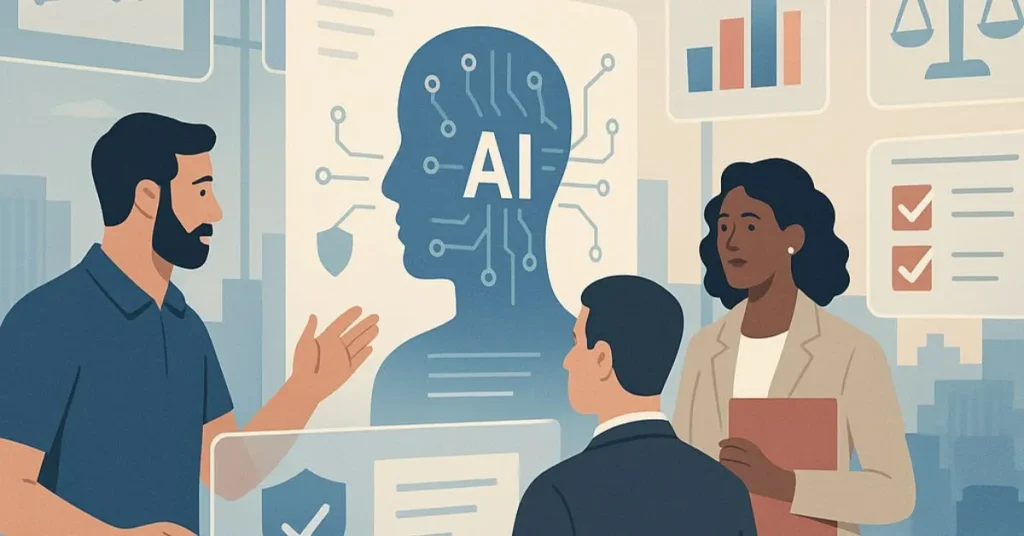
At its core, US AI regulation news December 2025 refers to a cluster of federal actions, guidance documents, agency rules, and legislative milestones that landed right at the end of the year. Think of it less like a single law and more like a toolkit being rolled out across different parts of the government.
A useful analogy is traffic regulation. For years, AI was like a new kind of vehicle driving on roads built for bicycles and cars. Everyone knew it was fast and powerful, but there were no speed limits, no seatbelt requirements, and no clear liability rules when accidents happened. December 2025 marked the moment when the US finally started installing traffic lights, lane markings, and basic safety standards.
Some of the most discussed developments included:
- Expanded federal agency authority to oversee high-risk AI systems
- Clearer definitions of what counts as “high-risk” or “impactful” AI
- New transparency and reporting requirements for developers and deployers
- Stronger enforcement mechanisms tied to existing consumer protection and civil rights laws
What’s important to understand is that the US approach remains different from the EU’s AI Act. Instead of one sweeping AI law, the US is layering AI oversight into existing legal frameworks like antitrust, discrimination law, consumer protection, and national security. December 2025 was when these layers started to visibly connect into something coherent.
Why December 2025 Became a Turning Point for US AI Policy
For years, AI regulation in the US moved slowly, often constrained by political gridlock and fears of stifling innovation. So why did December 2025 become such a pivotal moment?
First, real-world harms became harder to ignore. AI-driven hiring tools were accused of bias. Automated decision systems in healthcare raised safety concerns. Generative AI models triggered legal disputes over data use, misinformation, and intellectual property. Policymakers were no longer dealing with hypothetical risks; they were responding to active cases, lawsuits, and public pressure.
Second, global competition played a role. As the EU and several Asian countries moved forward with clearer AI rules, US companies faced a fragmented compliance landscape. December 2025 reflected an effort to provide domestic clarity so American firms wouldn’t be forced to design products solely around foreign regulations.
Third, agencies gained confidence and resources. By late 2025, regulators better understood how AI systems work in practice. They weren’t just reacting to buzzwords; they were issuing technically informed guidance that acknowledged model training, data pipelines, deployment contexts, and human oversight.
This combination of urgency, international pressure, and growing expertise made December 2025 feel less like another policy cycle and more like the start of a new regulatory era.
Benefits and Use Cases of Clearer US AI Regulation
While regulation often sounds like a burden, there are real benefits to the direction signaled by US AI regulation news December 2025. In fact, many companies quietly welcomed the clarity.
One major benefit is reduced uncertainty. When rules are vague, companies either take reckless risks or overcorrect by freezing innovation. Clearer expectations around transparency, testing, and accountability allow teams to build confidently, knowing where the guardrails are.
Another benefit is trust. Users, customers, and enterprise buyers are increasingly skeptical of “black box” AI. Regulation that encourages explainability and documentation makes it easier to sell AI-driven products to cautious stakeholders, especially in regulated industries like finance, healthcare, and education.
Practical use cases where regulation adds value include:
- HR technology companies designing fairer hiring algorithms
- Healthcare startups validating AI diagnostic tools before deployment
- Financial institutions documenting AI-driven credit decisions
- Content platforms managing generative AI responsibly to reduce misinformation
In short, well-designed regulation doesn’t kill innovation; it professionalizes it. December 2025 signaled that AI in the US is graduating from experimental novelty to infrastructure-level technology that must be governed responsibly.
Who Is Most Affected by US AI Regulation Right Now
One common misconception is that AI regulation only affects big tech. In reality, the ripple effects reach far beyond Silicon Valley.
Startups are affected because compliance expectations now shape funding conversations. Investors increasingly ask about AI risk management, data sourcing, and regulatory exposure. A startup that can’t answer those questions may struggle to raise capital.
Mid-sized businesses using third-party AI tools are also impacted. Even if you didn’t build the model yourself, you may still be responsible for how it’s used. December 2025 guidance emphasized shared accountability between developers and deployers.
Other heavily affected groups include:
- Content creators using generative AI in commercial workflows
- Government contractors integrating AI into public services
- Educational institutions adopting AI-powered assessment tools
- Legal and compliance teams tasked with translating policy into practice
If AI touches your workflow in any meaningful way, US AI regulation news December 2025 likely applies to you, whether directly or indirectly.
Step-by-Step Guide: How to Respond to US AI Regulation Updates
Navigating AI regulation doesn’t require a law degree, but it does require a structured approach. Here’s a practical, step-by-step way organizations are responding after December 2025.
Step one is mapping your AI systems. List where AI is used, what data it processes, and what decisions it influences. Many organizations are surprised by how many “hidden” AI tools exist across departments.
Step two is risk classification. Determine whether each system could be considered high-risk based on factors like impact on rights, safety, or access to opportunities. This classification drives everything else.
Step three is documentation. Regulators increasingly care about process, not perfection. Document training data sources, testing methods, human oversight procedures, and known limitations.
Step four is governance. Assign clear ownership for AI oversight. This could be a cross-functional committee or a dedicated AI risk officer.
Step five is monitoring and iteration. Regulation isn’t static. Build feedback loops so systems are reviewed regularly, especially after updates or changes in use context.
Following these steps won’t make regulation disappear, but it will put you in a defensible, resilient position.
Best Practices and Compliance Tips from Late 2025
By December 2025, certain best practices had emerged among companies navigating US AI regulation successfully.
One key practice is “compliance by design.” Instead of treating regulation as an afterthought, teams integrate transparency, logging, and human-in-the-loop mechanisms from day one.
Another is cross-disciplinary collaboration. Legal teams alone can’t manage AI risk. The most effective organizations bring together engineers, product managers, ethicists, and compliance professionals early in the development process.
Additional tips include:
- Regular bias and performance audits using representative data
- Clear user disclosures when AI materially influences outcomes
- Vendor risk assessments for third-party AI tools
- Internal training to build AI literacy across teams
These practices don’t just satisfy regulators; they improve product quality and resilience overall.
Tools, Comparisons, and Recommendations for AI Compliance
A growing ecosystem of tools emerged to help organizations respond to AI regulation by the end of 2025. These range from lightweight documentation platforms to enterprise-grade governance systems.
Free or low-cost options often include:
- Open-source model cards and data documentation templates
- Basic bias testing libraries
- Internal wikis for tracking AI usage and policies
Paid tools typically offer:
- Automated risk assessments
- Continuous monitoring dashboards
- Audit-ready reporting features
- Integration with existing compliance workflows
When comparing tools, consider factors like scalability, transparency, and ease of use. A complex tool that no one understands can be worse than a simple system used consistently.
My recommendation is to start small. Choose tools that match your current maturity level, then upgrade as regulatory expectations and internal complexity grow.
Common Mistakes Companies Are Making and How to Fix Them
Despite clearer guidance in US AI regulation news December 2025, many organizations are still stumbling in predictable ways.
One common mistake is assuming regulation doesn’t apply because AI is “just a feature.” Regulators care about impact, not labels. If an AI feature influences outcomes, it matters.
Another mistake is over-reliance on vendors. Using a third-party AI tool doesn’t eliminate your responsibility. You still need to understand how it works and how it’s used.
Other frequent errors include:
- Failing to document decisions and trade-offs
- Ignoring edge cases and minority impacts
- Treating compliance as a one-time project instead of an ongoing process
The fix is mindset as much as mechanics. Treat AI governance as part of core operations, not a box to check when regulators come knocking.
How US AI Regulation Compares to Global Approaches
A lot of December 2025 discussion centered on how the US approach compares internationally. Unlike the EU’s centralized AI Act, the US continues to favor a decentralized, sector-based model.
This has pros and cons. On the plus side, it allows flexibility and adaptation to different industries. On the downside, it can feel fragmented and harder to interpret.
For global companies, this means building modular compliance strategies. Core principles like transparency, accountability, and fairness remain consistent, even if implementation details vary by region.
Understanding these differences is crucial for avoiding duplication of effort and ensuring consistent governance across markets.
The Future Outlook After December 2025
Looking ahead, December 2025 is likely to be remembered as the foundation, not the finish line. Expect more enforcement actions, clearer case law, and incremental legislative updates.
We’ll also likely see greater convergence between technical standards and legal expectations. Industry frameworks developed in response to December 2025 guidance may eventually become de facto standards.
For professionals and businesses, the takeaway is simple: AI regulation in the US is no longer speculative. It’s operational. Those who adapt early will have a competitive advantage in trust, resilience, and long-term growth.
Conclusion
US AI regulation news December 2025 marked a clear shift from discussion to action. It brought clarity, accountability, and a more mature understanding of how AI should be governed in the real world. While compliance can feel daunting, it also offers an opportunity to build better, more trustworthy systems.
If you take one thing away, let it be this: AI regulation isn’t about stopping innovation. It’s about making sure innovation earns and keeps public trust. Start with understanding your systems, documenting responsibly, and building governance into your workflows. If you do, you’ll be well-positioned for whatever comes next.
If you found this breakdown helpful, feel free to share it with your team or leave a comment with how AI regulation is affecting your work.
FAQs,
What is the significance of US AI regulation news December 2025?
It marks a shift toward clearer, enforceable guidance on how AI systems should be developed and used across industries.
Does US AI regulation affect small businesses?
Yes, especially if they build or deploy AI systems that impact users, employees, or customers in meaningful ways.
Is there a single US AI law as of December 2025?
No, the US uses a layered approach that integrates AI oversight into existing laws and agency authorities.
How does US AI regulation differ from the EU AI Act?
The US favors sector-based and agency-driven oversight, while the EU uses a centralized, comprehensive framework.
What counts as high-risk AI in the US?
Generally, systems that significantly affect rights, safety, access to services, or economic opportunitie

Adrian Cole is a technology researcher and AI content specialist with more than seven years of experience studying automation, machine learning models, and digital innovation. He has worked with multiple tech startups as a consultant, helping them adopt smarter tools and build data-driven systems. Adrian writes simple, clear, and practical explanations of complex tech topics so readers can easily understand the future of AI.