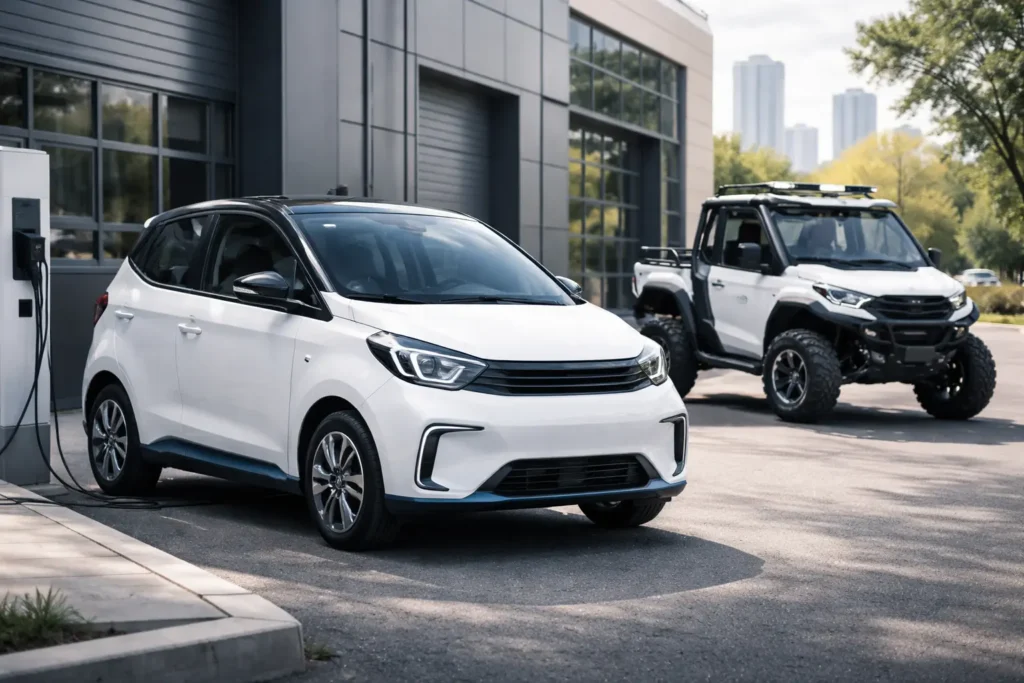
If you’ve spent any time researching affordable electric vehicles, compact urban EVs, or off-road electric platforms, chances are you’ve stumbled across kandi technology—and probably walked away with mixed feelings. Some people see it as a quiet innovator. Others dismiss it as a niche player that never quite broke into the mainstream. Both reactions are understandable.
Kandi Technology matters right now for one simple reason: the global EV market is no longer just about premium cars and massive battery ranges. It’s about accessibility, urban mobility, last-mile transportation, and purpose-built electric vehicles. That’s exactly the space where Kandi has spent most of its life.
This article is written for investors trying to understand what Kandi actually does, EV researchers looking beyond Tesla headlines, business owners exploring electric fleets, and everyday readers who want clarity—not hype. By the end, you’ll understand where Kandi fits, where it struggles, and where it genuinely has an edge.
No speculation. No cheerleading. Just a grounded, experience-based breakdown.
Understanding Kandi Technology from the Ground Up (Beginner to Expert)
At its core, kandi technology refers to the electric vehicle and mobility solutions developed by Kandi Technologies Group, Inc., a company founded in China and later listed on NASDAQ. Unlike most EV brands that start with passenger cars, Kandi built its foundation around micro EVs, utility vehicles, and modular electric platforms.
Think of Kandi less like a traditional carmaker and more like an electric mobility toolkit company. Instead of asking, “How do we build the best electric sedan?” Kandi asked, “Where do electric vehicles solve real, everyday problems better than gas?”
That mindset led them into areas many automakers ignored:
- Urban car-sharing EVs designed for dense cities
- Electric off-road vehicles for farms and recreational use
- Low-speed electric vehicles (LSEVs) for campuses and industrial sites
- Battery-swapping experiments before most Western EV brands considered it
For beginners, Kandi might look small. For experts, it’s a case study in specialization over scale. The company doesn’t try to win everywhere—it tries to win where electric makes the most sense.
Real Benefits and Real-World Use Cases of Kandi Technology
The biggest misunderstanding about kandi technology is assuming it competes head-to-head with Tesla, BYD, or Ford. It doesn’t. Kandi competes in spaces where simplicity, cost control, and task-specific design matter more than luxury or performance.
In practice, Kandi vehicles shine in environments like:
- University campuses where speed limits are low and charging is predictable
- Warehouses and logistics hubs replacing gas-powered utility carts
- Rural properties using electric UTVs for daily work
- Dense cities needing ultra-compact electric transport
The real benefit isn’t range or acceleration—it’s operational efficiency. Owners often report lower maintenance costs, easier repairs, and simpler charging infrastructure. In fleet settings, that translates to measurable savings.
Before Kandi-style EVs, organizations relied on modified golf carts or inefficient gas vehicles. After switching, they get quieter operation, fewer breakdowns, and better energy predictability. That’s not exciting marketing—but it’s practical, and it works.
How Kandi Technology Actually Works (Step-by-Step, Practical View)
Understanding how Kandi operates helps explain both its strengths and its limits.
First, Kandi designs purpose-built electric platforms rather than adapting gas designs. That means fewer unnecessary parts and more room for batteries, controllers, and modular components.
Second, manufacturing is optimized for cost efficiency, not luxury finishes. You’ll see simpler interiors, basic infotainment, and straightforward mechanical layouts. That’s intentional.
Third, Kandi focuses heavily on low-speed and off-road classifications, which reduces regulatory barriers and development costs. In many markets, these vehicles don’t require the same safety certifications as full passenger cars.
Finally, Kandi experiments with distribution models—direct-to-consumer, fleet sales, and partnerships—rather than relying on traditional dealerships.
Each step matters because it keeps pricing low while maintaining reliability. It’s not glamorous, but it’s sustainable.
Tools, Models, and Comparisons: Where Kandi Fits Best
When people evaluate kandi technology, comparisons often miss the point. The real comparison isn’t Tesla vs Kandi—it’s Kandi vs alternatives in the same task category.
For example:
- Kandi electric UTVs vs gas-powered Polaris models
- Kandi micro EVs vs used gasoline compact cars
- Kandi LSEVs vs modified golf carts
Kandi wins on:
- Lower upfront cost
- Simpler maintenance
- Quiet operation
- Easier charging
It loses on:
- Top speed
- Interior refinement
- Brand recognition
From experience, Kandi works best when expectations are aligned with purpose. If you want a daily highway commuter, look elsewhere. If you want reliable electric mobility for controlled environments, Kandi makes sense.
Common Mistakes People Make with Kandi Technology (and How to Avoid Them)
One common mistake is buying a Kandi vehicle expecting a traditional car experience. That leads to disappointment. These vehicles are tools, not luxury products.
Another mistake is ignoring local regulations. Low-speed vehicles aren’t street-legal everywhere, and misunderstanding that can cause frustration.
People also underestimate charging needs. While Kandi vehicles are efficient, poor charging planning can disrupt daily use.
The fix is simple: match the vehicle to the job. When Kandi is used as intended, satisfaction is high. When it’s misused, complaints follow.
The Bigger Picture: Where Kandi Technology Is Headed
Kandi’s future isn’t about competing with global EV giants. It’s about carving deeper into niches where electric makes unavoidable sense.
As cities push low-emission zones, campuses electrify fleets, and recreational vehicles move away from gas, Kandi’s experience becomes more valuable—not less.
The company’s long-term success depends on:
- Better distribution in Western markets
- Clearer consumer education
- Continued focus on affordability
It won’t dominate headlines, but it doesn’t need to.
Conclusion: Is Kandi Technology Worth Paying Attention To?
If you’re looking for hype, kandi technology will disappoint you. If you’re looking for practical electric mobility, it deserves serious attention.
Kandi isn’t building dreams—it’s solving specific problems. And in a world where EV adoption is shifting from novelty to necessity, that quiet approach may age better than many expect.
Whether you’re researching electric fleets, exploring affordable EV options, or analyzing overlooked EV companies, Kandi is worth understanding on its own terms—not someone else’s.
FAQs
What is Kandi Technology best known for?
Affordable electric utility vehicles, micro EVs, and low-speed electric platforms.
Is Kandi a Chinese company?
Yes, with operations and market focus extending into the U.S. and other regions.
Are Kandi vehicles street legal?
Some are, depending on local laws. Many are designed for controlled environments.
How reliable is Kandi technology?
In task-specific use, reliability is generally strong due to simple designs.
Is Kandi suitable for personal daily driving?
Only in limited scenarios. It’s better suited for short-distance, low-speed use.

Adrian Cole is a technology researcher and AI content specialist with more than seven years of experience studying automation, machine learning models, and digital innovation. He has worked with multiple tech startups as a consultant, helping them adopt smarter tools and build data-driven systems. Adrian writes simple, clear, and practical explanations of complex tech topics so readers can easily understand the future of AI.