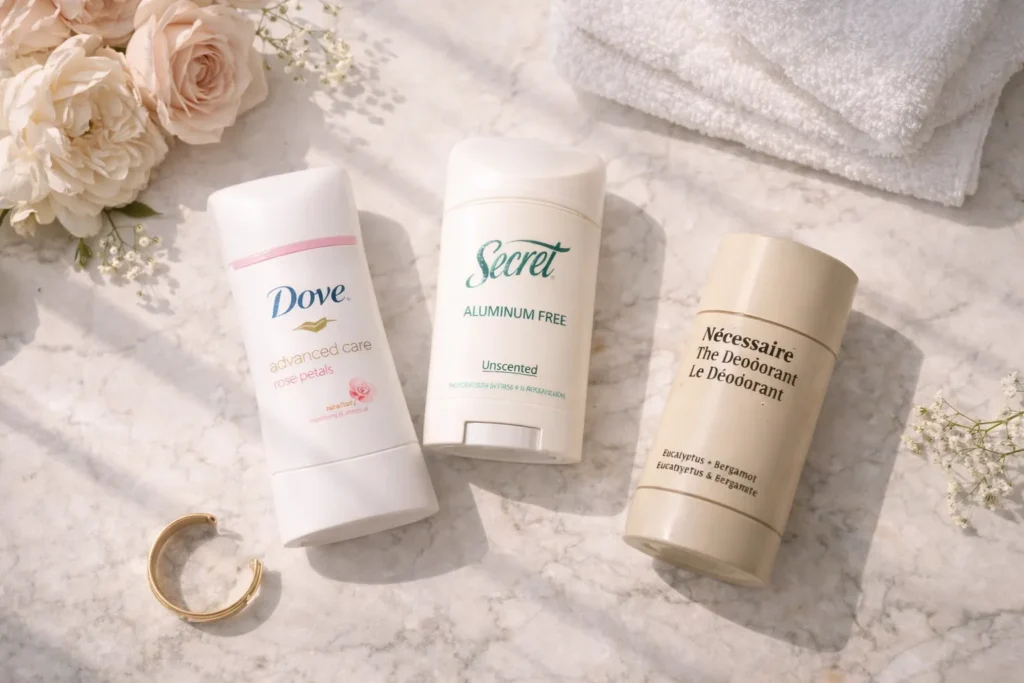
Choosing a personal care product should be simple, but the deodorant aisle can be surprisingly complex. With countless options available, finding the right deodorant for women can feel like a major decision. Should you choose an antiperspirant? A natural formula? What about ingredients like aluminum, baking soda, or charcoal? This choice is about more than just smelling fresh; it is about finding a product that works with your body, fits your lifestyle, and makes you feel confident all day long.
This guide is designed to demystify the world of underarm care. We will explore the key differences between deodorant and antiperspirant, break down the various formulas on the market, and help you select the perfect product for your unique needs—whether you have sensitive skin, lead an active lifestyle, or are looking to make a more natural choice.
Deodorant vs. Antiperspirant: What’s the Difference?
The first and most important step in your search is to understand that “deodorant” and “antiperspirant” are not the same thing. Though they are often used interchangeably, they perform two very different functions.
How Deodorant Works
A deodorant’s sole purpose is to control odor. It does not stop you from sweating. Instead, it uses ingredients to neutralize or mask the smell that occurs when sweat mixes with bacteria on your skin.
- Mechanism: Deodorants are typically alcohol-based, which creates an acidic environment that is less hospitable to odor-causing bacteria.
- Key Ingredients: They often contain fragrances to cover up smells and antibacterial agents like triclosan or natural alternatives like tea tree oil.
- Best For: Individuals who don’t sweat heavily but want to ensure they stay fresh throughout the day.
How Antiperspirant Works
An antiperspirant’s job is to reduce or stop sweat. By preventing wetness, it indirectly controls odor, as there is less sweat for bacteria to interact with.
- Mechanism: Antiperspirants use aluminum-based compounds (like aluminum chlorohydrate) as their active ingredient. These compounds temporarily plug the sweat ducts, reducing the amount of perspiration that reaches the skin’s surface.
- Key Ingredients: Aluminum salts are the active ingredient.
- Best For: People who experience moderate to heavy sweating or who simply want to avoid the feeling of underarm wetness and prevent sweat stains on clothing.
Many products on the market are a combination of both, offering the dual benefit of reducing sweat and masking odor.
The Rise of Natural Deodorant
In recent years, there has been a significant shift towards “clean” beauty, and the deodorant for women category is no exception. Natural deodorants are formulas made without aluminum, parabens, phthalates, or artificial fragrances.
Why People Choose Natural
The primary driver for the natural deodorant trend is the desire to avoid aluminum. While regulatory bodies like the FDA consider aluminum-based antiperspirants safe, some consumers prefer to avoid the ingredient due to personal health concerns or a preference for “natural” personal care routines. Others find that aluminum and other chemicals can irritate their skin.
Common Ingredients in Natural Deodorant
Natural deodorants rely on a variety of ingredients to absorb moisture and neutralize odor.
- Baking Soda (Sodium Bicarbonate): Very effective at neutralizing odor-causing bacteria. However, its high pH can be irritating for many people, causing redness and rashes.
- Arrowroot Powder or Cornstarch: These powders help to absorb some moisture, though they do not block sweat like aluminum.
- Magnesium Hydroxide: A gentle alternative to baking soda for neutralizing odor. It is much less likely to cause skin irritation.
- Charcoal and Clay: These ingredients are known for their ability to absorb impurities and moisture.
- Coconut Oil and Shea Butter: These form the nourishing base of many natural deodorant sticks, helping them glide on smoothly and moisturize the skin.
- Essential Oils: Tea tree, lavender, and sandalwood oils are often used for their natural antibacterial properties and pleasant scents.
The “Detox” Period
When you switch from an aluminum-based antiperspirant to a natural deodorant, your body may go through an adjustment phase, often called a “detox.” Because your sweat ducts are no longer being plugged, you might notice an increase in sweat and odor for a couple of weeks as your body re-regulates. This is normal and usually subsides.
Exploring Different Deodorant Formats
The formula and application method of your deodorant can greatly impact your experience. Choosing the right format often comes down to personal preference and lifestyle.
Solid Stick
This is the most popular and classic format. A solid compound is pushed up from a tube for direct application.
- Pros: Easy to apply, mess-free, travels well.
- Cons: Can sometimes leave white marks on dark clothing if not allowed to dry.
Gel or Soft Solid
These offer a clearer application than traditional solids, with a formula that glides on smoothly and feels wet initially.
- Pros: Goes on clear, reducing the risk of white marks. Feels cooling upon application.
- Cons: Can feel sticky until it dries completely.
Roll-On
A liquid deodorant or antiperspirant is applied via a rolling ball at the top of the bottle.
- Pros: Precise application, clear formula.
- Cons: Feels very wet and requires significant drying time.
Spray (Aerosol)
An aerosol can dispenses a fine mist of deodorant.
- Pros: Dries almost instantly, can be shared hygienically, feels refreshing.
- Cons: Can be irritating to inhale in a small space, less environmentally friendly due to aerosol propellants.
Cream or Paste
Often found in natural deodorant lines, these are applied with your fingertips from a jar or tube.
- Pros: Allows for precise control over the amount and area of application. Often made with skin-nourishing ingredients.
- Cons: Requires using your hands, which can be inconvenient.
How to Choose the Best Deodorant for Your Needs
With all the options available, how do you find the right deodorant for women? Consider these factors.
For Sensitive Skin
If you are prone to rashes, itching, or redness, you need a gentle formula.
- Look For: Hypoallergenic, fragrance-free, and alcohol-free labels. In natural deodorants, opt for baking soda-free formulas that use magnesium instead.
- Avoid: High concentrations of alcohol, artificial fragrances, and baking soda.
For an Active Lifestyle or Heavy Sweating
If you work out frequently or experience hyperhidrosis (excessive sweating), you will need maximum protection.
- Look For: “Clinical strength” antiperspirants. These contain a higher concentration of the active aluminum ingredients.
- Application Tip: For best results, apply clinical strength antiperspirants at night before bed. Your sweat glands are less active at night, allowing the formula to form a stronger plug.
For Preventing Yellow Stains
Those dreaded yellow stains on the armpits of white shirts are caused by a chemical reaction between the aluminum in antiperspirants and the proteins in your sweat.
- Look For: Formulas specifically labeled “anti-stain” or “no white marks.”
- Try: Switching to an aluminum-free deodorant. Since there is no aluminum, there is no chemical reaction to cause staining.
For an Eco-Conscious Choice
If sustainability is a priority, look beyond the ingredient list to the packaging.
- Look For: Deodorants in refillable cases, or packaged in biodegradable materials like cardboard or recycled plastic.
- Consider: Deodorant creams in glass jars or solid deodorant bars with minimal packaging.
Application Tips for Maximum Effectiveness
How you apply your deodorant is just as important as which one you choose.
- Apply to Clean, Dry Skin: For best results, apply deodorant or antiperspirant right after you shower and have completely dried your underarms. Applying to wet skin can dilute the formula.
- Ensure Even Coverage: Make sure you cover the entire underarm area with a thin, even layer. Two to three swipes are usually sufficient for a solid stick.
- Let It Dry: Give the product a minute or two to dry before getting dressed. This is the single best way to prevent white marks on your clothes.
- Nighttime Application for Antiperspirants: As mentioned, applying antiperspirant at night can dramatically increase its effectiveness. The plug it forms will last through your next-day shower and beyond.
Shaving and Deodorant Application
Shaving can cause micro-abrasions on the skin, making it more sensitive.
- Wait to Apply: If possible, wait a little while after shaving before applying your deodorant, especially if it contains alcohol or other potentially irritating ingredients. Shaving at night and applying deodorant in the morning is a good strategy.
- Choose a Soothing Formula: Look for deodorants that contain moisturizing ingredients like aloe vera, vitamin E, or shea butter to help soothe freshly shaved skin.
Conclusion: Confidence in a Bottle (or Stick)
The journey to finding the perfect deodorant for women is a personal one. What works wonders for one person may not be the right fit for another. By understanding the core differences between antiperspirants and deodorants, paying attention to ingredients, and considering your own unique body chemistry and lifestyle, you can move beyond the overwhelming choices and select a product with confidence.
Whether you need the clinical-strength power of an antiperspirant, the gentle touch of a sensitive skin formula, or the clean ingredients of a natural deodorant, there is an option out there that will keep you feeling fresh, dry, and ready to face the day.
Frequently Asked Questions (FAQs)
Q1: Is the aluminum in antiperspirants harmful?
A: Major health organizations, including the American Cancer Society and the National Cancer Institute, have found no conclusive scientific evidence linking the use of underarm antiperspirants to breast cancer. The FDA considers them safe for consumer use. However, some people with kidney disease may be advised to avoid aluminum.
Q2: Why does my natural deodorant seem to stop working?
A: Sometimes your body’s chemistry can change, or the bacteria on your skin can adapt. If your favorite natural deodorant suddenly stops working, try “rotating” your deodorant. Switch to a different brand with a different active ingredient (e.g., from a baking soda base to a magnesium base) for a few weeks before switching back.
Q3: Can deodorant or antiperspirant expire?
A: Yes. Most products have an expiration date printed on the packaging, typically 1-3 years after manufacturing. Over time, the active ingredients can become less effective, and the scent may change. It is best to replace expired products.
Q4: How do I get rid of white deodorant marks on my clothes?
A: For a quick fix, you can rub the area with a dry towel, a pair of nylon stockings, or a dedicated deodorant-removing sponge. To prevent them in the first place, make sure your deodorant is completely dry before dressing.
Q5: Is it better to use a different deodorant for working out?
A: Not necessarily. If your daily antiperspirant is a clinical strength or long-lasting formula, it should provide enough protection for a workout. However, if you use a light, natural deodorant for daily wear, you might want to switch to a stronger antiperspirant or a sport-specific formula before hitting the gym.

Sofia Bennett is a fashion writer and style observer known for her clean sense of aesthetics and trend analysis. She has covered fashion shows, reviewed designer collections, and interviewed independent creators. Sofia specializes in connecting fashion with real-life lifestyle choices, helping readers understand what looks good — and why.