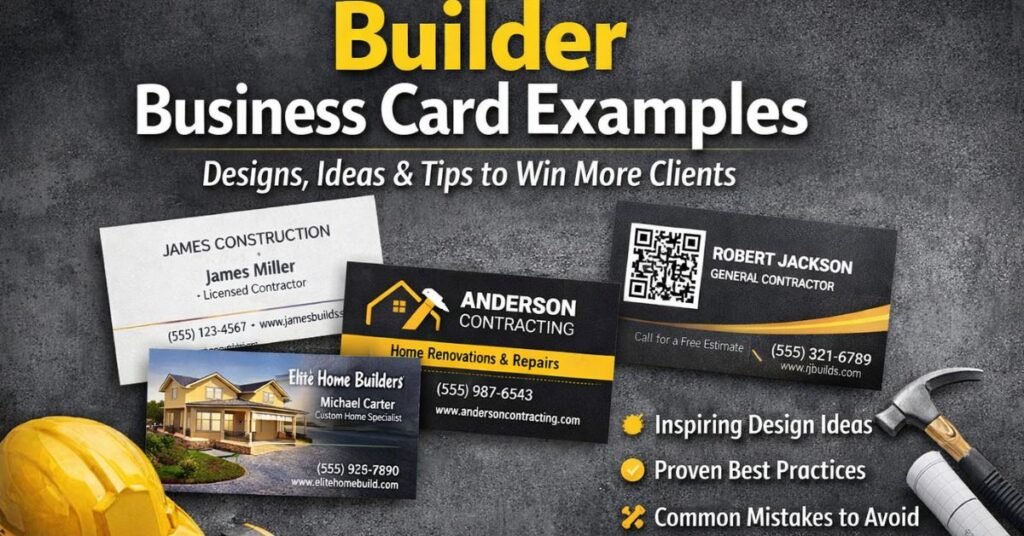
If you’re searching for builder business card examples, chances are you’re not just looking for design inspiration—you want a card that actually brings in work. Maybe you’ve handed out dozens of cards that never turned into calls. Maybe you’re starting a construction business and want to look professional from day one. Or maybe you simply know that in trades like building, carpentry, and contracting, reputation begins with the smallest details.
A business card might feel old-school in a digital world, yet on real job sites, in hardware stores, at networking events, and during word-of-mouth referrals, it’s still one of the fastest ways to turn a conversation into a paying client. The difference between a forgettable card and a powerful one often comes down to design clarity, messaging, trust signals, and real-world usability—not flashy graphics.
In this in-depth guide, you’ll discover practical, proven, and realistic builder business card ideas drawn from real industry experience. We’ll explore design styles that work, mistakes that quietly cost jobs, tools that make printing easy, and step-by-step guidance to create a card that people actually keep.
By the end, you won’t just have inspiration—you’ll have a clear blueprint for a business card that converts curiosity into contracts.
What Builder Business Card Examples Really Mean (And Why They Matter)
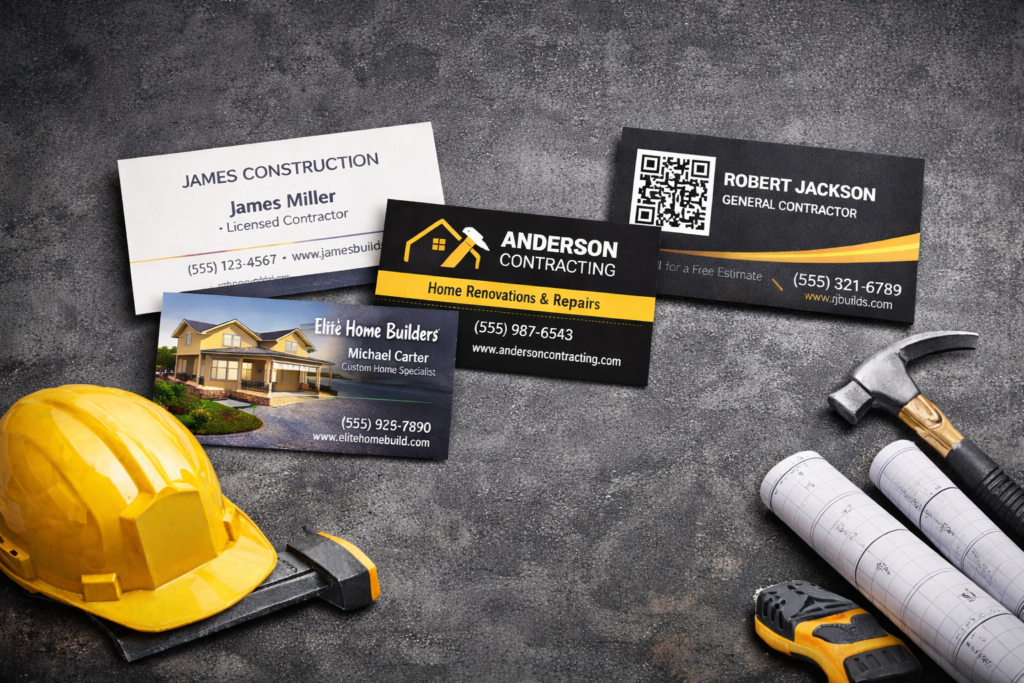
When people search for builder business card examples, they’re usually imagining a visual gallery of construction-themed designs—hard hats, tools, bold fonts, maybe a photo of finished work. But in practice, a great builder’s card is less about decoration and more about instant trust.
Think about how clients choose a builder. Most homeowners don’t understand construction deeply. They rely on signals: professionalism, clarity, reliability, and proof of experience. Your card becomes a micro-resume that communicates all of this in seconds.
A useful analogy is a shopfront window. Even before someone steps inside, they judge quality from the outside. Your business card works the same way. A cluttered, poorly printed card suggests rushed work. A clean, structured design suggests attention to detail—exactly what clients want in a builder.
Strong builder business cards usually include:
- A clear service identity (builder, contractor, carpenter, renovator)
- Location or service area
- Direct contact details that are easy to read
- One credibility signal (years of experience, licensed, insured, guarantees)
- Optional visual proof (subtle project image or brand color)
Notice what’s missing: unnecessary slogans, tiny unreadable text, or overdesigned graphics. In construction, clarity beats creativity almost every time.
Why Builder Business Cards Still Bring Real Clients in 2026
It’s tempting to believe social media replaced business cards. Yet in construction and trades, referrals still dominate. A homeowner asks a neighbor, “Do you know a good builder?” The neighbor hands over a card. Job won.
This simple offline moment explains why builder business card examples remain so valuable. They operate where digital ads often fail—in personal trust exchanges.
Here’s where cards outperform digital-only marketing:
Face-to-face credibility
When meeting someone at a site visit, quoting a job, or talking in a supplier store, handing over a professional card reinforces legitimacy. It signals permanence and accountability.
Easy sharing between homeowners
People rarely forward builder websites spontaneously, but they physically pass along cards. This multiplies referrals without extra marketing cost.
Memory reinforcement
Even if a client doesn’t need work immediately, a well-designed card sits on a fridge, desk, or toolbox. Months later, when renovation plans start, your name is already familiar.
Works without internet or ads
Unlike online marketing, cards don’t rely on algorithms, budgets, or Wi-Fi. They keep working quietly for years.
In short, builder business cards are not outdated—they’re low-cost, high-trust marketing tools uniquely suited to the construction industry.
The Real Benefits of Using Strong Builder Business Card Designs
Looking at builder business card examples isn’t just about aesthetics. The real value lies in how the right design improves client perception, response rate, and long-term brand memory.
Instant professionalism
A structured, high-quality card tells clients you take your work seriously. In trades where reliability matters, this first impression can influence whether someone even requests a quote.
Higher referral quality
Clear cards make it easier for satisfied customers to recommend you. When your contact details, services, and name are obvious, referrals convert faster.
Better brand recognition
Consistent colors, fonts, and layout build familiarity. Over time, people begin to recognize your brand even before reading the text.
Competitive differentiation
Many builders still use generic or outdated cards. A modern, clean design quietly separates you from competitors without saying a word.
Long-term marketing value
Unlike ads that disappear when budgets stop, a business card can generate work months or years later.
These benefits explain why experienced contractors often treat business cards not as stationery, but as strategic marketing assets.
Step-by-Step Guide to Creating a Builder Business Card That Wins Jobs
Designing an effective builder business card doesn’t require artistic talent. It requires clarity, structure, and smart decisions. Follow this proven process used by successful contractors.
Step 1: Define your core message
Before touching design software, decide what one idea your card must communicate. Examples:
- Reliable local home builder
- Renovation specialist
- Affordable general contractor
- Premium custom construction expert
Everything on the card should reinforce this single positioning.
Step 2: Choose a clean, readable layout
The most effective builder business card examples share a simple structure:
Front:
- Business name or logo
- Your name and role
- Phone number (primary contact)
Back:
- Services list
- Location/service area
- Optional project image or QR code
Avoid overcrowding. White space increases readability and perceived quality.
Step 3: Use construction-appropriate colors and fonts
Common effective palettes include:
- Black + yellow (safety, construction identity)
- Dark blue + white (trust, professionalism)
- Earth tones (natural building, carpentry)
- Gray + orange (modern contractor branding)
Fonts should be bold, simple, and highly legible, even at small sizes.
Step 4: Add one credibility signal
Instead of long descriptions, include a short trust builder:
- Licensed & insured
- 15+ years experience
- Free estimates
- Satisfaction guaranteed
One strong proof point is more powerful than five weak claims.
Step 5: Print on durable material
Thin cards feel disposable. Builders benefit from:
- Thick matte cardstock
- Spot UV highlights
- Rounded corners
- Waterproof or plastic cards (great for job sites)
Durability subtly communicates work quality.
Step 6: Test before bulk printing
Always print a small batch first. Check:
- Readability in sunlight
- Smudge resistance
- Phone number clarity
- Overall professional feel
Real-world testing prevents expensive mistakes.
Popular Builder Business Card Styles That Actually Work
Exploring builder business card examples reveals recurring design categories that consistently perform well.
Minimalist professional
Clean background, bold text, strong hierarchy.
Best for: high-end builders and renovation specialists.
Tool-themed construction design
Subtle icons like hammers or rooftops.
Best for: general contractors and handyman services.
Photo-based portfolio card
Shows a finished project image.
Best for: custom home builders and remodelers.
Bold industrial style
Dark colors, strong typography, rugged feel.
Best for: commercial contractors and structural builders.
Modern QR-enabled card
Includes a QR code linking to gallery or WhatsApp.
Best for: tech-friendly builders targeting younger homeowners.
Each style serves a different client perception, so choosing depends on your market positioning—not personal taste alone.
Tools and Printing Options: Free vs Paid Choices
Creating builder business cards today is easier than ever. The real decision is choosing between DIY design platforms and professional printing services.
Free or low-cost design tools
These are ideal for new builders or small budgets:
- Drag-and-drop templates
- Pre-made construction layouts
- Basic customization options
Pros:
- Very affordable
- Fast to create
- No design experience required
Cons:
- Limited uniqueness
- Common templates used by competitors
Best for established builders wanting stronger branding.
Pros:
- Custom professional design
- Higher-quality materials
- Unique brand identity
Cons:
- Higher upfront cost
- Longer turnaround time
A practical strategy many successful builders use:
Start with clean template + premium printing, then upgrade to fully custom design once business grows.
Common Mistakes Builders Make With Business Cards (And How to Fix Them)
Even experienced contractors often overlook small details that reduce effectiveness.
Too much information
Crowded cards confuse readers.
Fix: Keep only essentials—name, service, phone, location.
Tiny unreadable text
Clients may be older or reading outdoors.
Fix: Use larger fonts and high contrast.
Cheap paper quality
Thin cards feel unprofessional.
Fix: Choose thick matte or waterproof material.
Missing service clarity
If clients don’t know what you do, they won’t call.
Fix: Clearly state services like “Home Renovations” or “General Builder.”
No follow-up pathway
Without website or QR code, interest may fade.
Fix: Add one simple digital connection point.
Avoiding these errors instantly improves trust and response rate.
Conclusion: Turning Simple Cards Into Steady Construction Work
The best builder business card examples prove a simple truth: success doesn’t come from flashy graphics—it comes from clarity, credibility, and real-world usability.
A strong card:
- Builds trust in seconds
- Makes referrals effortless
- Reinforces professionalism
- Works for years without extra cost
Whether you’re a solo contractor or growing construction company, investing thoughtful effort into your business card is one of the highest-return marketing moves you can make.
If you’re planning to redesign your card, start simple, focus on trust, and test in real situations. And if you’ve seen a builder card that impressed you—or created one that brought real jobs—share your experience. Real-world insights help everyone build smarter.
FAQs
What should a builder business card include?
Name, business name, phone number, services, and location are essential. Adding a license note or QR code improves trust and contact ease.
What is the best color for construction business cards?
Black/yellow, dark blue/white, and gray/orange are popular because they signal safety, trust, and professionalism.
Should builders use photos on business cards?
Photos work well for renovation or custom home builders but should be high quality and not overcrowd the design.
Are QR codes useful on builder cards?
Yes. They quickly connect clients to portfolios, reviews, or WhatsApp contact, increasing response rates.
How thick should a business card be?
At least 16pt cardstock is recommended. Thicker or waterproof cards create stronger durability and perceived quality.

Michael Grant is a business writer with professional experience in small-business consulting and online entrepreneurship. Over the past decade, he has helped brands improve their digital strategy, customer engagement, and revenue planning. Michael simplifies business concepts and gives readers practical insights they can use immediately.