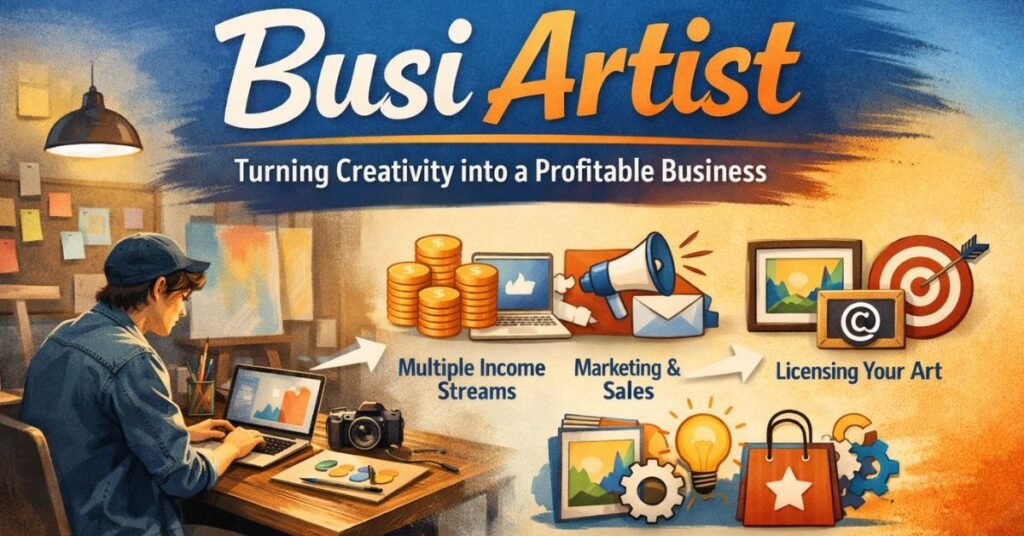
If you’ve ever felt torn between making great art and actually paying your bills, you’re already thinking like a busi artist.
Maybe you’ve heard the term tossed around in creative circles. Maybe you stumbled across it while searching for ways to monetize your art without becoming “too commercial.” Or maybe you are the busi artist — you just didn’t have the language for it yet.
Here’s the truth most creatives eventually discover: talent alone doesn’t build a sustainable career. Passion alone doesn’t scale. And “exposure” definitely doesn’t pay rent.
The modern creative economy demands something different — a blend of artistic integrity and business intelligence. That blend is what defines a busi artist.
In this comprehensive guide, you’ll learn:
- What a busi artist really is (and what it’s not)
- Why this mindset is essential in today’s creator economy
- The benefits and real-world applications of becoming one
- A step-by-step roadmap to building your own busi artist system
- Tools, platforms, and strategies to monetize sustainably
- Common mistakes that quietly sabotage creative careers
- Clear FAQs and SEO insights to deepen your authority
If you want to stop choosing between “artist” and “entrepreneur,” this is your roadmap.
Let’s dive in.
What Is a Busi Artist? (And Why the Concept Matters More Than Ever)
At its core, a busi artist is a creative professional who intentionally combines artistic skill with business strategy.
Think of it this way:
- An artist focuses on creation.
- An entrepreneur focuses on monetization.
- A busi artist masters both — without compromising identity.
It’s not about becoming corporate. It’s not about turning your studio into a boardroom. And it’s definitely not about “selling out.”
It’s about sustainability.
Imagine a musician who understands branding, distribution, audience growth, and licensing. Or a visual artist who builds systems for prints, digital products, commissions, and workshops. Or a writer who leverages email marketing and SEO alongside storytelling.
That’s a busi artist.
The term reflects a shift in the creative world. In the past, artists depended on gatekeepers: galleries, record labels, publishers. Today, platforms allow direct-to-audience monetization. But with that freedom comes responsibility — strategy, marketing, and financial planning.
The busi artist mindset says:
“My art deserves structure. My creativity deserves stability.”
And that shift changes everything.
Why the Rise of the Busi Artist Is Inevitable in the Creator Economy
We’re living in what many call the “creator economy.” But let’s be honest — most creators struggle financially.
Social media metrics don’t equal income.
Followers don’t equal customers.
Talent doesn’t equal visibility.
The busi artist approach solves this disconnect.
Here’s why this model is becoming essential:
1. Gatekeepers Are Gone — But So Is Guaranteed Support
In the past, landing a record deal or publishing contract meant infrastructure. Today, independence means you build that infrastructure yourself.
You need:
- Audience development systems
- Sales funnels
- Pricing strategies
- Licensing knowledge
- Financial literacy
A busi artist doesn’t just create — they build ecosystems.
2. Multiple Income Streams Are No Longer Optional
Creative income is rarely stable. One month you’re booked. The next, silence.
The busi artist builds diversified revenue:
- Direct sales
- Digital products
- Subscriptions
- Licensing
- Teaching
- Collaborations
- Brand partnerships
Diversification reduces risk and increases long-term stability.
3. Algorithms Favor Strategy, Not Just Talent
Platforms reward consistency, clarity, and positioning. Without business thinking, even incredible work can disappear into the noise.
A busi artist understands:
- Niche positioning
- Content repurposing
- Audience psychology
- Conversion design
It’s not manipulation. It’s structure.
And structure creates freedom.
The Benefits of Becoming a Busi Artist
Becoming a busi artist isn’t about adding stress to your creative life. Done correctly, it reduces stress.
Here’s how.
Creative Freedom Through Financial Stability
When your income is unpredictable, you create from pressure. When your income is structured, you create from intention.
Financial stability gives you:
- Time to experiment
- Confidence to reject bad-fit clients
- Space to grow your craft
Ironically, business strategy protects artistic integrity.
Scalable Income Instead of Time-for-Money
Many artists trade time directly for money:
- Commission → Payment
- Performance → Payment
- Workshop → Payment
But busi artists build scalable assets:
- Digital courses
- Print-on-demand products
- Licensing agreements
- Membership communities
That means income without constant labor.
Stronger Brand Authority
A busi artist thinks long-term.
You’re not just posting art.
You’re building a brand.
This leads to:
- Higher perceived value
- Better collaboration opportunities
- Media coverage
- Speaking invitations
Authority compounds.
Clear Career Direction
Instead of chasing every opportunity, you build a strategy aligned with:
- Your strengths
- Your audience
- Your values
- Your income goals
Clarity reduces burnout.
Who Should Become a Busi Artist?
The short answer: any creative who wants longevity.
The long answer depends on your field.
Visual Artists
Painters, illustrators, digital designers, NFT creators, muralists — you benefit from:
- Print licensing
- Online shops
- Commission systems
- Patreon-style memberships
- Art course monetization
Musicians
Independent artists can leverage:
- Streaming royalties
- Sync licensing
- Merchandise
- Ticketed virtual shows
- Subscription fan communities
Writers
Bloggers, authors, copywriters, journalists can build:
- Email newsletters
- SEO-driven content hubs
- Paid communities
- Courses
- Books and digital downloads
Designers & Creatives
Brand designers, UX professionals, motion artists can:
- Productize services
- Build template shops
- Sell digital assets
- Offer group coaching
The busi artist mindset adapts across industries.
Step-by-Step Guide: How to Become a Busi Artist
This is where theory becomes action.
Step 1: Clarify Your Creative Core
Before monetization, define identity.
Ask yourself:
- What do I create best?
- What problem does my work solve?
- Who resonates with my work?
- What themes consistently show up?
Without clarity, your marketing becomes scattered.
Write a one-sentence positioning statement:
“I help ___ experience/achieve ___ through ___.”
This becomes your foundation.
Step 2: Define Your Audience Precisely
Generic targeting kills growth.
Instead of:
“People who like art”
Try:
“Millennial homeowners who want modern, minimal wall art under $300.”
Specificity increases conversion.
Build an audience profile:
- Age range
- Interests
- Income level
- Pain points
- Buying behavior
Think like both an artist and a strategist.
Step 3: Design Multiple Revenue Streams
Start with three tiers:
- Entry-level (low cost)
- Prints
- Digital downloads
- Templates
- Mini courses
- Mid-tier
- Workshops
- Commissions
- Merchandise
- Coaching sessions
- Premium
- Mastermind groups
- Exclusive collections
- Brand collaborations
- Licensing contracts
This layered model protects you from income swings.
Step 4: Build a Platform You Own
Social media is rented land.
A busi artist builds owned assets:
- Website
- Email list
- E-commerce store
- Portfolio hub
Email is especially powerful because:
- You control distribution
- It’s not algorithm-dependent
- It converts at higher rates
Even 1,000 engaged subscribers can outperform 50,000 passive followers.
Step 5: Develop a Marketing System
Consistency beats bursts of effort.
Create:
- Weekly content themes
- Repurposing strategy
- Clear call-to-action structure
- Launch cycles
For example:
- 3 value posts
- 1 storytelling post
- 1 soft pitch post
Marketing becomes rhythm instead of panic.
Step 6: Track Metrics Like a Business Owner
Artists often avoid numbers. Busi artists embrace them.
Track:
- Revenue by stream
- Conversion rates
- Audience growth
- Customer lifetime value
Data clarifies what’s working.
Tools, Comparisons & Recommendations
The right tools simplify execution.
Website & Store Platforms
Shopify
Pros:
- Powerful e-commerce
- Scalable
- Reliable
Cons:
- Monthly cost
- Learning curve
Etsy
Pros:
- Built-in audience
- Easy setup
Cons:
- Fees
- High competition
- Limited branding
WordPress + WooCommerce
Pros:
- Full control
- Strong SEO
Cons:
- Technical setup required
Recommendation:
If you’re starting, test on Etsy. As you grow, transition to owned platforms.
Email Marketing Tools
ConvertKit
Best for creators.
Mailchimp
Good entry-level option.
Beehiiv
Strong for newsletter-driven creators.
Focus on:
- Automation
- Segmentation
- Analytics
Digital Product Tools
Gumroad
Simple setup for downloads.
Teachable
Best for structured courses.
Kajabi
All-in-one but higher cost.
Free vs Paid Tools
Free tools are great to validate ideas. Paid tools:
- Save time
- Increase professionalism
- Improve conversion
Invest when revenue justifies it.
Common Mistakes Busi Artists Make (And How to Fix Them)
Mistake 1: Trying to Monetize Too Late
Many artists wait until they’re “ready.”
Fix:
Start small. Sell early. Iterate.
Mistake 2: Underpricing Work
Fear-based pricing signals low value.
Fix:
Research market benchmarks. Raise gradually.
Mistake 3: Ignoring Audience Feedback
Art is personal — but business is relational.
Fix:
Survey your audience. Track buying behavior.
Mistake 4: Relying on One Platform
Platform risk is real.
Fix:
Build email. Diversify traffic sources.
Mistake 5: Burnout From Overproduction
Constant content creation without systems leads to exhaustion.
Fix:
Batch content. Repurpose. Automate.
Advanced Busi Artist Strategies for Scaling
Once foundations are built, scale intelligently.
Licensing Your Work
Instead of selling one painting once, license it for:
- Apparel
- Home decor
- Digital backgrounds
- Book covers
Licensing multiplies revenue without additional creation.
Collaborations
Partner with:
- Brands
- Other artists
- Influencers
- Local businesses
Cross-pollination accelerates growth.
Building Community
Private groups or memberships create recurring income.
Community builds:
- Loyalty
- Feedback loops
- Brand ambassadors
Recurring revenue reduces anxiety.
The Mindset Shift That Changes Everything
The biggest transformation isn’t tactical — it’s psychological.
A busi artist doesn’t see business as a threat to art.
They see it as infrastructure.
Art without structure burns out.
Business without art feels hollow.
When combined intentionally, they reinforce each other.
You can create meaningful work.
You can earn well.
You can build authority.
You can maintain integrity.
The busi artist path isn’t compromise.
It’s alignment.
FAQs
What does busi artist mean?
A busi artist is a creative professional who intentionally blends artistic skill with business strategy to build a sustainable career.
Is being a busi artist the same as being an entrepreneur?
Not exactly. Entrepreneurs may not prioritize artistic expression. A busi artist maintains creative integrity while applying entrepreneurial strategy.
Can beginners become busi artists?
Yes. In fact, starting with a business mindset early prevents many financial struggles later.
Do I need a large following to succeed as a busi artist?
No. A small, engaged audience often converts better than a large, passive one.
How long does it take to build a profitable creative business?
Typically 12–36 months of consistent strategy and execution, depending on niche and effort.

Michael Grant is a business writer with professional experience in small-business consulting and online entrepreneurship. Over the past decade, he has helped brands improve their digital strategy, customer engagement, and revenue planning. Michael simplifies business concepts and gives readers practical insights they can use immediately.