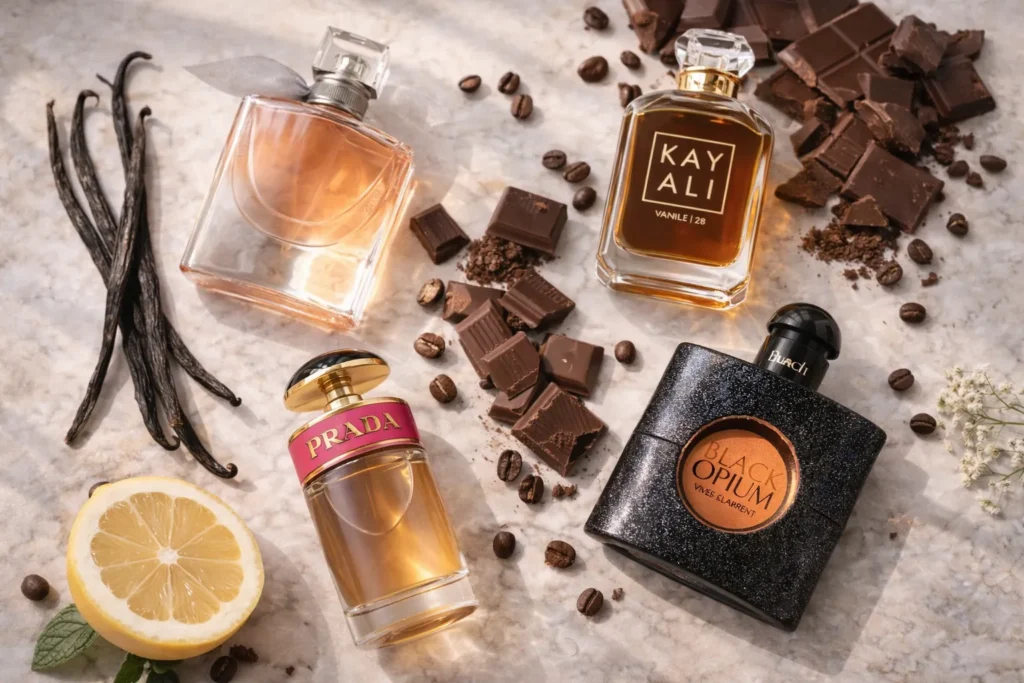
What if a fragrance could do more than just make you smell good? What if it could evoke the warm comfort of a bakery, the decadent pleasure of a box of chocolates, or the energizing aroma of freshly brewed coffee? Welcome to the delicious world of gourmand perfumes. This category of scents, characterized by their “edible” notes, has exploded in popularity, transforming the fragrance industry from a landscape of florals and musks to a playground of vanilla, caramel, and cherry.
Gourmand fragrances are more than just sweet; they are nostalgic, comforting, and deeply personal. They tap into our most primal senses, linking scent directly to the pleasure of taste and memory. This comprehensive guide will take you on a journey through the gourmand family. We will explore its history, decode its most popular notes, highlight the iconic fragrances you need to know, and provide expert tips on how to wear these delectable scents without smelling like a candy shop.
What Exactly Are Gourmand Perfumes?
The term “gourmand” comes from the French word for a person who enjoys eating, often to excess. In perfumery, it refers to a fragrance family composed primarily of synthetic notes meant to resemble food, particularly sweets and desserts.
Think of notes like:
- Vanilla
- Chocolate
- Caramel
- Coffee
- Almond
- Cherry
- Honey
- Spun Sugar (Cotton Candy)
The goal of a gourmand perfume is not just to smell sweet, but to create a full, multi-sensory experience that is comforting, addictive, and utterly irresistible.
The Birth of the Gourmand Fragrance Family
For most of fragrance history, smelling like food was not considered sophisticated. Perfumery was dominated by florals, chypres, and oriental scents. That all changed in 1992 with the launch of a revolutionary fragrance that shattered all the rules.
The Original Game-Changer: Thierry Mugler’s Angel
Thierry Mugler wanted to create a perfume that reminded him of his childhood memories of funfairs and sweet treats. His perfumers, Olivier Cresp and Yves de Chirin, created a groundbreaking formula with a massive overdose of ethyl maltol, a synthetic compound that smells like cotton candy or caramelized sugar. They balanced this intense sweetness with a deep, earthy patchouli base.
The result was Angel. At first, the industry was shocked. It was unlike anything that had come before it. But the public fell in love. Angel proved that a perfume could be both sophisticated and delicious, creating an entirely new olfactory category and paving the way for the thousands of gourmand perfumes that would follow.
Decoding the Main Gourmand Notes
The gourmand family is diverse, with sub-categories based on the dominant edible note. Understanding these will help you find the scent profile you are most drawn to.
Vanilla: The Queen of Gourmands
Vanilla is the backbone of the gourmand world. It can be interpreted in countless ways, making it incredibly versatile.
- Sugary & Cake-Like: Think vanilla extract or buttercream frosting. These are sweet, comforting, and straightforwardly delicious. (Example: Comptoir Sud Pacifique Vanille Abricot)
- Smoky & Boozy: Vanilla can be blended with notes like tobacco, rum, or incense to create a dark, complex, and mature scent. (Example: Tom Ford Tobacco Vanille)
- Spicy: When paired with notes like clove, cinnamon, or cardamom, vanilla becomes warm and exotic. (Example: Guerlain Shalimar)
Chocolate & Cacao: Dark and Decadent
From rich dark chocolate to powdery cocoa, this note provides a deep, luxurious sweetness. It is often paired with patchouli, coffee, or orange to enhance its richness. Cacao notes can range from bitter and earthy to sweet and milky. (Example: Mancera Choco Violette)
Coffee & Tea: The Aromatic Gourmands
These notes offer a more grown-up take on the gourmand trend.
- Coffee: The aroma of a freshly brewed espresso or a creamy latte can be incredibly addictive. Coffee notes add a roasted, slightly bitter edge that balances sweeter elements like vanilla or milk. (Example: Maison Margiela ‘REPLICA’ Coffee Break)
- Tea: Notes like black tea, matcha, or chai provide a lighter, more aromatic sweetness. They can be fresh and calming or spicy and invigorating.
Fruity Gourmands: Juicy and Playful
While fruit has always been used in perfume, fruity gourmands take it a step further. Instead of just the fresh scent of a cut fruit, they aim to capture the experience of a fruit-based dessert.
- Cherry: This has become a massive trend. It can be a sweet, candy-like maraschino cherry or a dark, boozy cherry liqueur. (Example: Tom Ford Lost Cherry)
- Peach & Apricot: These “lactonic” fruits have a creamy, milky quality that makes them feel soft and skin-like.
- Berries: Strawberry, raspberry, and blackberry notes add a jammy, tart sweetness.
Nuts & Spices: Warm and Comforting
Notes like almond, pistachio, and hazelnut add a creamy, nutty richness. They often have a marzipan-like quality. Spices like cinnamon, cardamom, and ginger bring warmth and a festive, cozy feeling to a fragrance, perfect for autumn and winter.
Iconic Gourmand Perfumes You Need to Know
Beyond Angel, several other fragrances have defined and shaped the gourmand category.
Viktor&Rolf Flowerbomb
Launched in 2005, this fragrance is exactly what its name suggests: an explosion of flowers. But its secret weapon is its base. A potent combination of patchouli and sweet, gourmand notes gives the floral bouquet an addictive, candy-like quality. It is a perfect “floriental gourmand” and a modern classic.
Lancôme La Vie Est Belle
One of the best-selling perfumes in the world, La Vie Est Belle is a powerhouse of sweetness. It features dominant notes of iris, praline, and vanilla. It’s an optimistic, powerful, and incredibly long-lasting fragrance that announced the gourmand trend was here to stay.
Maison Francis Kurkdjian Baccarat Rouge 540
While not a traditional dessert-like gourmand, BR540 became a viral sensation for its unique, addictive sweetness. It uses saffron, ambergris, and cedar to create an airy, burnt-sugar or “crystalized” scent that is both sweet and mineralic. It stretched the definition of what a gourmand could be.
Yves Saint Laurent Black Opium
This fragrance took the gourmand trend in a darker, more rock-and-roll direction. The star note is coffee, which provides a shot of adrenaline against a backdrop of sweet vanilla and white flowers. It is sensual, energetic, and perfect for a night out.
How to Wear Gourmand Perfumes
The biggest fear when wearing a sweet fragrance is smelling juvenile or overwhelming. Here is how to wear them with sophistication.
Less is More
Gourmand perfumes, particularly those with notes of vanilla, patchouli, and ethyl maltol, often have powerful sillage (the scent trail you leave behind) and longevity. Start with one or two sprays. You can always add more, but you cannot take it away.
Consider the Season and Occasion
- Colder Months: Heavy, spicy, and rich gourmands (like those with vanilla, coffee, and chocolate) bloom in the autumn and winter. The cold air prevents them from becoming too cloying.
- Warmer Months: In spring and summer, opt for lighter, fruity gourmands or scents with a fresh element. Look for notes like coconut, citrus, or light tea to balance the sweetness.
- The Office: For professional settings, choose a more subdued gourmand. A “skin scent” with soft notes of almond milk or a vanilla-musk combination is less likely to distract your colleagues than a full-blown praline-patchouli bomb.
The Art of Layering
Layering allows you to customize your scent and add complexity.
- Body Products: Use an unscented body lotion before spraying your perfume. The oils in the lotion will give the fragrance something to cling to, making it last longer. Alternatively, use a body lotion with a simple, complementary scent (like vanilla or coconut) to enhance your perfume.
- Layering with Other Perfumes: You can add depth to a simple sweet scent by layering it with something from another fragrance family. For example, spray a woody or smoky fragrance first, then add a light vanilla spray on top to create a more complex, personalized blend.
The Psychology of Sweet Scents
Why are we so drawn to gourmand perfumes? The answer lies in our brains.
- Scent and Memory: Our olfactory bulb is directly linked to the limbic system, which controls memory and emotion. The smell of vanilla, for example, can instantly transport us back to baking cookies in our grandmother’s kitchen, creating a powerful feeling of comfort and security.
- The Link to Taste: Gourmand notes trigger the same pleasure centers in our brain that are activated when we eat something delicious. In a way, wearing a gourmand perfume is like enjoying a calorie-free dessert all day long.
- A Feeling of Warmth and Comfort: Sweet, warm scents are often described as “cozy.” They can feel like a cashmere sweater or a warm hug in a bottle, making them perfect for days when you need a little emotional boost.
Conclusion: A Treat for the Senses
The rise of the gourmand family has democratized fragrance, moving it away from the abstract and untouchable toward something familiar, joyful, and deeply personal. Gourmand perfumes prove that a scent can be both fun and sophisticated, playful and elegant. They are a celebration of life’s simple pleasures, bottled for our enjoyment.
Whether you are drawn to the comforting embrace of a vanilla scent, the energetic buzz of a coffee fragrance, or the juicy burst of a cherry perfume, there is a gourmand out there waiting for you. So go ahead, indulge your senses. After all, life is short—you deserve to smell delicious.
Frequently Asked Questions (FAQs)
Q1: What was the first gourmand perfume?
A: Thierry Mugler’s Angel, launched in 1992, is widely credited as the first modern gourmand perfume. Its groundbreaking use of a cotton candy-like note (ethyl maltol) created an entirely new fragrance category.
Q2: Will gourmand perfumes make me smell like a teenager?
A: Not at all! While there are many sweet body sprays marketed to a younger audience, sophisticated gourmand perfumes balance their sweetness with complex notes like wood, spices, musk, or patchouli. A fragrance like Tom Ford’s Tobacco Vanille is a perfect example of a mature, refined gourmand scent.
Q3: Are gourmand perfumes only for women?
A: No. Fragrance has no gender. Many gourmand scents are marketed as unisex, and notes like coffee, cacao, and boozy vanilla are incredibly popular in men’s perfumery as well.
Q4: My gourmand perfume doesn’t last long. How can I fix this?
A: First, make sure your skin is well-moisturized before applying perfume. Fragrance lasts longer on hydrated skin. Second, apply it to your pulse points (wrists, neck, behind the ears). You can also spray a little on your clothes or in your hair (from a distance), as fabric and hair hold scent longer than skin.
Q5: What is a “floriental gourmand”?
A: This is a popular sub-category that blends the gourmand family with the floral and oriental families. These perfumes typically have a core of sweet, edible notes, but they are wrapped in a bouquet of rich flowers (like jasmine or orchid) and anchored with warm, spicy oriental notes (like amber or incense). Viktor&Rolf’s Flowerbomb is a classic example.

Sofia Bennett is a fashion writer and style observer known for her clean sense of aesthetics and trend analysis. She has covered fashion shows, reviewed designer collections, and interviewed independent creators. Sofia specializes in connecting fashion with real-life lifestyle choices, helping readers understand what looks good — and why.